Quick Answer
Bottom line: This profile helps you evaluate European travel services fast with essential decision data.
Key Facts
- Verification status: editorially reviewed
- Data refresh cycle: ongoing
- Best for: users comparing options quickly
title: “Warsaw 3-Day Itinerary: The Best Things to Do in 2026”
slug: “warsaw-3-day-itinerary”
meta_description: “Planning 3 days in Warsaw? Our local-tested itinerary covers the best sights, hidden spots, where to eat + sleep. Updated 2026.”
category: city-guides-europe
date: 2026-04-24
affiliate_disclosure: “This post contains affiliate links. We earn a small commission at no extra cost to you.”
Warsaw 3-Day Itinerary: The Best Things to Do in 2026
TL;DR
- Total budget: €180–380 per person for 3 days (mid-range), excluding flights
- Best months: May, June or September for warm days without summer crowds; December for the Christmas market
- Must-do: Spend 2 hours at the POLIN Museum, walk the Old Town before 9am, eat pierogi at a proper milk bar, see Łazienki Park on Sunday for the free Chopin concerts
- Skip: The Palace of Culture observation deck unless the visibility is perfect, walking inside the lobby gives you the building anyway
- Getting around: Metro (2 lines), trams, buses on single ticket system. A 3-day travel card is 36 PLN (€8.40)
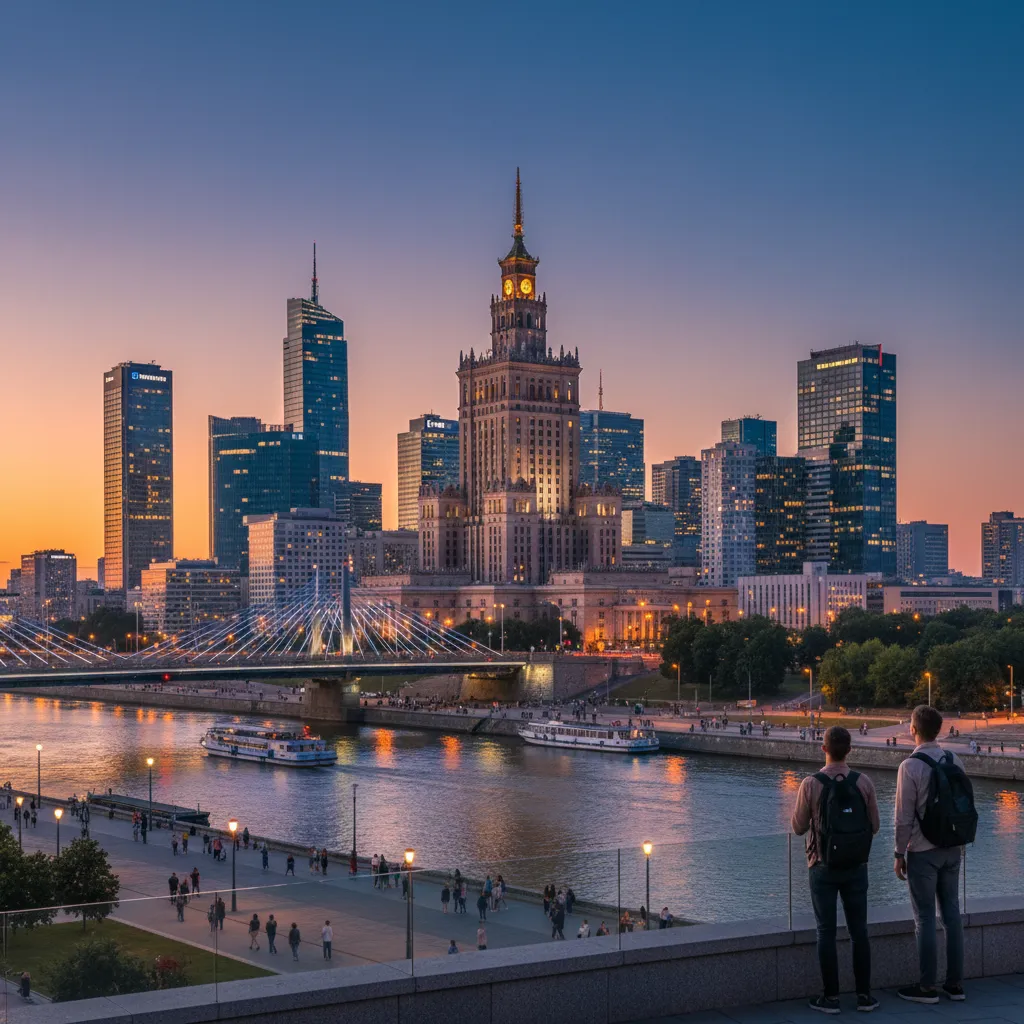
Warsaw is the European capital that refuses to be the version of itself that every guidebook wrote about 30 years ago. Yes, 85% of the city was destroyed in World War II. Yes, the Old Town was rebuilt brick-for-brick using Bellotto’s 18th-century paintings as the reference. But Warsaw in 2026 is not a museum to its own destruction, it is the biggest, richest, fastest-growing capital in Central Europe, with a modern skyline that jumped up between 2015 and 2025 and a food scene that the rest of Europe is finally noticing.
This Warsaw 3-day itinerary is the one I send to friends who want to see modern Warsaw, not just the reconstructed postcard version. Which museums actually matter. Where locals eat pierogi when they are not performing Polishness for tourists. And how to move around a city that is bigger and more spread out than the brochure suggests.
Find flights to Warsaw on Aviasales, LOT, Ryanair, and Wizz Air all run cheap routes from across Europe.
How to Get to Warsaw
Warsaw has two airports. Warsaw Chopin (WAW) is 10 km south of the centre, train S2 or S3 direct to Warszawa Centralna in 20 minutes for 4.80 PLN (€1.15, free on a 24-hour pass). Bus 175 also runs to the centre in 30–40 minutes for the same price. Warsaw Modlin (WMI) is 40 km north, used by Ryanair, bus or Modlin Bus (45 PLN / €10.50) runs to the centre in 50–60 minutes.
For rail travellers, Warsaw is a major PKP Intercity hub. Berlin, Warsaw takes 6h (€35–70), Prague, Warsaw 8h via Katowice (€40–70), Vienna, Warsaw 7h30 (€40–70), and the night train from Kraków takes 7h (€20–40) for a beds-in-a-compartment sleeper. All arrive at Warszawa Centralna. See our Eurail Pass Guide 2026 for Polish rail pass logic.
FlixBus runs from Prague (10h, €20–35), Berlin (9h, €25–40), Vilnius (8h, €25–35). Station Warszawa Zachodnia (West, connected to metro line M2).
Where to Stay in Warsaw: 3 Neighbourhoods Locals Recommend
Warsaw hotels are excellent value, central 4-stars often run €80–140/night, a fraction of Western Europe at similar quality.
Śródmieście (City Centre), The modern commercial heart around Centralna station, Palace of Culture, Nowy Świat shopping street. 3-star hotels 280–450 PLN (€65–105)/night, 4-star 500–800 PLN (€117–187). Business travellers’ district, quiet at night, convenient for trains.
Stare Miasto + Powiśle, The Old Town plus the embankment below it. 3-stars 350–500 PLN (€82–117)/night. Walking distance to the castle, cathedrals, and river walk. More atmospheric.
Praga, The gritty-hip east side across the Vistula. Surviving original pre-war architecture (Praga was not destroyed). Street art, jazz clubs, independent restaurants. 3-stars 250–380 PLN (€58–89)/night. 15 min tram to the centre. Best for repeat visitors.
Powiśle / Solec, The hip neighbourhood along the Vistula with the new Copernicus Science Centre, the Neon Museum, and the best river-walking access. 3-stars 350–500 PLN (€82–117)/night. Walking distance to Old Town.
| Neighbourhood | Price Range/Night | Best For | Walk to Old Town |
|---|---|---|---|
| Śródmieście | €65–187 | Business, convenience | 15 min or tram |
| Stare Miasto | €82–117 | First-timers, walkers | 0 min |
| Powiśle | €82–117 | Hip, riverside, cafés | 15 min |
| Praga | €58–89 | Value, authentic | 20 min or 10-min tram |
[Source: Booking.com Warsaw]
Compare 1,500+ Warsaw hotels on Booking.com, free cancellation on most bookings.
Day 1: Old Town, Royal Castle, and Your First Pierogi
Morning (8:30 – 13:00)
Start in the Old Town before 9am. The meticulously rebuilt medieval quarter is at its best when the tour groups have not arrived yet. Plac Zamkowy (Castle Square) with the Sigismund’s Column (1644, the oldest monument in Warsaw) and the Royal Castle behind it is the classic opening shot.
The Royal Castle (Zamek Królewski), €12 / 50 PLN, or free on Wednesdays, is the former seat of Polish kings, destroyed 1944, rebuilt 1971–84. The Great Assembly Hall, the Marble Room, and the Canaletto Room (with Bernardo Bellotto’s 18 paintings of 1770s Warsaw, the same paintings used as the template for postwar reconstruction) are the highlights. Budget 1.5 hours.
Walk the Rynek Starego Miasta (Old Town Square), the colourful burghers’ houses around the open square, with the Warsaw Mermaid statue in the middle. St. John’s Cathedral on the south side (free nave, small crypt ticket 10 PLN / €2.30 to see the coronation tombs of Polish kings).
Continue through Barbakan (the Barbican fortification gate) into Nowe Miasto (New Town, still 17th-century old, just “new” relative to Stare Miasto). The Marie Curie birthplace museum (Freta 16, 14 PLN / €3.30) is small but charming if you care about Curie’s legacy.
Afternoon (13:00 – 17:30)
Lunch: Zapiecek (several locations, the Freta 1 branch near the Old Town is the classic), pierogi chain with dozens of fillings (ruskie with potato + cheese, meat, cabbage + mushroom, fruit-sweet) at 22–32 PLN (€5.20–7.50) per portion of 9 pierogi. Touristy but solid. For a real “milk bar” (bar mleczny, a Soviet-era cafeteria tradition serving cheap homemade food), try Bar Prasowy (Marszałkowska 10/16). Three-course lunch 25–40 PLN (€5.90–9.40). Communist aesthetic, amazing soup.
After lunch, walk or tram south to the Palace of Culture and Science (pl. Defilad 1). The 1955 Stalinist wedding-cake skyscraper, 237 metres, the tallest building in Poland when finished, an uncomfortable gift from Stalin to the Poles. The 30th-floor observation terrace costs 25 PLN (€5.90) and has a wide view, worth it if the weather is clear, skippable if overcast.
Walk north through Plac Piłsudskiego to the Tomb of the Unknown Soldier (free, changing of guard every hour) and into Ogród Saski (Saxon Garden), Warsaw’s oldest public park. Free, always open.
End the afternoon at Nowy Świat / Krakowskie Przedmieście, the long elegant 19th-century boulevard with Warsaw University, Polish Academy of Sciences, and the Presidential Palace. This is where Warsaw shows off. Stop at Blikle (Nowy Świat 35) for the famous Polish doughnuts (pączki, 5–7 PLN / €1.20–1.70), the shop has been at this address since 1869.
For more Central European trip context, see our Best Budget Eastern Europe Trip 2026: Prague, Budapest, Krakow and our Poland Budget City Break Itinerary 2026. (source: U.S. travel advisories)
| Attraction | 2026 Price | Time Needed | Book Ahead? |
|---|---|---|---|
| Royal Castle | 50 PLN (€12) or free Wed | 1.5h | No |
| POLIN Museum | 45 PLN (€10.50) | 2.5–3h | Yes |
| Warsaw Uprising Museum | 35 PLN (€8.20) | 2–3h | Yes |
| Palace of Culture viewing deck | 25 PLN (€5.90) | 30 min | No |
| Copernicus Science Centre | 57 PLN (€13.30) | 2.5h | Yes |
| Wilanów Palace | 40 PLN (€9.40) | 2h | No |
| Łazienki Park Palace on Water | 35 PLN (€8.20) | 1h | No |
| Neon Museum (Praga) | 15 PLN (€3.50) | 45 min | No |
| 3-day travel card | 36 PLN (€8.40) | , | , |
[Source: Warsaw Tourism, POLIN]
Evening (19:00 – 22:30)
Dinner: Podwale 25 (Piwna 49/51, Old Town), a proper Polish tavern with goulash, pierogi, bigos (hunters stew), pork knuckle, and dark beer, in a cellar setting. 45–75 PLN (€10.50–17.50) per main. Or Specjały Regionalne (Nowy Świat 27) for Polish regional cooking in a more upmarket setting, mains 50–85 PLN. (source: EU tourism statistics)
For modern Polish at Michelin-level, Nolita (Wilcza 46) does a tasting menu at 490 PLN (€115). Book 2 weeks ahead.
After dinner, climb the stairs or take the elevator up to Taras Widokowy at the Palace of Culture for the lit-up night view, the viewing deck is open until 10pm in summer. Or walk along the river to the Centrum Nauki Kopernik (Copernicus Science Centre) observation deck on the roof (free, open until sunset).
Day 2: POLIN, the Uprising Museum, and Warsaw’s Hard History
Day 2 is the history day. Emotionally heavy but essential to understanding the city.
Morning (9:00 – 13:00)
Start at the POLIN Museum of the History of Polish Jews (Mordechaja Anielewicza 6). Opened 2013 on the site of the former Warsaw Ghetto. 45 PLN (€10.50) for the core exhibition, free on Thursdays with advance ticket. Budget 2.5–3 hours minimum, the chronological walk-through tells 1,000 years of Polish-Jewish history from the first settlements in the 11th century through the Holocaust. Voted European Museum of the Year 2016. [Source: POLIN official]
Exit POLIN and walk past the Monument to the Ghetto Heroes (Nathan Rapoport, 1948) and along the Anielewicza route through the former Ghetto. Only a few pre-war Warsaw buildings survived, the rest are markers in the pavement showing the ghetto wall’s former line. The Ghetto Wall fragments at Sienna 55 and Złota 62 are the rare physical remnants.
Afternoon (13:00 – 17:30)
Lunch in the Muranów neighbourhood. Pardon, To Tu (Plac Grzybowski 12/16) does Middle-Eastern-inflected Polish lunch with excellent vegetable plates at 35–55 PLN (€8–13). Or Cava Luka (Solec 81) for modern Polish in Powiśle.
After lunch, Warsaw Rising Museum (Muzeum Powstania Warszawskiego), Grzybowska 79. 35 PLN (€8.20). The 2004-opened museum commemorates the 1944 Warsaw Uprising, 63 days of civilian-led combat against Nazi occupation that ended with Germany razing 85% of the city in retaliation while the Red Army waited across the river. Intense, dense, 2–3 hours. The reconstructed sewer crawl that uprising fighters used to move between districts is not for the claustrophobic but is worth the experience.
Outside the museum, walk to the Wolski cemetery memorial site if time permits, or the Umschlagplatz monument where 300,000 Jews were loaded onto trains for Treblinka.
Evening (18:30 – 22:30)
Dinner: Bibenda (Nowogrodzka 10), modern Polish cooking with seasonal Polish ingredients. Mains 55–85 PLN (€13–20). Or Alewino (Mokotowska 48) for Polish tapas-style small plates with Polish wines.
For a different mood, cross the river to Praga. Skład Butelek (Ząbkowska 38) is a classic Praga bar in a surviving pre-war building, vodka flights, craft beer, and a cellar interior that feels like 1930s Warsaw. Pre-war Praga nightlife is genuinely one of the most atmospheric in Central Europe.
Day 3: Parks, Palaces, and a Gentler Warsaw
Day 3 lightens up after two heavy days.
Morning (9:00 – 13:00)
Start at Łazienki Park (Agrykola 1). Warsaw’s biggest and most beautiful park, 19th-century formal gardens, peacocks, the Palace on the Water (Pałac na Wyspie, 35 PLN / €8.20, Polish King’s summer residence on an artificial lake), the Amphitheatre, the Chopin Monument. Free to enter the park, paid for palace interiors.
If you are in Warsaw on a Sunday between mid-May and late September, the free Chopin piano concerts at noon and 4pm under the Chopin monument are the highlight. Pianists from the annual Chopin competition play the composer’s own works. Free, open-air, and extraordinary. [Source: Chopin Park Concerts]
From Łazienki, take bus 116 or 180 south to Wilanów Palace (Kostki Potockiego 10/16). The 17th-century Baroque summer residence of Polish king Jan III Sobieski (who defeated the Ottomans at Vienna in 1683). 40 PLN (€9.40) palace interior, 10 PLN gardens only. Think Polish Versailles. Budget 2 hours including gardens.
Afternoon (13:00 – 17:00), Option A: Praga Deep
Cross the river by tram 3 or 7 to Praga. The district that survived WWII mostly intact is the authentic pre-war Warsaw, scarred brick, Orthodox churches, real tenement courtyards with shrines.
- Neon Museum (Mińska 25, 15 PLN / €3.50), the preserved collection of communist-era neon signs that once lit Warsaw streets. 1.5 hour visit.
- Koneser Praga Centrum (Plac Konesera), the former Koneser vodka distillery turned hip mixed-use district with restaurants, the Polish Vodka Museum (35 PLN / €8.20), and craft beer taprooms.
- Ząbkowska Street, the main Praga boulevard, pre-war architecture, small cafés, independent galleries.
Afternoon (13:00 – 17:00), Option B: Modern Warsaw
Copernicus Science Centre (Wybrzeże Kościuszkowskie 20, 57 PLN / €13.30) on the Vistula embankment. Hands-on science museum that is much better than the usual kids-only pitch, adults enjoy the chaos-physics and biology exhibits. 2.5 hours.
Walk the Vistula riverbank, the pedestrianised west bank below the Royal Castle is one of the best river walks in Europe, with bike paths, rotating exhibits, summer beach bars (plaża miejska), and the Copernicus Monument. The Multimedia Fountain Park (Skwer 1 Dywizji Pancernej) runs free water-and-light shows summer evenings Friday, Sunday.
Or the National Museum (Aleje Jerozolimskie 3, 25 PLN / €5.90), the national collection of Polish art with Jan Matejko’s enormous Battle of Grunwald and the Faras Gallery of Nubian Christian frescoes (one of the largest outside Egypt).
Evening (18:30 – 22:30)
Last dinner: Elixir by Dom Wódki (Wierzbowa 9/11), an 1826-era vodka house reimagined as a modern Polish restaurant. Vodka flight pairings with regional Polish small plates. Set menus from 290 PLN (€68). Book a week ahead.
For a real-Warsaw last dinner at normal prices, Warszawa Powiśle (Kruczkowskiego 3b), the former ticket booth of the Powiśle train station turned bar-café with burgers, Polish comfort plates, craft beer. 45–75 PLN per main.
End the evening with vodka shots at Chmury (11 listopada 22, Praga) or the new Hydrozagadka (Zbieracz 3, Praga). Warsaw’s nightlife goes until 4am on weekends, longer in Praga. A shot of quality Polish vodka is 12–18 PLN (€2.80–4.20).
Compare flights home on Aviasales, 200+ airlines in one search.
Warsaw 3-Day Budget Breakdown
Here is what three days in Warsaw actually costs per person in 2026, based on mid-range choices:
| Category | Budget | Mid-Range | Splurge |
|---|---|---|---|
| Accommodation (3 nights) | €60–120 (hostel/Airbnb) | €195–345 (3-star hotel) | €420–750 (4-star central) |
| Food & drink (3 days) | €40–70 | €90–150 | €200–350 |
| Museums & sites | €30–50 | €55–95 | €120–200 |
| Local transport (3-day card) | €8.40 | €8.40 | €8.40 or taxis €30 |
| Total per person | €140–248 | €350–598 | €750–1,310 |
Warsaw is one of the cheapest major European capitals. A milk bar lunch costs €6. A full Polish dinner with vodka runs €20–30. The free Thursday at POLIN and free Wednesday at the Royal Castle are real savings worth timing your visit around.
Getting Around Warsaw Without a Car
Do not rent a car. Warsaw traffic is slow and parking is hard to find in the centre.
ZTM Warsaw runs 2 metro lines, 30+ tram routes, and buses on a single ticket. Single ticket 4.80 PLN (€1.15, 75 minutes including transfers). 24-hour pass 18 PLN (€4.20). 3-day travel card 36 PLN (€8.40), the best value for most tourists.
The M1 metro line runs north-south through the centre; M2 runs east-west. Trams cover everything the metro does not. The system works Google Maps, style if you enter origin and destination. Buy tickets at machines at every metro station, vending machines at major tram stops, or the Jakdojade app.
Taxis: Uber, Bolt, and FreeNow all operate. Ride across the centre is 15–30 PLN (€3.50–7). Regular metered taxis charge 6 PLN start + 3 PLN/km.
When to Visit Warsaw in 2026
April, May: Spring warm-up, 10–20°C, blooming chestnut trees on Nowy Świat in May. Łazienki Park rhododendrons in late May.
June, August: 18–28°C, long days, outdoor life, Chopin concerts in Łazienki every Sunday. The river beach bars (plaża miejska) open in late May.
September, October: Sweet spot. 10–20°C, golden light, fewer tourists, Warsaw Film Festival in October.
November, February: Cold (−5 to 4°C), short days, occasional snow. Warsaw Christmas Market at the Old Town Square runs late November to early January. Hotels drop 25–30% outside Christmas/New Year.
Book your Warsaw trip on Booking.com, Christmas market weekends fill 2 months ahead.
FAQ: Warsaw 3-Day Itinerary
Is 3 days enough for Warsaw?
Three days covers the major museums (POLIN, Rising Museum), the Old Town, and one park or neighbourhood deep-dive. If you want to add Kraków (2h30 by train, worth 2 days) or the Masurian Lakes (3h by car), stretch to 5–7 days for a full Poland trip.
How much does a trip to Warsaw cost in 2026?
A mid-range 3-day Warsaw trip costs €350–598 per person including 3-star hotel, meals, museums, and transport. Budget travellers in hostels can do it for €140–248. Warsaw is about 20% cheaper than Prague and 40% cheaper than Berlin for equivalent quality. [Source: Budget Your Trip Warsaw]
Is Warsaw safe for tourists in 2026?
Warsaw is among the safer European capitals. Petty crime around Centralna station at night is the main risk. Common tourist scams: unmetered taxis at Centralna (use app only), overcharging at touristy Old Town restaurants that do not post prices, and the occasional scam at currency exchange booths with “no commission” signs. Use PKO BP, PeKaO, or ING ATMs only.
Do I need to learn Polish to visit Warsaw?
No. English is well-spoken by under-40s in the centre, at hotels, restaurants, and museums. Signs in the metro and museums are bilingual. Basic greetings (dzień dobry / dziękuję / do widzenia) are appreciated. Polish is a Slavic language with seven cases, do not try to learn it in 3 days.
What food is Warsaw known for?
Warsaw’s classics are pierogi (dumplings with various fillings), żurek (sour rye soup, often served in a bread bowl), bigos (hunter’s stew with cabbage and meat), kotlet schabowy (breaded pork cutlet, the Polish equivalent of a schnitzel), gołąbki (stuffed cabbage rolls), and pączki doughnuts. Modern Warsaw restaurants do clever takes on all of these. Polish vodka, Żubrówka (bison grass), Chopin, Belvedere, is better than you probably expect and is the national drink.
Is the POLIN Museum worth the time?
Yes, absolutely. POLIN covers 1,000 years of Jewish life in Poland before, during, and after the Holocaust, not just the Holocaust itself. The permanent exhibition is chronological, thorough, and emotionally weighted. 2.5–3 hours minimum. It has been voted European Museum of the Year and deserves the ranking. Free Thursdays with advance booking. [Source: POLIN official]
Should I do Warsaw or Kraków for a Polish city visit?
Both if possible. Warsaw is modern, bigger, more complicated, the rebuilt postwar capital with the best museums and strongest restaurant scene. Kraków is older, more postcard-pretty, with an intact medieval centre and Auschwitz-Birkenau 1.5 hours away. They are 2h30 apart by train (150 PLN / €35 Pendolino). A combined 5–6 day trip is ideal: 3 days Warsaw + 2–3 days Kraków.
FAQ
Why trust this information?
Profiles follow a quality checklist and are updated when new verified data is available.
How do I request corrections?
Use the contact page to submit updates with supporting details.