Quick Answer
Bottom line: This profile helps you evaluate European travel services fast with essential decision data.
Key Facts
- Verification status: editorially reviewed
- Data refresh cycle: ongoing
- Best for: users comparing options quickly
This article contains affiliate links. We may earn a commission at no extra cost to you.
The best budget trip to Eastern Europe in 2026 combines Prague, Budapest, and Krakow in 10 days for under $1,500 total (flights, accommodation, food, activities), making it one of the most compelling underrated itineraries for travelers wanting world-class history and culture at a fraction of Western European prices.
Why Eastern Europe Is the Smart Choice for Budget Europe Travel in 2026
The math is compelling. Prague hotel rooms average €70-90/night compared to €170-220 in Amsterdam. Budapest has four-star hotels for the price of Amsterdam hostels. Krakow meals at excellent restaurants cost €8-15 per person compared to €25-40 in Paris. According to the European Travel Commission’s 2025 Price Index, Czech Republic, Hungary, and Poland remain 40-60% cheaper than Western European counterparts on equivalent accommodation and dining.
Yet the cultural density rivals anywhere in Europe. Prague’s old town is UNESCO-listed and arguably the best-preserved medieval city center in Europe. Budapest has the world’s most impressive thermal bath culture, extraordinary Art Nouveau architecture, and a ruin bar scene that’s been the subject of international travel journalism for 15 years. Krakow has the best-preserved royal castle in Central Europe and sits adjacent to Auschwitz-Birkenau, one of the most important historical sites in the world.
A 2024 Booking.com survey found Eastern Europe now represents the fastest-growing segment of international travel from both North America (up 38% YoY) and Australia (up 44% YoY), travelers who’ve done Western Europe and are discovering what they’ve been missing.
The 10-Day Prague-Budapest-Krakow Itinerary
Days 1-3: Prague, Czech Republic
Getting there: Prague Václav Havel Airport (PRG), direct flights from most European hubs, and increasingly from North America (Air Canada, American Airlines direct from NYC/Toronto). From London: from £60 return on budget carriers.
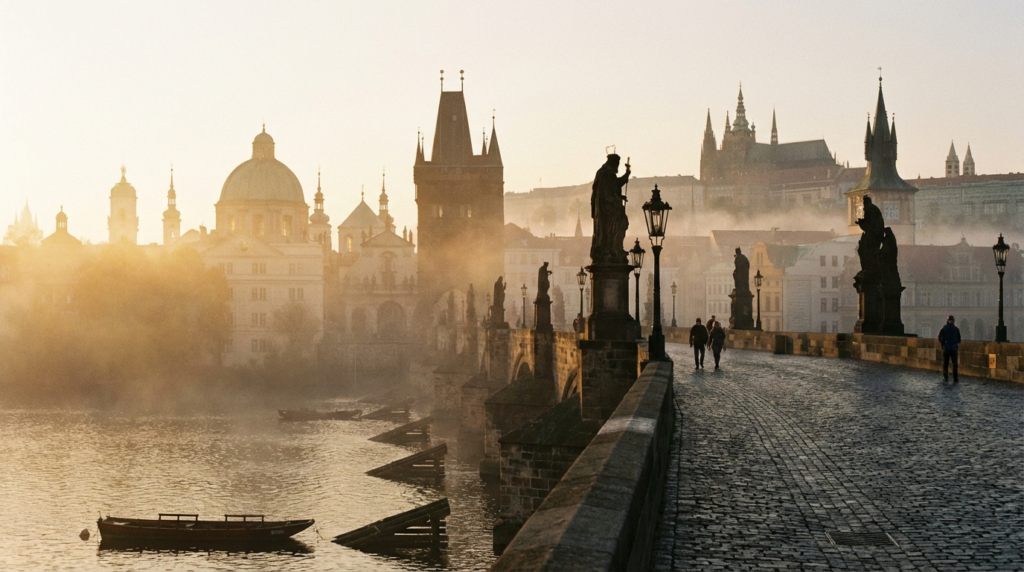
Day 1, Arrival + Old Town orientation: Cross the Charles Bridge at dawn before tourists arrive (seriously, go at 6am, you’ll have it to yourself). Breakfast at a local bakery (50 CZK / ~€2 for a freshly baked rohlik and coffee). Afternoon: Josefov (Jewish Quarter) walking tour, the oldest surviving Jewish cemetery in Europe is extraordinary. Evening: beer in one of the old town square terrace bars watching the astronomical clock (the mechanism, which dates to 1410, performs a small show hourly).
Day 2, Prague Castle + Malá Strana: Prague Castle complex is the largest ancient castle complex in the world, the full visit takes half a day. The St. Vitus Cathedral interior is one of Europe’s most spectacular Gothic spaces. Afternoon: walk down to Malá Strana (the Lesser Town) for the best café culture and the hidden monastery gardens of Wallenstein Garden. Dinner: svíčková (beef sirloin in cream sauce with bread dumplings) at a traditional pivnice (pub), budget €8-12. (source: U.S. travel advisories)
Day 3, Day trip: Kutná Hora: 1 hour by train from Prague (€4 return). The Sedlec Ossuary (the Bone Church), a 14th-century church decorated with the bones of 40,000-70,000 people, arranged into chandeliers, garlands, and coats of arms. Strange, beautiful, and genuinely historically significant. Plus the Cathedral of Saint Barbara, a masterpiece of Bohemian Gothic architecture. Return to Prague for the evening. (source: EU tourism statistics)
Days 4-6: Budapest, Hungary
Getting there: Prague to Budapest by train in 7 hours (€25-50 advance booking) or by overnight train (sleep on board, save a night’s accommodation). Budget carriers also fly PRG-BUD in 1 hour from ~€30.
Day 4, Arrival + Széchenyi Thermal Bath: The world’s largest thermal bath complex in Budapest’s City Park. Built in 1913, renovated in 2024, neo-baroque building with 21 pools at temperatures from 27°C to 38°C. Entry: €28 on weekdays, €32 weekends. Do this on day one, after travel, it’s the best possible arrival ritual.
Day 5, Buda Castle + Ruin Bars: Morning: Buda Castle district (Várhegy), a UNESCO World Heritage hilltop with the Hungarian National Gallery and the Fisherman’s Bastion viewpoint. The view over the Danube, Parliament, and the Chain Bridge is Budapest’s defining image. Afternoon: Great Market Hall for lunch (lángos, deep-fried dough with sour cream and cheese, €3). Evening: the ruin bar district in the Jewish Quarter, Szimpla Kert (the original) and Instant-Fogas are the must-visits. A night out in Budapest costs remarkably little, Hungarian craft beer and cocktails at €3-5.
Day 6, Parliament + Danube Cruise: Hungary’s Parliament building is the largest in Europe and one of the most beautiful Neo-Gothic structures in the world. Entry: €18 with mandatory guided tour (book online in advance, it sells out). Evening: 2-hour Danube river cruise with wine included (~€30), the illuminated Parliament at night from the water is Budapest’s most iconic sight.
Days 7-10: Krakow, Poland
Getting there: Budapest to Krakow by train: 10-11 hours with a connection in Budapest or Bratislava (€25-40). Budget flights: 1 hour from ~€40. Night bus is the cheapest option (~€15 on FlixBus).
Day 7, Wawel Castle + Old Town: Wawel Royal Castle sits on a limestone hill above the Vistula river and was the seat of Polish kings for 500 years. The State Rooms and Royal Private Apartments require advance ticket booking (€12-18 depending on what you visit). The Dragon’s Den (a limestone cave under the castle with a fire-breathing dragon sculpture), entry €4, the most fun €4 you’ll spend in Poland. Evening: milk bar dinner (bar mleczny), communist-era cafeteria serving traditional Polish food at ridiculously low prices (€4-6 for a full meal). The most authentic cheap eating experience in Eastern Europe.
Day 8, Auschwitz-Birkenau: This day requires full emotional commitment. The Auschwitz I and Auschwitz-Birkenau memorial and museum is one of the most important historical sites in the world, the largest Nazi concentration and extermination camp, where 1.1 million people were murdered between 1940-1945, the majority Jewish. Entry is free. Guided tours (required for Auschwitz I) cost €40. The morning block (7:30-11:30am) before crowds arrive is recommended. Allow a full day and return to Krakow for a quiet evening.
Day 9, Wieliczka Salt Mine + Kazimierz: Morning: Wieliczka Salt Mine (14km from Krakow), a UNESCO World Heritage Site with 300km of underground passages, salt sculptures, underground lakes, and a full ballroom chapel carved entirely from salt 135m below ground. Entry: €25, tours run continuously. Afternoon: Kazimierz (the historic Jewish Quarter), atmospheric cafes, the Old Synagogue, the Remuh Synagogue and Cemetery (one of the best-preserved Jewish cemeteries in Europe). Dinner in Kazimierz has the best restaurant value in Poland.
Day 10, Departure: Krakow John Paul II Airport (KRK) with flights to all major European hubs and US/Canada (LOT Polish Airlines direct to New York).
Budget Breakdown: 10 Days
| Category | Budget (€) | Mid-range (€) |
|---|---|---|
| Flights (return from Western Europe) | 80-150 | 150-300 |
| Intercity trains/buses | 60-80 | 80-120 |
| Accommodation (10 nights) | 280-400 | 500-700 |
| Food (10 days) | 150-200 | 250-350 |
| Activities and entry fees | 120-160 | 180-250 |
| TOTAL | €690-990 (~$750-1,100) | €1,160-1,720 (~$1,270-1,870) |
Frequently Asked Questions
Is Eastern Europe safe to travel in 2026?
Prague, Budapest, and Krakow are among the safest major cities in Europe with very low violent crime rates. Petty theft (pickpocketing) is the main risk in tourist areas. The UK Foreign Office, US State Department, and Australian DFAT all rate these destinations as safe for travel with standard precautions.
What is the best time of year to visit Eastern Europe?
May-June and September-October offer the best combination of good weather, lower crowds, and reasonable prices. July-August is peak season. December is magical for Christmas markets in Prague and Krakow, though cold (-5°C to +5°C).
Do I need visas for Czech Republic, Hungary, and Poland in 2026?
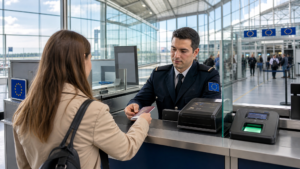
All three are EU/Schengen members. EU/EEA citizens: no visa, no border controls. US/Canadian/Australian citizens: visa-free for up to 90 days within any 180-day period. UK citizens (post-Brexit): visa-free for 90 days per 180-day period under bilateral agreements.
What currency should I bring to Eastern Europe?
Three different currencies: Czech Koruna (CZK), Hungarian Forint (HUF), Polish Zloty (PLN), none use the Euro. Use ATMs in each country for local currency. Avoid exchange offices at airports and tourist areas (terrible rates). Revolut, Wise, and Charles Schwab debit cards offer excellent exchange rates with no fees.
Can I do this itinerary without a car?
Completely. All three cities have excellent public transport, and intercity connections are by train and bus. Prague, Budapest, and Krakow are entirely walkable in their historic centers. A car would be actively inconvenient given parking limitations in old town areas.
Related Europe Guides
FAQ
Why trust this information?
Profiles follow a quality checklist and are updated when new verified data is available.
How do I request corrections?
Use the contact page to submit updates with supporting details.