Warsaw 3-Day Itinerary: The Best Things to Do in 2026


title: “Warsaw 3-Day Itinerary: The Best Things to Do in 2026”
slug: “warsaw-3-day-itinerary”
meta_description: “Planning 3 days in Warsaw? Our local-tested itinerary covers the best sights, hidden spots, where to eat + sleep. Updated 2026.”
category: city-guides-europe
author: Sophie Laurent
date: 2026-04-24
affiliate_disclosure: “This post contains affiliate links. We earn a small commission at no extra cost to you.”


Warsaw 3-Day Itinerary: The Best Things to Do in 2026
TL;DR


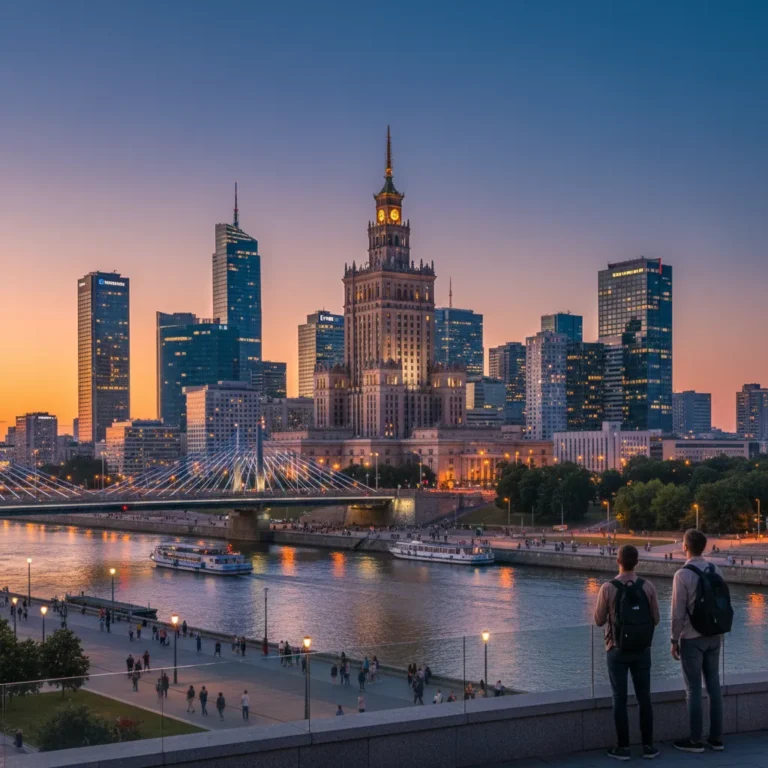
Warsaw is the European capital that refuses to be the version of itself that every guidebook wrote about 30 years ago. Yes, 85% of the city was destroyed in World War II. Yes, the Old Town was rebuilt brick-for-brick using Bellotto’s 18th-century paintings as the reference. But Warsaw in 2026 is not a museum to its own destruction — it is the biggest, richest, fastest-growing capital in Central Europe, with a modern skyline that jumped up between 2015 and 2025 and a food scene that the rest of Europe is finally noticing.

This Warsaw 3-day itinerary is the one I send to friends who want to see modern Warsaw, not just the reconstructed postcard version. Which museums actually matter. Where locals eat pierogi when they are not performing Polishness for tourists. And how to move around a city that is bigger and more spread out than the brochure suggests.

Find flights to Warsaw on Aviasales — LOT, Ryanair, and Wizz Air all run cheap routes from across Europe.


How to Get to Warsaw

Warsaw has two airports. Warsaw Chopin (WAW) is 10 km south of the centre — train S2 or S3 direct to Warszawa Centralna in 20 minutes for 4.80 PLN (€1.15, free on a 24-hour pass). Bus 175 also runs to the centre in 30–40 minutes for the same price. Warsaw Modlin (WMI) is 40 km north — used by Ryanair, bus or Modlin Bus (45 PLN / €10.50) runs to the centre in 50–60 minutes.

For rail travellers, Warsaw is a major PKP Intercity hub. Berlin–Warsaw takes 6h (€35–70), Prague–Warsaw 8h via Katowice (€40–70), Vienna–Warsaw 7h30 (€40–70), and the night train from Kraków takes 7h (€20–40) for a beds-in-a-compartment sleeper. All arrive at Warszawa Centralna. See our Eurail Pass Guide 2026 for Polish rail pass logic.

FlixBus runs from Prague (10h, €20–35), Berlin (9h, €25–40), Vilnius (8h, €25–35). Station Warszawa Zachodnia (West, connected to metro line M2).


Where to Stay in Warsaw: 3 Neighbourhoods Locals Recommend

Warsaw hotels are excellent value — central 4-stars often run €80–140/night, a fraction of Western Europe at similar quality.

Śródmieście (City Centre) — The modern commercial heart around Centralna station, Palace of Culture, Nowy Świat shopping street. 3-star hotels 280–450 PLN (€65–105)/night, 4-star 500–800 PLN (€117–187). Business travellers’ district, quiet at night, convenient for trains.

Stare Miasto + Powiśle — The Old Town plus the embankment below it. 3-stars 350–500 PLN (€82–117)/night. Walking distance to the castle, cathedrals, and river walk. More atmospheric.

Praga — The gritty-hip east side across the Vistula. Surviving original pre-war architecture (Praga was not destroyed). Street art, jazz clubs, independent restaurants. 3-stars 250–380 PLN (€58–89)/night. 15 min tram to the centre. Best for repeat visitors.

Powiśle / Solec — The hip neighbourhood along the Vistula with the new Copernicus Science Centre, the Neon Museum, and the best river-walking access. 3-stars 350–500 PLN (€82–117)/night. Walking distance to Old Town.

Neighbourhood Price Range/Night Best For Walk to Old Town
Śródmieście €65–187 Business, convenience 15 min or tram
Stare Miasto €82–117 First-timers, walkers 0 min
Powiśle €82–117 Hip, riverside, cafés 15 min
Praga €58–89 Value, authentic 20 min or 10-min tram

[Source: Booking.com Warsaw]

Compare 1,500+ Warsaw hotels on Booking.com — free cancellation on most bookings.


Day 1: Old Town, Royal Castle, and Your First Pierogi

Morning (8:30 – 13:00)

Start in the Old Town before 9am. The meticulously rebuilt medieval quarter is at its best when the tour groups have not arrived yet. Plac Zamkowy (Castle Square) with the Sigismund’s Column (1644, the oldest monument in Warsaw) and the Royal Castle behind it is the classic opening shot.

The Royal Castle (Zamek Królewski) — €12 / 50 PLN, or free on Wednesdays — is the former seat of Polish kings, destroyed 1944, rebuilt 1971–84. The Great Assembly Hall, the Marble Room, and the Canaletto Room (with Bernardo Bellotto’s 18 paintings of 1770s Warsaw — the same paintings used as the template for postwar reconstruction) are the highlights. Budget 1.5 hours.

Walk the Rynek Starego Miasta (Old Town Square) — the colourful burghers’ houses around the open square, with the Warsaw Mermaid statue in the middle. St. John’s Cathedral on the south side (free nave, small crypt ticket 10 PLN / €2.30 to see the coronation tombs of Polish kings).

Continue through Barbakan (the Barbican fortification gate) into Nowe Miasto (New Town, still 17th-century old, just “new” relative to Stare Miasto). The Marie Curie birthplace museum (Freta 16, 14 PLN / €3.30) is small but charming if you care about Curie’s legacy.

Afternoon (13:00 – 17:30)

Lunch: Zapiecek (several locations, the Freta 1 branch near the Old Town is the classic) — pierogi chain with dozens of fillings (ruskie with potato + cheese, meat, cabbage + mushroom, fruit-sweet) at 22–32 PLN (€5.20–7.50) per portion of 9 pierogi. Touristy but solid. For a real “milk bar” (bar mleczny, a Soviet-era cafeteria tradition serving cheap homemade food), try Bar Prasowy (Marszałkowska 10/16). Three-course lunch 25–40 PLN (€5.90–9.40). Communist aesthetic, amazing soup.

After lunch, walk or tram south to the Palace of Culture and Science (pl. Defilad 1). The 1955 Stalinist wedding-cake skyscraper — 237 metres, the tallest building in Poland when finished, an uncomfortable gift from Stalin to the Poles. The 30th-floor observation terrace costs 25 PLN (€5.90) and has a wide view — worth it if the weather is clear, skippable if overcast.

Walk north through Plac Piłsudskiego to the Tomb of the Unknown Soldier (free, changing of guard every hour) and into Ogród Saski (Saxon Garden) — Warsaw’s oldest public park. Free, always open.

End the afternoon at Nowy Świat / Krakowskie Przedmieście — the long elegant 19th-century boulevard with Warsaw University, Polish Academy of Sciences, and the Presidential Palace. This is where Warsaw shows off. Stop at Blikle (Nowy Świat 35) for the famous Polish doughnuts (pączki, 5–7 PLN / €1.20–1.70) — the shop has been at this address since 1869.

For more Central European trip context, see our Best Budget Eastern Europe Trip 2026: Prague, Budapest, Krakow and our Poland Budget City Break Itinerary 2026.

Attraction 2026 Price Time Needed Book Ahead?
Royal Castle 50 PLN (€12) or free Wed 1.5h No
POLIN Museum 45 PLN (€10.50) 2.5–3h Yes
Warsaw Uprising Museum 35 PLN (€8.20) 2–3h Yes
Palace of Culture viewing deck 25 PLN (€5.90) 30 min No
Copernicus Science Centre 57 PLN (€13.30) 2.5h Yes
Wilanów Palace 40 PLN (€9.40) 2h No
Łazienki Park Palace on Water 35 PLN (€8.20) 1h No
Neon Museum (Praga) 15 PLN (€3.50) 45 min No
3-day travel card 36 PLN (€8.40)

[Source: Warsaw Tourism, POLIN]

Evening (19:00 – 22:30)

Dinner: Podwale 25 (Piwna 49/51, Old Town) — a proper Polish tavern with goulash, pierogi, bigos (hunters stew), pork knuckle, and dark beer, in a cellar setting. 45–75 PLN (€10.50–17.50) per main. Or Specjały Regionalne (Nowy Świat 27) for Polish regional cooking in a more upmarket setting, mains 50–85 PLN.

For modern Polish at Michelin-level, Nolita (Wilcza 46) does a tasting menu at 490 PLN (€115). Book 2 weeks ahead.

After dinner, climb the stairs or take the elevator up to Taras Widokowy at the Palace of Culture for the lit-up night view — the viewing deck is open until 10pm in summer. Or walk along the river to the Centrum Nauki Kopernik (Copernicus Science Centre) observation deck on the roof (free, open until sunset).


Day 2: POLIN, the Uprising Museum, and Warsaw’s Hard History

Day 2 is the history day. Emotionally heavy but essential to understanding the city.

Morning (9:00 – 13:00)

Start at the POLIN Museum of the History of Polish Jews (Mordechaja Anielewicza 6). Opened 2013 on the site of the former Warsaw Ghetto. 45 PLN (€10.50) for the core exhibition, free on Thursdays with advance ticket. Budget 2.5–3 hours minimum — the chronological walk-through tells 1,000 years of Polish-Jewish history from the first settlements in the 11th century through the Holocaust. Voted European Museum of the Year 2016. [Source: POLIN official]

Exit POLIN and walk past the Monument to the Ghetto Heroes (Nathan Rapoport, 1948) and along the Anielewicza route through the former Ghetto. Only a few pre-war Warsaw buildings survived — the rest are markers in the pavement showing the ghetto wall’s former line. The Ghetto Wall fragments at Sienna 55 and Złota 62 are the rare physical remnants.

Afternoon (13:00 – 17:30)

Lunch in the Muranów neighbourhood. Pardon, To Tu (Plac Grzybowski 12/16) does Middle-Eastern-inflected Polish lunch with excellent vegetable plates at 35–55 PLN (€8–13). Or Cava Luka (Solec 81) for modern Polish in Powiśle.

After lunch, Warsaw Rising Museum (Muzeum Powstania Warszawskiego) — Grzybowska 79. 35 PLN (€8.20). The 2004-opened museum commemorates the 1944 Warsaw Uprising — 63 days of civilian-led combat against Nazi occupation that ended with Germany razing 85% of the city in retaliation while the Red Army waited across the river. Intense, dense, 2–3 hours. The reconstructed sewer crawl that uprising fighters used to move between districts is not for the claustrophobic but is worth the experience.

Outside the museum, walk to the Wolski cemetery memorial site if time permits, or the Umschlagplatz monument where 300,000 Jews were loaded onto trains for Treblinka.

Evening (18:30 – 22:30)

Dinner: Bibenda (Nowogrodzka 10) — modern Polish cooking with seasonal Polish ingredients. Mains 55–85 PLN (€13–20). Or Alewino (Mokotowska 48) for Polish tapas-style small plates with Polish wines.

For a different mood, cross the river to Praga. Skład Butelek (Ząbkowska 38) is a classic Praga bar in a surviving pre-war building — vodka flights, craft beer, and a cellar interior that feels like 1930s Warsaw. Pre-war Praga nightlife is genuinely one of the most atmospheric in Central Europe.


Day 3: Parks, Palaces, and a Gentler Warsaw

Day 3 lightens up after two heavy days.

Morning (9:00 – 13:00)

Start at Łazienki Park (Agrykola 1). Warsaw’s biggest and most beautiful park — 19th-century formal gardens, peacocks, the Palace on the Water (Pałac na Wyspie, 35 PLN / €8.20, Polish King’s summer residence on an artificial lake), the Amphitheatre, the Chopin Monument. Free to enter the park, paid for palace interiors.

If you are in Warsaw on a Sunday between mid-May and late September, the free Chopin piano concerts at noon and 4pm under the Chopin monument are the highlight. Pianists from the annual Chopin competition play the composer’s own works. Free, open-air, and extraordinary. [Source: Chopin Park Concerts]

From Łazienki, take bus 116 or 180 south to Wilanów Palace (Kostki Potockiego 10/16). The 17th-century Baroque summer residence of Polish king Jan III Sobieski (who defeated the Ottomans at Vienna in 1683). 40 PLN (€9.40) palace interior, 10 PLN gardens only. Think Polish Versailles. Budget 2 hours including gardens.

Afternoon (13:00 – 17:00) — Option A: Praga Deep

Cross the river by tram 3 or 7 to Praga. The district that survived WWII mostly intact is the authentic pre-war Warsaw — scarred brick, Orthodox churches, real tenement courtyards with shrines.

Afternoon (13:00 – 17:00) — Option B: Modern Warsaw

Copernicus Science Centre (Wybrzeże Kościuszkowskie 20, 57 PLN / €13.30) on the Vistula embankment. Hands-on science museum that is much better than the usual kids-only pitch — adults enjoy the chaos-physics and biology exhibits. 2.5 hours.

Walk the Vistula riverbank — the pedestrianised west bank below the Royal Castle is one of the best river walks in Europe, with bike paths, rotating exhibits, summer beach bars (plaża miejska), and the Copernicus Monument. The Multimedia Fountain Park (Skwer 1 Dywizji Pancernej) runs free water-and-light shows summer evenings Friday–Sunday.

Or the National Museum (Aleje Jerozolimskie 3, 25 PLN / €5.90) — the national collection of Polish art with Jan Matejko’s enormous Battle of Grunwald and the Faras Gallery of Nubian Christian frescoes (one of the largest outside Egypt).

Evening (18:30 – 22:30)

Last dinner: Elixir by Dom Wódki (Wierzbowa 9/11) — an 1826-era vodka house reimagined as a modern Polish restaurant. Vodka flight pairings with regional Polish small plates. Set menus from 290 PLN (€68). Book a week ahead.

For a real-Warsaw last dinner at normal prices, Warszawa Powiśle (Kruczkowskiego 3b) — the former ticket booth of the Powiśle train station turned bar-café with burgers, Polish comfort plates, craft beer. 45–75 PLN per main.

End the evening with vodka shots at Chmury (11 listopada 22, Praga) or the new Hydrozagadka (Zbieracz 3, Praga). Warsaw’s nightlife goes until 4am on weekends, longer in Praga. A shot of quality Polish vodka is 12–18 PLN (€2.80–4.20).

Compare flights home on Aviasales — 200+ airlines in one search.


Warsaw 3-Day Budget Breakdown

Here is what three days in Warsaw actually costs per person in 2026, based on mid-range choices:

Category Budget Mid-Range Splurge
Accommodation (3 nights) €60–120 (hostel/Airbnb) €195–345 (3-star hotel) €420–750 (4-star central)
Food & drink (3 days) €40–70 €90–150 €200–350
Museums & sites €30–50 €55–95 €120–200
Local transport (3-day card) €8.40 €8.40 €8.40 or taxis €30
Total per person €140–248 €350–598 €750–1,310

Warsaw is one of the cheapest major European capitals. A milk bar lunch costs €6. A full Polish dinner with vodka runs €20–30. The free Thursday at POLIN and free Wednesday at the Royal Castle are real savings worth timing your visit around.


Getting Around Warsaw Without a Car

Do not rent a car. Warsaw traffic is slow and parking is hard to find in the centre.

ZTM Warsaw runs 2 metro lines, 30+ tram routes, and buses on a single ticket. Single ticket 4.80 PLN (€1.15, 75 minutes including transfers). 24-hour pass 18 PLN (€4.20). 3-day travel card 36 PLN (€8.40) — the best value for most tourists.

The M1 metro line runs north-south through the centre; M2 runs east-west. Trams cover everything the metro does not. The system works Google Maps–style if you enter origin and destination. Buy tickets at machines at every metro station, vending machines at major tram stops, or the Jakdojade app.

Taxis: Uber, Bolt, and FreeNow all operate. Ride across the centre is 15–30 PLN (€3.50–7). Regular metered taxis charge 6 PLN start + 3 PLN/km.


When to Visit Warsaw in 2026

April–May: Spring warm-up, 10–20°C, blooming chestnut trees on Nowy Świat in May. Łazienki Park rhododendrons in late May.

June–August: 18–28°C, long days, outdoor life, Chopin concerts in Łazienki every Sunday. The river beach bars (plaża miejska) open in late May.

September–October: Sweet spot. 10–20°C, golden light, fewer tourists, Warsaw Film Festival in October.

November–February: Cold (−5 to 4°C), short days, occasional snow. Warsaw Christmas Market at the Old Town Square runs late November to early January. Hotels drop 25–30% outside Christmas/New Year.

Book your Warsaw trip on Booking.com — Christmas market weekends fill 2 months ahead.


FAQ: Warsaw 3-Day Itinerary

Is 3 days enough for Warsaw?

Three days covers the major museums (POLIN, Rising Museum), the Old Town, and one park or neighbourhood deep-dive. If you want to add Kraków (2h30 by train, worth 2 days) or the Masurian Lakes (3h by car), stretch to 5–7 days for a full Poland trip.

How much does a trip to Warsaw cost in 2026?

A mid-range 3-day Warsaw trip costs €350–598 per person including 3-star hotel, meals, museums, and transport. Budget travellers in hostels can do it for €140–248. Warsaw is about 20% cheaper than Prague and 40% cheaper than Berlin for equivalent quality. [Source: Budget Your Trip Warsaw]

Is Warsaw safe for tourists in 2026?

Warsaw is among the safer European capitals. Petty crime around Centralna station at night is the main risk. Common tourist scams: unmetered taxis at Centralna (use app only), overcharging at touristy Old Town restaurants that do not post prices, and the occasional scam at currency exchange booths with “no commission” signs. Use PKO BP, PeKaO, or ING ATMs only.

Do I need to learn Polish to visit Warsaw?

No. English is well-spoken by under-40s in the centre, at hotels, restaurants, and museums. Signs in the metro and museums are bilingual. Basic greetings (dzień dobry / dziękuję / do widzenia) are appreciated. Polish is a Slavic language with seven cases — do not try to learn it in 3 days.

What food is Warsaw known for?

Warsaw’s classics are pierogi (dumplings with various fillings), żurek (sour rye soup, often served in a bread bowl), bigos (hunter’s stew with cabbage and meat), kotlet schabowy (breaded pork cutlet, the Polish equivalent of a schnitzel), gołąbki (stuffed cabbage rolls), and pączki doughnuts. Modern Warsaw restaurants do clever takes on all of these. Polish vodka — Żubrówka (bison grass), Chopin, Belvedere — is better than you probably expect and is the national drink.

Is the POLIN Museum worth the time?

Yes, absolutely. POLIN covers 1,000 years of Jewish life in Poland before, during, and after the Holocaust — not just the Holocaust itself. The permanent exhibition is chronological, thorough, and emotionally weighted. 2.5–3 hours minimum. It has been voted European Museum of the Year and deserves the ranking. Free Thursdays with advance booking. [Source: POLIN official]

Should I do Warsaw or Kraków for a Polish city visit?

Both if possible. Warsaw is modern, bigger, more complicated — the rebuilt postwar capital with the best museums and strongest restaurant scene. Kraków is older, more postcard-pretty, with an intact medieval centre and Auschwitz-Birkenau 1.5 hours away. They are 2h30 apart by train (150 PLN / €35 Pendolino). A combined 5–6 day trip is ideal: 3 days Warsaw + 2–3 days Kraków.


Sophie Laurent writes practical European city guides at eurotripfinder.com — real prices, real neighbourhoods, no AI fluff. More capitals coming throughout 2026.

Athens 3-Day Itinerary: The Best Things to Do in 2026


title: “Athens 3-Day Itinerary: The Best Things to Do in 2026”
slug: “athens-3-day-itinerary”
meta_description: “Planning 3 days in Athens? Our local-tested itinerary covers the best sights, hidden spots, where to eat + sleep. Updated 2026.”
category: city-guides-europe
author: Sophie Laurent
date: 2026-04-24
affiliate_disclosure: “This post contains affiliate links. We earn a small commission at no extra cost to you.”


Athens 3-Day Itinerary: The Best Things to Do in 2026
TL;DR


Athens is the Western world’s oldest continuously inhabited capital, and for 2,500 years people have argued about whether it has gone downhill. What tourists miss is that the 2004 Olympic cleanup plus 15 years of crisis-and-renovation have left modern Athens with a proper urban core — pedestrianised streets linking the major archaeological sites, a metro that opened up into Byzantine ruins, and a restaurant scene that finally caught up with the produce the country has always had.

This Athens 3-day itinerary is the one I send to friends who want the honest city. Where Athenians actually drink ouzo. Which Acropolis gate to use. And how to spend a third day that is not just another ruin (unless you genuinely want another ruin, which is fine).

Find flights to Athens on Aviasales — Aegean and Ryanair both run cheap European routes.


How to Get to Athens

Athens International Airport (ATH) is 33 km east of the centre. The Metro line 3 (blue) runs direct to Syntagma Square in 40 minutes for €9 single (€8 per person for 2+ people, €16 return). The X95 express bus runs 24 hours to Syntagma in 60–90 minutes for €5.50. The 3-day tourist ticket (€20) includes round-trip airport metro. Licensed airport taxis are a flat €44 daytime, €59 at night (midnight–5am). [Source: Athens Airport transport]

For rail travellers, Athens is at the end of the Greek network. TrainOSE runs trains from Thessaloniki (4h, €40–60), but most people arrive by air or by ferry from the islands. Piraeus port is the gateway — ferries to the Greek islands leave from here 24/7.

FlixBus runs some international coaches but most visitors fly into Athens.


Where to Stay in Athens: 3 Neighbourhoods Locals Recommend

Athens hotels are generally good value. A 3-star in the centre runs €80–140/night — half the Western European capitals at similar quality.

Plaka / Syntagma — The tourist heart below the Acropolis. Small streets, tavernas, walking distance to every major sight. 3-star hotels €90–160/night, 4-star €160–280. Can be noisy on summer weekends.

Monastiraki / Psirri — Flea market, street art, nightlife, restaurants. €75–130/night for 3-stars. Grittier at night but walkable and hip.

Koukaki / Makrygianni — The residential neighbourhood just south of the Acropolis, with the Acropolis Museum at its edge. Hotels €80–140/night. Quieter than Plaka, with good local tavernas on Drakou and Veikou streets. This is where I stay.

Kolonaki — Upmarket Athens — embassies, boutiques, cocktail bars, the National Gallery. €110–180/night. 15-minute walk to Syntagma.

Neighbourhood Price Range/Night Best For Walk to Acropolis
Plaka €90–280 First-timers, walkers 5 min
Monastiraki €75–130 Nightlife, value 10 min
Koukaki €80–140 Quiet, locals’ food 10 min
Kolonaki €110–180 Upscale, shopping 20 min

[Source: Booking.com Athens]

Compare 2,500+ Athens hotels on Booking.com — free cancellation on most bookings.


Day 1: Acropolis, the Greatest Ruin, and Your First Souvlaki

Morning (7:30 – 13:00)

Start at the Acropolis at 8am opening. The main entrance via Dionysiou Areopagitou Street (south side, near the Acropolis Museum) opens 8:00am April–October, 8:30am November–March. Book tickets online in advance — the “regular adult” ticket is €20 summer (€10 winter), but the combined 5-site package (Acropolis + Ancient Agora + Roman Forum + Library of Hadrian + Kerameikos + Temple of Olympian Zeus) is €30 for 5 days and saves you €30 if you visit three of the sites. [Source: Acropolis tickets official]

Walk the Propylaea entrance gate, past the Temple of Athena Nike, into the plateau to the Parthenon (447–432 BC, still the single most influential building in Western architecture). Continue to the Erechtheion (with the porch of the six Caryatids — five are replicas, the sixth is in the British Museum, the topic remains diplomatically fraught). The Acropolis panorama from the south-east corner gives you Athens spread across the plain all the way to Mount Hymettus.

Budget 1.5–2 hours on the rock itself. The whole ascent takes 20–30 minutes by foot from either gate. Bring water — there are no refill stations above the ticket booths, and at 35°C on an August morning, the marble reflects heat like a frying pan.

Descend via the south slope past the Theatre of Dionysus (5th-century BC, where Aeschylus, Sophocles, and Euripides premiered their plays) and the Odeon of Herodes Atticus (2nd century AD, still used for summer concerts). Both are included in the Acropolis ticket.

Afternoon (13:00 – 17:30)

Lunch at O Thanasis (Mitropoleos 69, Monastiraki) or O Kostas (Pentelis 5, Syntagma). Both are the classic Athens souvlaki institutions — a single wrap (pita with pork, onions, tomato, tzatziki) costs €2.80–3.50. Stand at the counter. Eat standing up. Order two. This is the real Athens lunch.

If you want sit-down, Karamanlidika tou Fani (Sokratous 1, Monastiraki) does Greek deli plates — cured meats, cheese, pickles, 15 kinds of olive — at €9–14 per plate. Lukumades street nearby for the traditional small round doughnuts in honey syrup.

After lunch, the Acropolis Museum (Dionysiou Areopagitou 15, €15 summer / €10 winter, open until 8pm Mon-Sun). Built 2009 on top of visible ancient ruins under glass floors. The top floor is arranged to the exact shape and orientation of the Parthenon, so you see the pediments and metopes as they would have appeared on the building. Budget 2 hours. [Source: Acropolis Museum]

Walk back up the pedestrianised Dionysiou Areopagitou — one of Europe’s great streets. Street performers, orange trees, the Acropolis looming above, the Temple of Olympian Zeus to the east. Free.

Attraction 2026 Price Time Needed Book Ahead?
Acropolis + slopes €20 summer / €10 winter 2h YES summer
Acropolis 5-site combo €30 (5 days) 5 hours total Yes
Acropolis Museum €15 / €10 winter 2h No
Ancient Agora + Stoa In combo / €10 1.5h No
National Archaeological Museum €12 / €6 winter 2.5h No
Temple of Olympian Zeus In combo / €8 30 min No
Panathenaic Stadium €10 45 min No
Benaki Museum of Greek Culture €12 1.5h No
Mount Lycabettus funicular €10 return 15 min No
3-day transit + airport €20

[Source: Visit Greece official, This Is Athens]

Evening (19:00 – 22:30)

Dinner: Klimataria (Theatrou 2, Psirri). Honest Greek taverna open since 1927. Moussaka, stifado, grilled fish, live rebetiko music on weekends. Budget €20–30 per person. Or Mani Mani (Falirou 10, Koukaki) — a modern upmarket Greek restaurant with regional southern Peloponnese dishes, mains €14–22.

After dinner, Monastiraki Square at night. The flea market is shuttered but the tavernas and bars fill in. Climb to Thisseion rooftop bar (Apostolou Pavlou 35) for a view of the illuminated Acropolis and Parthenon — a drink costs €9–14, and the view is the best free-to-access evening experience in Athens.

For more Athens and Greek island trip context, see our Best 5-Day Greece Itinerary: Athens and Santorini 2026.


Day 2: Ancient Agora, National Museum, and Modern Athens

Morning (9:00 – 13:00)

Start at the Ancient Agora (enter via Adrianou Street, Monastiraki). The marketplace where Socrates argued with his students. Included in the €30 combo, or €10 standalone. The restored Stoa of Attalos (2nd-century BC, rebuilt 1950s) houses the Agora Museum — pottery, ostraka (ancient voting shards with politicians’ names scratched on them), a small but excellent collection. The Temple of Hephaestus on the west side is the best-preserved Greek temple in the world — better-preserved than the Parthenon. Budget 1.5 hours.

From the Agora, cross into the Roman Forum + Library of Hadrian (same combo ticket). Budget 30 minutes combined. The Tower of the Winds (1st century BC) is a small octagonal clock tower with carvings of the eight wind deities — one of the strangest and coolest ancient monuments in the city.

End the morning at Varvakios Central Market (Athinas Street). The fish, meat, and produce market — the fish hall is pure theatre, especially early morning. The meat hall has taverna stalls where you can sit at a counter and eat fresh-cooked whatever you just saw for sale. Lunch for €12–18.

Afternoon (13:30 – 18:00)

Lunch at Diporto (Theatrou Street, inside Varvakios Market — literally in a basement). A 100-year-old no-menu, no-sign cellar taverna that serves whatever they cooked that day — fish soup, stuffed grape leaves, fava bean mash, bulk wine from the barrel. €12–20 per person. No reservations, arrive by 1pm.

Then the National Archaeological Museum (Patission 44, €12 summer / €6 winter, 9am–8pm summer / 9am–4pm winter). The most important Greek antiquities museum in the world. The Mask of Agamemnon, the Antikythera Mechanism (world’s first analog computer, 2nd century BC), the Poseidon of Artemision bronze, the Minoan frescoes from Akrotiri on Santorini. Budget 2.5–3 hours minimum, and that is rushing.

Walk or metro back to Syntagma. Changing of the Evzones (the presidential guard in traditional skirt uniform) happens on the hour at the Tomb of the Unknown Soldier in Syntagma Square. The elaborate Sunday 11am ceremony with full marching band runs about 30 minutes and is one of the better changing-of-guard rituals in Europe.

Evening (19:00 – 22:30)

Climb Filopappou Hill for sunset. Free, always open, the best view of the Acropolis with the Parthenon side-on against the setting sun. Entry via the path from Dionysiou Areopagitou. The climb takes 20–25 minutes from the gate to the Filopappou monument at the top. Bring water. Do not go alone after full dark in winter; fine in summer when crowds linger.

Dinner: To Kafeneio (Epicharmou 1, Plaka). A small no-English-menu, no-decorations taverna with cooked-behind-the-counter plates displayed in the window — point at what you want. Mains €8–14. Or if you want to go modern, CTC Urban Gastronomy (Paramythias 23, Metaxourgio) has a Michelin-star level at €95 for a 6-course tasting menu.

End the evening with a walk through Plaka by night. The district closes to cars, the tavernas spill onto the streets, and the old neighbourhood nobody quite redeveloped from the 1830s independence era stays charming despite the touristy edges.


Day 3: Coast, Islands, or Culture

Morning (8:30 – 13:30) — Option A: Delphi Day Trip

Delphi — the most important sanctuary in ancient Greece, 180 km north-west of Athens. The site with the Temple of Apollo, the Tholos, the theatre, and the stadium, plus the Delphi Museum (holding the Charioteer of Delphi). Public bus KTEL from Liosion terminal (€18 one-way, 3 hours). Organised day tours from Athens (€70–90 including transport, entry, and guide) are much easier. Budget a full day — leave by 7am, back by 8pm.

Morning (8:30 – 13:30) — Option B: Sounion + Coast

Cape Sounion and the Temple of Poseidon — 70 km south on the Athenian Riviera coastline. KTEL bus from Mavromateon terminal (€7 one-way, 2 hours). The 5th-century BC temple on the cliff overlooking the Aegean is best seen at sunset. Combine with swimming at Voula, Vouliagmeni, or Varkiza beaches along the way. Budget half-day.

Morning (8:30 – 13:30) — Option C: Modern Athens Walk

Start at Exarcheia — the radical-student neighbourhood with anarchist graffiti, record shops, and the 1973 Polytechnic uprising memorial. Coffee at Taf (Normanou 5, Monastiraki) for Athens’ best third-wave coffee. Walk through Neapoli to Lycabettus Hill funicular (€10 return, runs every 30 minutes). At 277 metres, Lycabettus is the highest point in central Athens with a 360-degree view.

Come down through Kolonaki — boutique shopping, cafés, the Benaki Museum of Greek Culture (Koumbari 1, €12). Four floors of Greek art and everyday objects from prehistoric to modern. Often ranked Athens’ second-best museum after the National Archaeological.

Afternoon (13:30 – 17:30)

Lunch: Vezené (Vrasida 11, Kolonaki) is a respected modern Greek restaurant — mains €18–32, reservations help. Or Nolan (Voulis 31, Syntagma) for Greek-Asian fusion by chef Sotiris Kontizas, mains €14–24.

Spend the afternoon on:

Evening (18:30 – 22:30)

Last dinner: Café Avissinia (Avissinias Square, Monastiraki). In the flea market square, Greek food with a more refined bent, live rebetiko on weekends. €30–45 per person. Or Aleria (Megalou Alexandrou 57, Metaxourgio) for a Michelin one-star tasting menu at €95.

For real-Athens last dinner, Oineas (Esopou 9, Psirri) — a modern bistro with takes on Greek classics and a strong Greek wine list. Mains €14–22.

End the night with rakomelo or tsipouro (grape spirit, €4–6 a shot) at one of the small bars off Iroon Square in Psirri. Or late-night loukoumades and honey at Lukumades (Aiolou 21) — open until 2am.

Compare flights home on Aviasales — 200+ airlines in one search.


Athens 3-Day Budget Breakdown

Here is what three days in Athens actually costs per person in 2026, based on mid-range choices:

Category Budget Mid-Range Splurge
Accommodation (3 nights) €75–135 (hostel/Airbnb) €240–420 (3-star hotel) €480–900 (4-star central)
Food & drink (3 days) €55–85 €105–170 €230–400
Archaeological sites + museums €40–60 €70–120 €130–220
Local transport (3-day + airport) €20 €20 €20 or taxis €60
Total per person €190–300 €435–730 €860–1,540

Athens is one of the better-value European capitals in 2026. Greek food costs 30–40% less than equivalent in France or Italy. The combined archaeological site ticket saves you €30 if you hit the main three. Beer at a neighbourhood bar is €4–5. Wine €3–5 a glass.


Getting Around Athens Without a Car

Do not rent a car. Athens traffic is genuinely chaotic and parking does not exist.

Athens Metro has 3 lines (red, blue, green). A single ticket is €1.20 (covers 90 minutes including transfers between metro, bus, tram). A 24-hour pass is €4.10. A 3-day tourist ticket with airport is €20 — best value for most visitors. Buy from machines in metro stations.

Buses and trams run on the same ticket system. The tram runs along the coast to the Athenian Riviera (Faliro, Glyfada). Useful for beach days, slow for central trips.

Taxis are cheap by European standards — €1.29 start + €0.74/km, plus €1 airport surcharge, double tariff after midnight. Beat is the dominant taxi app (owned by Daimler). Uber operates as Uber Taxi only in Athens — matches you with a licensed taxi at metered rate. Most rides across the centre cost €5–9.


When to Visit Athens in 2026

March–April: 12–22°C, spring flowers, Easter in Greek Orthodox tradition (April 12 in 2026, Greek Easter is one of the big annual events). Good time to visit if you do not mind some cooler evenings.

May–June: Sweet spot. 18–28°C, still bearable at midday on the Acropolis, everything open, crowds not yet at peak.

July–August: Dangerous heat. 33–40°C, occasional heatwaves above 42°C. Most Athenians leave for the islands or mountains. Tourists still come, but midday Acropolis visits become medical concerns. Hotels drop 15–20% from peak in these months as Greeks flee — airport and hotel availability is better than you would expect.

September–October: Second sweet spot. 20–28°C, crowds decline, Greek islands’ season winds down so flights and ferries are cheaper.

November–February: Cool (8–16°C), occasional rain. All archaeological sites open with shorter hours and lower ticket prices (winter rates). Athens in winter has almost no other tourists on the Acropolis — best time for photographers.

Book your Athens trip on Booking.com — Easter week fills up 2 months ahead.


FAQ: Athens 3-Day Itinerary

Is 3 days enough for Athens?

Three days covers the Acropolis, the ancient agora, the major museums, and either a day trip (Delphi, Sounion, Aegina) or deep Athens exploration. If you want to start hitting multiple islands or longer day trips, extend to 4–5 days. Most people combine 3 days in Athens with 4+ days on the Greek islands for a proper Greek trip.

How much does a trip to Athens cost in 2026?

A mid-range 3-day Athens trip costs €435–730 per person including a 3-star hotel, restaurant meals, archaeological sites, and a 3-day transport pass. Budget travellers in hostels can do it for €190–300. Athens is one of the cheapest major European capitals — 20% less than Rome, 30% less than Barcelona. [Source: Budget Your Trip Athens]

Is Athens safe for tourists in 2026?

Central Athens (Plaka, Syntagma, Monastiraki) is safe by day. At night, Omonia Square and certain parts of Kolokotroni / Exarcheia can feel edgier but serious violence against tourists is rare. Main risks: pickpocketing on metro line 3 (especially between airport and Monastiraki), taxi scams (always insist on the meter, “taximetro”), and overcharging at tavernas that do not display printed prices. Use Beat app for taxis.

Do I need to learn Greek to visit Athens?

No. English is widely spoken in the tourist core and by anyone under 50. Menus are bilingual or English-only in most central tavernas. Basic greetings (kalimera / efcharistó / yiasu) are appreciated. Learn “efcharistó” (thank you) — Greeks respond warmly to any attempt.

What food is Athens known for?

Athens’ classics are souvlaki (grilled meat skewers, wrapped or on a plate), gyros (rotating-spit meat in a pita with tzatziki and onions), moussaka (baked eggplant with meat and béchamel), pastitsio (Greek lasagne), stifado (beef stew with pearl onions and red wine), horiatiki (Greek salad — feta, tomatoes, cucumber, olives, no lettuce), and grilled fish by the kilo. Greek yogurt with honey and walnuts is the standard dessert. Ouzo, tsipouro, and retsina are the traditional spirits.

How do I get from Athens to the Greek islands?

Ferries to all major islands (Mykonos, Santorini, Crete, Paros, Naxos) leave from Piraeus Port — metro line 1 (green) from Monastiraki takes 25 minutes. Ferryhopper and FerryScanner are the best booking apps. Fast ferries to Santorini take 5 hours (€60–90), slow overnight ferries 9 hours (€35–55). Book 2–4 weeks ahead in July–August. Flights from Athens to Santorini, Mykonos, Heraklion (Crete) take 45 minutes and cost €70–180 on Aegean or Sky Express.

Is the Athens combined archaeological ticket worth it?

Yes, if you visit 3+ sites. The €30 combined ticket covers Acropolis, Ancient Agora, Roman Forum, Library of Hadrian, Kerameikos, and Temple of Olympian Zeus for 5 days. Separately, these would cost €20 + €10 + €4 + €4 + €4 + €8 = €50. Break-even at 3 sites. The ticket does not cover the Acropolis Museum (which is separate at €15) or the National Archaeological Museum (€12).


Sophie Laurent writes practical European city guides at eurotripfinder.com — real prices, real neighbourhoods, no AI fluff. More capitals coming throughout 2026.

Stockholm 3-Day Itinerary: The Best Things to Do in 2026

title: “Stockholm 3-Day Itinerary: The Best Things to Do in 2026”
slug: “stockholm-3-day-itinerary”
meta_description: “Planning 3 days in Stockholm? Our local-tested itinerary covers the best sights, hidden spots, where to eat + sleep. Updated 2026.”
category: city-guides-europe
author: Sophie Laurent
date: 2026-04-24
affiliate_disclosure: “This post contains affiliate links. We earn a small commission at no extra cost to you.”


Stockholm 3-Day Itinerary: The Best Things to Do in 2026
TL;DR


Stockholm is a city built on 14 islands between Lake Mälaren and the Baltic Sea, and the geography is the whole personality. Half of what you do here is crossing water — by ferry, by bridge, by subway tunnel under the harbour. What tourists miss is that Stockholm is genuinely compact. The old town (Gamla Stan), the museum island (Djurgården), and the hip south side (Södermalm) are all within 25 minutes of each other by public transport, and the system works like Swiss clockwork.

This Stockholm 3-day itinerary is the one I send to friends who want Stockholm beyond the Vasa ship and the ABBA costumes. Where locals do fika. Which museum is actually worth the entry fee. And how to eat real Swedish food without paying Noma prices.

Find flights to Stockholm on Aviasales — SAS, Norwegian, and Ryanair all run cheap European routes.


How to Get to Stockholm

Stockholm Arlanda (ARN) is 40 km north of the centre — further than most European capitals. The Arlanda Express train runs direct to Stockholm Central in 18 minutes for 299 SEK (€27) one-way, 598 SEK return. The commuter train (Pendeltåg) is much cheaper at 169 SEK (€15) but takes 40 minutes and requires an additional 150 SEK station-access fee. The Flygbussarna airport bus runs to Stockholm Central in 45 minutes for 119 SEK (€11) — the best value option.

If you are flying into Skavsta (the Ryanair airport 100 km south), the Flygbussarna is 189 SEK and takes 1h20. Bromma Airport (closer, smaller) has direct buses in 20 minutes for 99 SEK.

For rail travellers, SJ runs trains from Copenhagen (5h15, €50–90), Oslo (4h40, €40–80), and Gothenburg (3h, €30–70). All arrive at Stockholm Central. See our Eurail Pass Guide 2026 for pass details.


Where to Stay in Stockholm: 3 Neighbourhoods Locals Recommend

Stockholm hotels are high-priced but well-built. A central 3-star often has the same quality bedding and bathrooms as a 4-star in Southern Europe.

Gamla Stan — The medieval old town island. Small cobbled streets, the Royal Palace, Nobel Museum, postcard-perfect. 3-star hotels 1,800–2,500 SEK (€165–225)/night, boutique 4-star 2,800–4,200 SEK (€250–380). Quiet after dark because it empties out of tourists at 10pm.

Norrmalm / Central — The modern centre around Central Station. 3-star chains 1,500–2,200 SEK (€135–200)/night. Convenient for arrivals and museums, less charm, big on department stores.

Södermalm — The hip south island. Vintage shops, trendy bars, SoFo area, indie restaurants, views of Gamla Stan from the north shore. 3-star hotels 1,400–2,000 SEK (€125–180)/night. 10-min subway to the centre.

Östermalm — Elegant residential, embassies, Östermalms Saluhall food market, smart shopping on Biblioteksgatan. 3-star hotels 1,800–2,800 SEK (€165–250)/night. Quiet, classy, great for fine dining.

Neighbourhood Price Range/Night Best For T-bana to T-Centralen
Gamla Stan €165–380 First-timers, charm 2 min or walk
Norrmalm €135–200 Budget central 0 min
Södermalm €125–180 Hip, value 5 min
Östermalm €165–250 Quiet, dining 5 min

[Source: Booking.com Stockholm]

Compare 1,500+ Stockholm hotels on Booking.com — free cancellation on most bookings.


Day 1: Gamla Stan, the Royal Palace, and Your First Fika

Morning (9:00 – 13:00)

Start in Gamla Stan before 10am. The medieval island core — 14th-century buildings, cobbles, the Nobel Museum, the Royal Palace — fills with cruise-ship tour groups from 11am onward. At 9:30am you walk Stortorget square with only the locals and the ravens.

Start at the Nobel Museum (Börshuset, Stortorget 2, 140 SEK / €12.60). Smallish but well-curated — exhibits on every Nobel laureate since 1901, from physics to peace. Budget 1 hour. The Ice Bar stuff is at the other Nobel experience (the Nobel Prize Museum on Slussen, opening 2026 after delays — check status).

Walk to the Royal Palace (Kungliga Slottet). Three museums under one roof — Royal Apartments, Treasury, and Tre Kronor Museum. Combined ticket 200 SEK (€18). Budget 2 hours for all three. The changing of the guard happens at 12:15pm weekdays, 13:15pm Sundays and holidays — the mounted detail comes up from the stables, and the whole thing takes 40 minutes with marching band.

From the palace walk past the Storkyrkan (the cathedral, 60 SEK / €5.40 entry, free on Sundays for services) and down to Järntorget square for a proper fika.

Attraction 2026 Price Time Needed Book Ahead?
Nobel Museum 140 SEK (€12.60) 1h No
Royal Palace (3 museums) 200 SEK (€18) 2h No
Vasa Museum 210 SEK (€19) 1.5–2h Summer yes
Skansen 230 SEK (€21) summer 3–4h No
ABBA Museum 339 SEK (€31) 1.5h Yes
Nordiska Museet 180 SEK (€16) 1.5h No
Fotografiska 195 SEK (€17.50) 1.5h No
City Hall tour 150 SEK (€13.50) 45 min Summer yes
Archipelago ferry to Vaxholm 145 SEK (€13) return 3h round Summer yes
SL 72-hour travel card 250 SEK (€22.50)

[Source: Visit Stockholm official]

Afternoon (13:00 – 18:00)

Lunch: Tradition (Österlånggatan 1, Gamla Stan) — honest Swedish food in a 17th-century cellar room. Meatballs with cream gravy and lingonberry at 195 SEK (€17.50). The dagens lunch (daily lunch menu, 11:30am–2pm) is 165 SEK and includes salad, bread, coffee. Or for something quicker, Bastard Burgers on Stora Nygatan for a Swedish-style burger at 130 SEK (€11.70).

After lunch, walk across to Riddarholmen (the smaller island with the old church spire), then cross Riddarholmsbron bridge to City Hall (Stadshuset). The 1923 building with the iconic green copper tower hosts the Nobel Prize banquet every December 10. The tower climb (106 metres) is separate from the building tour — it is free to walk to the base, 80 SEK to go up. The Blue Hall + Golden Hall tour is 150 SEK and runs hourly 10am–3pm (summer 9am–4pm).

Walk back through Kungsholmen to Kungsgatan — the main shopping street — and explore the Kungliga Biblioteket (Royal Library, free, grand reading room worth a 15-minute visit) or the Central Station architecture. Or cross to Djurgården in preparation for tomorrow.

End the afternoon with fika at Vete-Katten (Kungsgatan 55). The 1928-founded pastry institution, with marble tables and 30+ kinds of cake. A coffee and a kanelbulle (cinnamon bun) or prinsesstårta (green marzipan-dome cake) costs 85–120 SEK (€7.70–11). The “second fika” of the day is essentially mandatory in Stockholm.

For broader Nordic context, see our Europe Off Season Budget Itinerary 2026.

Evening (19:00 – 22:30)

Dinner: Pelikan (Blekingegatan 40, Södermalm) — the 1664-year-old beer hall serving classic Swedish dishes in a huge cavernous room with beer-hall tables. Meatballs 195 SEK, herring 185 SEK, pyttipanna 170 SEK. Expect 20-min wait on weekends; they do not take reservations. For something upmarket, Kryp In (Prästgatan 17, Gamla Stan) does a 1-star-worthy Swedish menu at 550 SEK (€49.50) for three courses.

After dinner, stroll the Gamla Stan at night. The island empties at around 10pm and the lights on the waterline and across Riddarfjärden toward City Hall are one of the best urban night views in Northern Europe. Walk the Skeppsbron waterfront.


Day 2: Djurgården — Vasa, Skansen, and Where Stockholm Keeps Its Greatest Hits

Day 2 is Djurgården, the museum island, and it is the day most people remember.

Morning (9:00 – 13:30)

Take tram 7 from T-Centralen or Sergels Torg to Djurgården (15 minutes, free on SL pass). Or walk — it is 30 minutes from Central Station across Strömbron and past Strandvägen.

Start at the Vasa Museum (Galärvarvsvägen 14, 210 SEK / €19). The 17th-century warship that sank 20 minutes into her maiden voyage in 1628, was raised from the harbour in 1961, and is 98% original. The exhibit around her explains 17th-century shipbuilding, class structure on board, and the forensic reconstruction of the bodies recovered. It is the most-visited museum in Scandinavia and genuinely deserves the reputation. Open 8:30am in summer, 10am in winter. Budget 1.5–2 hours.

From Vasa, walk 10 minutes to Skansen — the world’s oldest open-air museum, founded 1891. 150 historic buildings moved here from across Sweden plus a Nordic zoo (Scandinavian wildlife — elk, wolf, lynx, reindeer). 230 SEK (€21) summer, lower in winter. Budget 3–4 hours. This is where Swedish Midsummer festivities happen in late June and the Christmas market in late November/December.

Afternoon (13:30 – 17:30)

Lunch on Djurgården. Skansen has several restaurants on the grounds; Östermalmshallen food market is 15 minutes back in Östermalm — a proper indoor food hall with lobster rolls, caviar, and game-meat plates at 150–280 SEK (€13–25).

After lunch, choose one or two of these:

Walk or tram back toward the centre along Strandvägen — the Östermalm waterfront boulevard with 19th-century apartment buildings the Swedish monarchy used to build for its entourage. The boats docked along the quay have coffee shops in summer.

Evening (19:00 – 22:30)

Dinner: Woodstockholm (Mosebacke Torg 9, Södermalm). Pre-set tasting menus with seasonal Swedish ingredients — 795 SEK (€71.50) for 5 courses. Book 2 weeks ahead. The Mosebacke Torg square it sits on has one of the best Stockholm viewpoints; grab a drink at the bar next door first.

For cheaper, Urban Deli Nytorget (Nytorget 4, Södermalm) is a Swedish deli-bistro with small plates at 115–210 SEK (€10–19) and a good wine list. No reservations, arrive at 6:30pm.

End the evening with a drink at Pharmarium (Stortorget 7, Gamla Stan) — a 1575-old pharmacy turned cocktail bar with apothecary-themed drinks at 150 SEK (€13.50). Or Himlen (Götgatan 78, 25th floor of the Skatteskrapan) for Stockholm’s most well-known panoramic bar — drinks 175–220 SEK.

Compare activities and tours on GetYourGuide — free cancellation on most tours.


Day 3: Archipelago Day Trip or Södermalm Deep Dive

Morning (9:00 – 14:00) — Option A: Archipelago to Vaxholm

Stockholm Archipelago — 30,000 islands stretching 80 km east of the city. The closest and easiest day trip is Vaxholm (1 hour by Waxholmsbolaget ferry from Strömkajen, 145 SEK / €13 return). The small wooden-house island has a Vasa-era fortress (Vaxholms kastell, 70 SEK / €6.30 entry, summer only), a main street of cafés, and the kind of red-painted Swedish houses you picture. Budget 3–4 hours including ferry time.

For a longer archipelago day, Grinda (2h each way) or Sandhamn (2h30) are the next steps out. Both have swimming beaches, forest walks, and summer-only restaurants. Bring a packed lunch from Östermalms Saluhall — island prices are tourist-high.

Morning (9:00 – 14:00) — Option B: Södermalm Deep

Start at Monteliusvägen (Södermalm north shore walk). The 400-metre elevated path along the cliff edge above Hornsgatan with the single best panoramic view over Gamla Stan, City Hall, and Riddarfjärden. Free, always open. Bring coffee.

Explore SoFo (South of Folkungagatan) — the Södermalm hip quarter. Independent clothing shops, vintage, record stores, coffee roasters. Drop Coffee (Wollmar Yxkullsgatan 10), Johan & Nyström (Swedenborgsgatan 7), and Kaffeverket (Sankt Eriksgatan 88, Vasastan — a short T-bana ride away) are the three must-hit coffee shops.

Stop at Fotografiska if you did not yesterday — it is in the middle of Södermalm and the 4th-floor restaurant at lunch is very good (175–250 SEK / €15.50–22.50).

Afternoon (14:00 – 18:00)

Lunch back in the centre if on Archipelago Option A, or in Södermalm if on Option B. Nytorget 6 on Nytorget (Södermalm) is a modern Swedish bistro with a 185 SEK (€16.50) dagens lunch Mon–Fri. Or pick up coffee and a cinnamon bun from Bröd & Salt (various locations) for a 55 SEK (€4.95) fika.

Spend the afternoon on art stations of the T-bana. Stockholm’s metro is famous for its station art — 90 of the 100 stations are decorated, often dramatically (painted cave walls, hanging sculptures, geological exhibits). Buy a single ticket (39 SEK / €3.50 or free on SL pass) and ride the blue line from T-Centralen to Stadion, Tekniska högskolan, Rådhuset, Solna Centrum, and Kungsträdgården. Each stop has a distinctive installation. Budget 2 hours to do 5–6 stations.

Alternative art-heavy afternoon: Moderna Museet (Exercisplan 4, Skeppsholmen island, 170 SEK / €15.30). The national modern art museum with strong Picasso, Matisse, Duchamp holdings plus Swedish modernists. Great harbour views from the island.

Evening (18:30 – 22:30)

Last dinner: Oaxen Krog (Beckholmsvägen 26, Djurgården). Two-Michelin-star, foraged Nordic seafood, tasting menu around 2,400 SEK (€216). Book 3 weeks ahead.

For real-Swedish last-dinner at normal prices, Tennstopet (Dalagatan 50, Vasastan) is a 150-year-old traditional Swedish restaurant — herring plates, meatballs, dill-cured salmon, pickled fish, all done properly. Mains 195–295 SEK (€17.50–26.50).

End the night at Akkurat (Hornsgatan 18, Södermalm) — one of Stockholm’s classic craft-beer bars with 25+ taps of Belgian sours and Nordic craft. A beer 75–95 SEK (€6.70–8.50).

Compare flights home on Aviasales — 200+ airlines in one search.


Stockholm 3-Day Budget Breakdown

Here is what three days in Stockholm actually costs per person in 2026, based on mid-range choices:

Category Budget Mid-Range Splurge
Accommodation (3 nights) €135–225 (hostel/Airbnb) €375–600 (3-star hotel) €750–1,350 (4-star central)
Food & drink (3 days) €100–150 €200–320 €420–750
Museums & attractions €55–90 €110–180 €220–380
Local transport (72h card) €22.50 €22.50 €22.50 or taxis €90
Total per person €312–488 €707–1,123 €1,412–2,592

Stockholm is slightly cheaper than Copenhagen but still among the most expensive European capitals. The big savings: Flygbussarna instead of Arlanda Express (€30 saved each way), dagens lunch at 165–195 SEK instead of à la carte dinner, and drinking systembolaget wine at home if your hotel has a fridge.


Getting Around Stockholm Without a Car

Do not rent a car. Parking is 40–80 SEK/hour in the centre and the congestion charge adds on top.

SL (Storstockholms Lokaltrafik) runs the T-bana (metro), commuter trains, trams, buses, and ferries on a single ticket system. The SL 72-hour travel card is 250 SEK (€22.50) and covers all zones except Arlanda Express. Buy at any metro station machine or the SL app. The T-bana is three lines (red, green, blue) intersecting at T-Centralen.

Walking is practical for Gamla Stan–Norrmalm–Östermalm. Djurgården is best by tram 7 (free on SL card). The ferry to Djurgården from Slussen is scenic but slow.

Taxi: meter-metered and honest if licensed. Start fare ~50 SEK + ~20 SEK/km. Bolt operates here; Uber does not reliably.


When to Visit Stockholm in 2026

May–June: Sweet spot. 10–22°C, cherry blossoms in Kungsträdgården late April, long days (sunset at 10pm by mid-June). Swedish Midsummer (Friday June 19, 2026) is the biggest cultural holiday — most shops and restaurants close, but Skansen holds a big traditional celebration open to visitors.

July–August: Warm (18–25°C), long days, locals are on vacation (many shops close for 2 weeks in July). Tourist season peaks.

September–October: Cooler (8–15°C), autumn colours in Djurgården, prices drop 20–25%. Light is excellent for photography.

November–February: Cold (-5 to 5°C), short days (sunset at 14:45 in December). Nobel Week in December 10 with the royal banquet at City Hall — not something tourists can attend, but the whole city feels more historic. Hotels drop 30–40% outside New Year.

Book your Stockholm trip on Booking.com — Midsummer weekend sells out 3 months ahead.


FAQ: Stockholm 3-Day Itinerary

Is 3 days enough for Stockholm?

Three days covers Stockholm’s headline sights — one day for Gamla Stan and the Royal Palace, one day for Djurgården (Vasa and Skansen), one day for Södermalm or an archipelago trip. If you want to go deeper into the archipelago (Sandhamn, Grinda, or the Finnhamn outer islands), stretch to 5 days.

How much does a trip to Stockholm cost in 2026?

A mid-range 3-day Stockholm trip costs €707–1,123 per person including a 3-star hotel, restaurant meals, museum entries, and a 72-hour transport card. Budget travellers in hostels can do it for €312–488. Stockholm is about 10% cheaper than Copenhagen and 20% more expensive than Berlin. [Source: Budget Your Trip Stockholm]

Is Stockholm safe for tourists in 2026?

Stockholm ranks among the world’s safest cities for tourists. Pickpocketing happens at T-Centralen metro station and around the Vasa Museum in peak tourist season. The city has had some gang-related issues in outer suburbs (Järva, Rinkeby) that rarely affect tourists. Swimming in the harbour channel at Långholmen or Rålambshov parks is genuinely safe and locals do it all summer.

Do I need to learn Swedish to visit Stockholm?

No. Swedes speak excellent English, consistently ranked one of the best non-native countries in Europe. Hotel staff, waiters, museum attendants, and cashiers all handle English fluently. Basic greetings (hej / tack / hej då) are appreciated. Signs in the T-bana and at museums are in Swedish and English.

What food is Stockholm known for?

Stockholm’s classics are meatballs with cream sauce and lingonberry jam (köttbullar), gravad lax (cured salmon), pickled herring (sill — eaten on crispbread at Christmas and Midsummer), reindeer stew, Toast Skagen (shrimp salad on grilled bread), and pyttipanna (hash of potatoes, onions, and meat with a fried egg). The modern Stockholm food scene does heavy seasonal foraging and fermentation — Oaxen Krog and Ekstedt are the big-name modern Nordic restaurants. Fika (coffee + cake break) is structural to Swedish life.

Is the Stockholm Pass worth it?

The Go City Stockholm Pass (currently around €120–145 for 3 days) covers 50+ attractions including Vasa, Skansen, ABBA, Royal Palace, and a hop-on-hop-off bus. Worth it if you visit 4+ paid attractions. The transport-only SL 72-hour card at 250 SEK (€22.50) is sufficient for most visitors who plan to do only 2–3 paid museums.

How do I do Stockholm with kids?

Junibacken (Astrid Lindgren’s Pippi Longstocking museum on Djurgården) at 199 SEK is the obvious kid stop. Skansen zoo and Nordic farm animals are reliable. Gröna Lund amusement park on Djurgården (entry 140 SEK + ride ticket or pass 490 SEK / €44) operates April–September. Tekniska Museet (science museum) at 205 SEK has a strong kids’ section. Vasa Museum is fascinating but requires some attention span.


Sophie Laurent writes practical European city guides at eurotripfinder.com — real prices, real neighbourhoods, no AI fluff. More capitals coming throughout 2026.

Copenhagen 3-Day Itinerary: The Best Things to Do in 2026

title: “Copenhagen 3-Day Itinerary: The Best Things to Do in 2026”
slug: “copenhagen-3-day-itinerary”
meta_description: “Planning 3 days in Copenhagen? Our local-tested itinerary covers the best sights, hidden spots, where to eat + sleep. Updated 2026.”
category: city-guides-europe
author: Sophie Laurent
date: 2026-04-24
affiliate_disclosure: “This post contains affiliate links. We earn a small commission at no extra cost to you.”


Copenhagen 3-Day Itinerary: The Best Things to Do in 2026
TL;DR


Copenhagen is what happens when a city commits to being liveable. The bike lanes wider than car lanes, the harbour water clean enough to swim in, the entire centre essentially flat, the restaurants obsessed with foraging and fermentation — all of it is deliberate policy choice made over 40 years. What tourists miss is that the visible hygge lifestyle is built on top of one of the most expensive cost-of-living baselines in Europe. A coffee is €5.50. A beer is €9. You get what you pay for.

This Copenhagen 3-day itinerary is the one I send to friends who want the real Danish capital. Where Copenhageners actually swim. Which smørrebrød place is worth the 500 DKK lunch. How to spend a day that does not require a Noma reservation.

Find flights to Copenhagen on Aviasales — SAS, Norwegian, and Ryanair all run cheap European routes.


How to Get to Copenhagen

Copenhagen Airport (CPH) sits 8 km south-east of the centre. The metro M2 runs directly from the airport to the centre — 36 DKK (€4.80) or free on the CityPass, every 4–6 minutes, 15-minute ride to Nørreport. No other airport in Europe is this well-connected.

For rail travellers, Copenhagen is on the Eurail network. Trains from Hamburg (4h30, €50–90 via the ferry-on-train route that ended in 2019 — now via the Jutland peninsula, longer but still direct), Stockholm (5h15, €50–90 on the X2000), Oslo (7h20, €60–110). See our Eurail Pass Guide 2026 to check pass options.

FlixBus runs from Hamburg (5h, €20–35), Stockholm (9h, €30–50), Berlin (7h, €35–55). The Oslo–Copenhagen overnight ferry (DFDS) is 17 hours and €60–120 for deck passage.


Where to Stay in Copenhagen: 3 Neighbourhoods Locals Recommend

Copenhagen hotels are consistently among the most expensive in Europe. A decent 3-star in the centre runs 1,700–2,400 DKK (€230–320)/night. Budget accordingly.

Indre By (City Centre) — Strøget, Nyhavn, Rundetårn, Rosenborg. Walking distance to everything. 3-star hotels €200–340/night, 4-star €300–550. Historic core, busy with tourists.

Vesterbro — The former red-light district turned coolest-neighbourhood-of-the-year every five years. Meatpacking District (Kødbyen), Carlsberg city, small design shops. 3-star hotels €180–260/night. 15 minutes walking to the centre.

Nørrebro — Multicultural, hip, excellent restaurants (Mirabelle, Relæ), the Jaegersborggade street, the Assistens Cemetery where Kierkegaard and Hans Christian Andersen are buried. €150–240/night for 3-stars. 20 minutes walking to the centre.

Islands Brygge / Havneholmen — Modern developments on the harbour with new hotels and direct access to the harbour pools. €170–280/night for design hotels. 15 min bike to the centre.

Neighbourhood Price Range/Night Best For Metro to Nørreport
Indre By €200–550 First-timers 0 min
Vesterbro €180–260 Food, hipster scene 5 min
Nørrebro €150–240 Cafés, value 5 min
Islands Brygge €170–280 Modern, harbour swim 7 min

[Source: Booking.com Copenhagen]

Compare 1,200+ Copenhagen hotels on Booking.com — free cancellation on most bookings.


Day 1: The Classic Copenhagen — Nyhavn, Strøget, Tivoli

Morning (9:00 – 13:00)

Start at Rosenborg Castle (Øster Voldgade 4a). The 17th-century Renaissance palace holds the Danish crown jewels in the basement, the royal throne room with narwhal-tusk throne, and a 400-year-old collection of royal weirdness. 145 DKK (€19.50), open 9am–4pm. Budget 1 hour.

Walk through Kongens Have (King’s Garden) — the 1606 baroque garden behind Rosenborg, free, always open, a proper summer picnic spot.

Continue to Rundetårn (the Round Tower, Købmagergade 52a). The 1642 astronomical observatory tower with a 200-metre spiral ramp to the top (no stairs — horses used to pull carriages up). 40 DKK (€5.50). The best panorama of old Copenhagen rooftops. 45 minutes.

From Rundetårn, walk south onto Strøget — Europe’s longest pedestrian shopping street, stretching 1.1 km from Kongens Nytorv to Rådhuspladsen. Window-shop or skip it depending on mood. Illums Bolighus (Amagertorv 10) is the Danish design flagship; worth a 20-minute browse if you like Scandi home goods.

Stop for coffee at Democratic Coffee (Krystalgade 15, tucked inside the main library) — one of Copenhagen’s best-regarded independent roasters. Flat white 44 DKK (€5.90). Pastries 45 DKK.

Attraction 2026 Price Time Needed Book Ahead?
Rosenborg Castle 145 DKK (€19.50) 1h No
Rundetårn 40 DKK (€5.40) 45 min No
Tivoli Gardens (entry) 175 DKK (€23.50) 3–4h No
Tivoli unlimited rides 275 DKK (€37) 3–4h No
National Museum Free 2h No
Ny Carlsberg Glyptotek 135 DKK (€18) 1.5h No
Christiansborg Palace combined 170 DKK (€23) 2h No
Torvehallerne Market Free entry 1h No
Canal tour (1h) 115–150 DKK (€15.50–20) 1h Summer yes
Copenhagen Card (72h adult) 899 DKK (€120)

[Source: VisitCopenhagen, Tivoli official]

Afternoon (13:00 – 18:00)

Lunch at Torvehallerne (Frederiksborggade 21). Copenhagen’s covered food market — 60+ stalls including Hallernes Smørrebrød (proper Danish open-sandwich shop, 3 pieces for 195 DKK / €26), GRØD (the porridge shop that accidentally created the global hot-breakfast-bowl trend), Tacos Torvehallerne. Budget 150–250 DKK (€20–33) for lunch.

After lunch, walk to Nyhavn — the 17th-century harbour with coloured gabled houses that you already saw on Google Images 50 times. Yes it is touristy. Yes the beer is 70 DKK (€9) in the waterside cafés. But it is also genuinely pretty, Hans Christian Andersen lived at number 20, and the boat tours leave from the end of the harbour.

Take a harbour boat tour (115–150 DKK, 1 hour, multiple operators including Stromma and Netto Boats). The tour goes past the Little Mermaid, Operaen, Christianshavn, and the Black Diamond (royal library extension). Netto Boats is the budget option at 60 DKK but the boats are smaller.

End the afternoon at Tivoli Gardens (Vesterbrogade 3, entry 175 DKK / €23.50, ride unlimited 275 DKK / €37). The 1843 amusement park in the middle of the city — still operated by the original vision, with gardens, rides, open-air concerts, fireworks most nights in summer, and a Christmas market November–December. Even if you skip the rides, walking through the gardens in the evening with the lights and music is one of the signature Copenhagen experiences.

For Copenhagen in a broader European context, see our Europe Off Season Budget Itinerary 2026.

Evening (19:00 – 22:30)

Dinner at Pistola (Esromgade 12, Nørrebro) — Neapolitan pizza done by the team behind Relæ. 150–210 DKK (€20–28) per pizza. Or Höst (Nørre Farimagsgade 41) for modern Nordic in a design-magazine interior — tasting menu 595 DKK (€80). Book a week ahead.

For the full Danish night, BRUS (Guldbergsgade 29f, Nørrebro) is the Mikkeller-adjacent craft brewery with 20+ taps and excellent small plates. A flight of four beers is 150 DKK (€20).

End with a walk along Nyhavn or the Skuespilhuset (playhouse) harbour pier — the new modern wooden pier that juts into the harbour. Copenhagen at night is genuinely beautiful.


Day 2: Christiansborg, Christianshavn, and the Mermaid Ride

Morning (9:00 – 13:00)

Start with a bike rental. Multiple shops in the centre (Donkey Bike, Baisikeli, hotel rentals) — 120–180 DKK (€16–24)/day for a city bike, 250 DKK (€33) for an e-bike. Copenhagen is genuinely faster by bike than by any other means. The first hour feels chaotic; by hour two you are in the system.

Ride to Christiansborg Palace (Prins Jørgens Gård 1) — the seat of Danish parliament, on the original site where Copenhagen was founded by Bishop Absalon in 1167. The combined ticket (170 DKK / €23) covers the Royal Reception Rooms, the tower (free actually — go up for free just for the view), the ruins under the palace (12th-century stone foundations), the royal kitchens, and the royal stables.

The Christiansborg tower is the tallest spire in Copenhagen and entry is free — worth the 2-minute wait even if you skip the rest of the palace.

From Christiansborg, walk over the bridge to Christianshavn. The 17th-century Dutch-style canal district is home to the alternative community of Freetown Christiania, a former military barracks taken over by squatters in 1971 and still running as a self-governing enclave within the city. Take the “no photos” rule seriously in the Pusher Street area. The rest of Christiania is open to normal wandering — the Green Light District, the stage, the lakefront paths. Budget 1 hour.

Afternoon (13:00 – 17:30)

Lunch: Aamanns Etablissement (Øster Farimagsgade 12) — probably the best smørrebrød in Copenhagen. Three pieces for 265 DKK (€35), five pieces for 395 DKK (€53). The pickled herring, roast beef with remoulade, and the Christmas-week roast goose versions are the classics. For half the price at a still-good level, Kanalen (Wilders Plads 2) in Christianshavn does 3 pieces for 195 DKK (€26).

After lunch, ride up through Kastellet (the 17th-century star-shaped fortress, free, always open, ramparts walk with Danish windmill) to the Little Mermaid. It is 1.25 m tall, it is usually swarmed by 50 people taking photos, and there will be 20 cruise-ship tour groups in line. Spend 5 minutes, take your photo, ride away. You did not come to Copenhagen for this statue.

Continue along the coastline on the bike path to Langelinie Pier (cruise ship dock), then cut inland to Nyboder — the 17th-century yellow row houses built by King Christian IV for his navy. Still residential, still yellow, no tourists. Pretty 15-minute ride-through.

End the afternoon at one of the harbour pools:
Islands Brygge Harbour Pool — the original, opened 2003, free, just a fenced-in section of the harbour. May 15 to September 15. Swim like you are at a public pool, except it is the working harbour.
Sandkaj Harbour Pool — the newer one on the other side, designed by BIG architects, also free. More crowded on hot days.
La Banchina — a small café on a wooden pier with a sauna and a ladder into the harbour. Not free (90 DKK entry) but has the best vibe.

Evening (19:00 – 22:30)

Dinner: Manfreds (Jægersborggade 40, Nørrebro). Sister to the legendary Relæ, natural wine focus, tasting menu 395 DKK (€53) for 4 courses. The street it is on — Jægersborggade — is the most concentrated food street in Copenhagen, with Grød, Mirabelle bakery, Coffee Collective, and six more independent spots in 250 metres.

After dinner, bike home along the canals — Copenhagen is one of the few European capitals designed to be safe on a bike at night. The bike paths are lit, the cars respect the lanes, and the ride back to any central hotel is 10–20 minutes.

Compare flights and activities on Booking.com — Copenhagen stays often include free bike rental.


Day 3: Design, Day Trips, or a Quieter Copenhagen

Morning (9:00 – 13:30) — Option A: Day Trip to Helsingør + Louisiana Museum

Train from Copenhagen Central to Humlebæk (30 min, 90 DKK / €12 return). The Louisiana Museum of Modern Art (145 DKK / €19) is Denmark’s best-known art museum, on the coast 35 km north of Copenhagen, with a permanent Giacometti collection and rotating blockbuster shows. The grounds are as important as the galleries — sculpture park by the sea, Calder and Miró outdoor pieces. Budget 2–3 hours.

Continue 15 minutes further north to Helsingør and Kronborg Castle (145 DKK / €19) — Hamlet’s castle, 16th-century Renaissance fortress on the narrow strait between Denmark and Sweden. You can see Sweden across the water. Budget 2 hours. [Source: Kronborg Castle]

Take the train back to Copenhagen for a late lunch.

Morning (9:00 – 13:30) — Option B: Copenhagen Design + Museums

Start at the Designmuseum Danmark (Bredgade 68) — 135 DKK (€18), the Danish design collection from 1600s to now, including a full room of the original Y-chairs, Egg chairs, Series 7 chairs. Budget 1.5 hours.

Walk to Amalienborg Palace — the royal family’s winter residence, 4 rococo palaces around an octagonal square. The changing of the guard happens at noon daily (the queen is not always in residence; when she is, the guard ceremony is more elaborate). Free to watch from outside. Amalienborg Museum inside (120 DKK / €16) shows the royal apartments from the 19th century.

Continue to the Frederik’s Church (the Marble Church) next door — the 1894 dome church that was supposed to be finished in 1770 and ran out of money for 150 years. Free entry, climb the dome for 40 DKK / €5.40 in summer.

Afternoon (13:30 – 17:30)

Lunch: Restaurant Palægade (Palægade 8) — smørrebrød lunch at the adult-dining-room level, 3 pieces for 245 DKK (€33). Or 42Raw (Pilestræde 32) for plant-based Copenhagen lunch at 130–170 DKK (€17–23).

Afternoon options:

Evening (18:30 – 22:30)

Last dinner: Noma — if you booked 4+ months ago. Tasting menu is 3,400 DKK (€456) per person plus wine pairing. Copenhagen’s temple of New Nordic, best restaurant in the world four times.

For mortals, Geranium (Per Henrik Lings Allé 4) also has three Michelin stars at a similar price point, and Relæ (Jægersborggade 41) has two Michelin stars at 895 DKK (€120) for the tasting menu.

Real-Copenhagen last dinner: Kødbyens Fiskebar (Flæsketorvet 100, Meatpacking District) — the original Meatpacking fish restaurant, cracking seafood, industrial-chic room. Mains 245–395 DKK (€33–53). Book online.

End the trip with a walk through the Meatpacking District (Kødbyen) at night — the three white halls are now full of bars, restaurants, and galleries. Walk to the War Pigs brewery and taproom for a final Danish craft beer.

Compare flights home on Aviasales — 200+ airlines in one search.


Copenhagen 3-Day Budget Breakdown

Here is what three days in Copenhagen actually costs per person in 2026, based on mid-range choices:

Category Budget Mid-Range Splurge
Accommodation (3 nights) €135–240 (hostel/Airbnb) €420–720 (3-star hotel) €900–1,650 (4-star central)
Food & drink (3 days) €110–170 €200–340 €420–780
Attractions + Tivoli €50–90 €95–160 €220–380
Local transport (72h CityPass) €29.50 €29.50 €29.50 or taxis €120
Bike rental (2 days) €32–48 €32–48 €0 (hotel bikes)
Total per person €357–578 €777–1,298 €1,570–2,840

Copenhagen is genuinely one of the most expensive European capitals. The two biggest money-savers are biking everywhere (free with most hotels) and eating market-style instead of restaurant — Torvehallerne, Reffen, and the supermarkets (Netto, Irma, Lidl) are all fine.


Getting Around Copenhagen Without a Car

Ride a bike. Copenhagen has 400 km of dedicated bike paths and more bikes than people. Hotel rentals 120–180 DKK/day, or Donkey Bike (app-based rental) at 55 DKK/hour / 200 DKK/day.

For longer trips, the metro (M1-M4), S-train (commuter rail), and buses all run on the same ticket. CityPass 72-hour adult is 220 DKK (€29.50), covers all zones including the airport metro. Copenhagen Card at 899 DKK (72h, €120) adds museum entry and harbour bus — break-even at 4–5 attractions plus transport.

Taxis are extremely expensive — 50 DKK (€6.70) just to start the meter, 15 DKK/km. Uber shut down Copenhagen operations in 2017 due to regulations. The licensed taxis (Taxa 4×35, Dantaxi) are the only option.

Walking is often fastest inside the centre. Nørreport to Nyhavn is 10 minutes. Central Station to Rosenborg Castle is 15 minutes.


When to Visit Copenhagen in 2026

April–May: Cold start (6–15°C) warming fast. Cherry blossoms in late April at Bispebjerg Cemetery. Copenhagen Light Festival in late February–early March.

June–August: Peak, 15–22°C, long daylight until 11pm in June, harbour pools open, Distortion street party festival in late May/early June, Roskilde Festival late June/early July (biggest music festival in Northern Europe).

September–October: Sweet spot. 10–18°C, crowds thin out, autumn colours in the parks.

November–December: Cold (2–8°C), short days (sunset at 15:40 in December). Tivoli Christmas market reopens mid-November to early January — this is the strong reason to come in winter. Hotels drop 20–30% outside Christmas week.

Book your Copenhagen trip on Booking.com — Tivoli Christmas weekends fill up 2 months ahead.


FAQ: Copenhagen 3-Day Itinerary

Is 3 days enough for Copenhagen?

Three days covers Copenhagen’s centre comfortably and leaves time for one day trip — one day for the classic sights (Rosenborg, Nyhavn, Tivoli), one day for Christianshavn and the harbour, and one day for either Louisiana Museum or deep design-and-museums. If you want to add Malmö (Sweden, 35 min by train across the Øresund Bridge), stretch to 4 days.

How much does a trip to Copenhagen cost in 2026?

A mid-range 3-day Copenhagen trip costs €777–1,298 per person including 3-star hotel, restaurant meals, Tivoli, and transport. Budget travellers in hostels can do it for €357–578. Copenhagen is currently about 20–30% more expensive than Amsterdam and 40% more expensive than Berlin. [Source: Budget Your Trip Copenhagen]

Is Copenhagen safe for tourists in 2026?

Copenhagen is among the world’s safest cities. Tourist-specific risks are low-level pickpocketing at Nørreport Station and Tivoli, and bike theft (use both locks). Christiania is safe by day; at night, the Pusher Street cannabis market can have tensions — stick to daytime visits. Swimming in the harbour is genuinely safe — the water quality is tested daily in summer.

Do I need to learn Danish to visit Copenhagen?

No. Denmark has one of the highest English-fluency rates in the world — hotel staff, waiters, and cashiers all speak English fluently. Danish is a Germanic language and the written menus are often close enough to English to guess. Basic greetings (hej / tak) are appreciated but not expected.

What food is Copenhagen known for?

Copenhagen’s classics are smørrebrød (open-faced rye-bread sandwiches with pickled herring, roast beef, eggs-and-shrimp, etc.), stegt flæsk med persillesovs (fried pork belly with parsley sauce — the national dish), frikadeller (Danish meatballs), hotdogs from a pølsevogn street cart (the Danish equivalent of a kebab). The modern Copenhagen food scene is New Nordic (Noma, Geranium) and probably the most influential restaurant scene in the world right now.

Is the Copenhagen Card worth it?

The CopenhagenCard (72h 899 DKK / €120) covers all transport plus 80+ museums and attractions including Tivoli, Rosenborg, Glyptotek, Louisiana, and Kronborg. Break-even is 4–5 paid attractions plus transport. Worth it if you plan to do museums and Tivoli; not worth it if you mostly want to bike around and eat. The transport-only CityPass 72h at 220 DKK (€29.50) is almost always the right choice for non-museum-heavy visits.

How cold is the harbour water for swimming?

The harbour pool water at Islands Brygge is typically 14–18°C in June, 18–22°C in July and August, and unpleasantly cold (8–12°C) outside those months. The pools are officially open May 15 to September 15 with lifeguards; outside those dates people still jump in (Danish winter-swimming culture), but there is no supervision. Cleanliness is tested daily and meets EU bathing standards.


Sophie Laurent writes practical European city guides at eurotripfinder.com — real prices, real neighbourhoods, no AI fluff. More capitals coming throughout 2026.

Dublin 3-Day Itinerary: The Best Things to Do in 2026

title: “Dublin 3-Day Itinerary: The Best Things to Do in 2026”
slug: “dublin-3-day-itinerary”
meta_description: “Planning 3 days in Dublin? Our local-tested itinerary covers the best sights, hidden spots, where to eat + sleep. Updated 2026.”
category: city-guides-europe
author: Sophie Laurent
date: 2026-04-24
affiliate_disclosure: “This post contains affiliate links. We earn a small commission at no extra cost to you.”


Dublin 3-Day Itinerary: The Best Things to Do in 2026
TL;DR


Dublin is a small capital pretending to be a big one, and the pretence works. You can walk from Heuston Station in the west to the IFSC on the docks in 40 minutes. Within that square mile sit Trinity College, the Book of Kells, five major museums, a working port, eight 19th-century pubs still owned by the same families, and the highest concentration of Guinness consumption per square metre in Europe.

This Dublin 3-day itinerary is the one I send to friends who want the honest version. Not the Temple Bar stag-do weekend. Not the airport-to-Guinness-Storehouse-and-back. The Dublin where people live, eat, drink, and argue about property prices and rugby.

Find flights to Dublin on Aviasales — Ryanair and Aer Lingus both run cheap routes from everywhere in Europe.


How to Get to Dublin

Dublin Airport (DUB) sits 10 km north of the centre. The Airlink 747 bus (€8 one way, €13 return, every 10–15 minutes) runs from both terminals to the city centre in 35–45 minutes. The Aircoach (€11 one way, €17 return) goes to more drop-off points. No train from the airport — the MetroLink is still under construction with no opening date before 2035.

Taxis from the official airport rank are metered and honest, typically €28–45 to the centre depending on traffic. Uber and Free Now both operate.

For rail travellers, Ireland is not on the European rail network. Irish Ferries and Stena Line both run car/passenger ferries from Holyhead in Wales to Dublin Port (3h20, €40–120 depending on season). FlixBus does not cover Ireland.

For rail extensions within Ireland, see our Best Europe Cities for Solo Travel 2026 for Dublin solo tips.


Where to Stay in Dublin: 3 Neighbourhoods Locals Recommend

Dublin hotel prices are among the highest in Europe right now — a 3-star in the centre easily hits €200/night mid-week. The value play is staying 1–2 LUAS stops outside the core.

Dublin 2 (City Centre South) — South of the Liffey, walking distance to Trinity, Grafton Street, Temple Bar, St. Stephen’s Green. 3-star hotels €160–280/night, 4-stars €240–480. Safe, central, busy.

Dublin 7 (Smithfield / Stoneybatter) — North side, hip residential, good coffee shops and restaurants, the Cobblestone Pub. €110–180/night. 10-minute walk or 5-minute tram to the centre.

Dublin 8 (Liberties) — West side, Guinness Storehouse neighbourhood, up-and-coming with new hotels and restaurants. €120–200/night. 15 minutes on foot to Trinity.

Dublin 4 (Ballsbridge) — South-east, leafy residential, embassies, some of the best fine-dining restaurants. €150–240/night. LUAS green line to Stephens Green.

Neighbourhood Price Range/Night Best For Walk to Trinity
Dublin 2 (City Centre South) €160–480 First-timers 0–10 min
Dublin 1 (City Centre North) €120–240 Budget centre 5–10 min
Dublin 7 (Smithfield) €110–180 Hip, value 20 min or 5 min tram
Dublin 8 (Liberties) €120–200 Guinness area, food 15 min
Dublin 4 (Ballsbridge) €150–240 Quiet, dining 15 min tram

[Source: Booking.com Dublin]

Compare 1,500+ Dublin hotels on Booking.com — free cancellation on most bookings.


Day 1: Trinity, Grafton Street, and Your First Proper Pint

Morning (9:00 – 13:00)

Start at Trinity College. Founded 1592, free to walk through the front cobbled square. The 1712 Long Room library, home to the Book of Kells (an 800 AD illuminated manuscript of the four Gospels), is the paid attraction — €18.50 advance online, €21 walk-up. Book online: the exhibition sells out in summer. Allow 1 hour.

The Long Room itself has been partially closed for conservation since 2023; some of the famous marble busts and oak shelving are behind protective sheeting as the 18th-century structure gets a climate control upgrade. The Book of Kells and the entrance exhibit remain open. The library reopens in full in mid-2026 — check status before booking.

From Trinity, walk down Grafton Street — the main pedestrian shopping street, usually with 2–3 excellent buskers working at any given hour (the busking permit system has kept this lively since the 1980s). Grafton runs into St. Stephen’s Green, a 22-acre Georgian garden in the middle of the city. Free, always open, ducks on the pond, flower displays in summer.

Stop for coffee at Bewley’s (Grafton Street 78), Dublin’s 1840-era coffee shop with Harry Clarke stained glass windows. A coffee and scone costs €8. Not the best coffee in Dublin (that is 3FE or Coffeeangel), but the most atmospheric interior.

Attraction 2026 Price Time Needed Book Ahead?
Book of Kells + Old Library €18.50 advance / €21 1h YES (summer)
Guinness Storehouse €30 advance / €33 2h Yes
Jameson Distillery Bow St €27 1.5h Yes
Kilmainham Gaol €8 1.5h YES (books out weeks)
Dublin Castle €12 1h No
Chester Beatty Library Free 1h No
National Museum Archaeology Free 1.5h No
Christ Church Cathedral €11 45 min No
St. Patrick’s Cathedral €10 45 min No
Hop-on Hop-off Bus (24h) €30 All day No

[Source: Visit Dublin official tourism, Book of Kells]

Afternoon (13:30 – 18:00)

Lunch: Boxty House (Temple Bar, 20 Temple Bar) — traditional Irish boxty (potato pancake stuffed with meat/fish/veg), stews, coddle. €14–24 per main. The one decent tourist-heavy food spot in Temple Bar. For a locals’ version, Rosa Madre (Crow Street) does solid Italian in a Dubliner-approved way for €16–26.

After lunch, two Dublin Castle essentials:

Walk back north across the river to the Ha’penny Bridge (1816, the cast-iron pedestrian bridge over the Liffey) and into Temple Bar district. Do not sit down for a €9 pint at The Temple Bar pub. Walk through, see the cobblestones, take your photo, and leave for dinner elsewhere.

For more Dublin context and comparison with other European capitals, see our Best 7-Day Europe Itinerary for First-Timers in 2026.

Evening (19:30 – 23:00)

Dinner: The Brazen Head (20 Bridge Street Lower) — Ireland’s oldest pub, opened 1198. The food is tourist-fair but the building is genuinely the real thing and a pint in the old courtyard is worth it. Mains €16–28. Or The Winding Stair (40 Lower Ormond Quay) for modern Irish bistro cuisine with a Liffey-facing window seat — mains €24–36.

After dinner, the proper Dublin pub crawl:

  1. The Long Hall (51 South Great George’s Street) — 1881 Victorian pub, mahogany bar, no TV, no music. A pint is €6.80.
  2. Grogan’s (15 William Street South) — literary pub, strong artist scene, famous for its toasted ham and cheese. Pint €6.50.
  3. The Cobblestone (77 North King Street, Smithfield) — best traditional Irish music session in the city. Sessions daily 7pm, free, serious musicians only (they mean it about the no-singing-along rule). Pint €6.50.

Day 2: Guinness, Kilmainham, and the Western City

Today is the west-side day: Guinness, gaol, Phoenix Park.

Morning (9:00 – 13:00)

Start at the Guinness Storehouse (St. James’s Gate, €30 online, €33 walk-up). Book online — the 9am and 9:30am slots are always open and the 11am–3pm slots can be booked out. The seven-floor tour ends with a free pint at the Gravity Bar with a 360-degree view over Dublin. It is tourist-corporate but genuinely well-done, and the pint at the top with the 360 view is worth the ticket on its own. Budget 2 hours.

Walk or get the LUAS red line to Kilmainham Gaol (2 km west of Guinness, €8). Advance booking is mandatory — often sold out 2–4 weeks ahead. The 1796–1924 prison held political prisoners including the leaders of the 1916 Easter Rising (most were executed in the stonebreaker’s yard). The 1-hour guided tour is the most emotional, historically important visit in Dublin. [Source: Kilmainham Gaol]

If you cannot get a Kilmainham ticket, the Irish Museum of Modern Art (IMMA) is next door in the Royal Hospital Kilmainham. Free, open 11:30am–5:30pm, strong contemporary Irish collection plus rotating internationals.

Afternoon (13:00 – 17:30)

Lunch in the Liberties. Fumbally Café (Fumbally Lane) does seasonal Dublin-farm-to-table — bowls, salads, sourdough sandwiches — for €12–18. Or the Marker Rooftop (Grand Canal Dock) for a view-and-lunch combo at €18–28.

Phoenix Park after lunch. At 1,750 acres, it is the largest enclosed urban park in any European capital (twice the size of Central Park). Home to the Dublin Zoo, the President of Ireland’s residence (Áras an Uachtaráin), the Wellington Monument, and a herd of 600 wild fallow deer that have lived in the park since 1662. Free. LUAS red line to Heuston, then walk or bus 46a to the park entrance.

Inside the park:
Áras an Uachtaráin free guided tours on Saturdays (check dates, book online via phoenixpark.ie)
Dublin Zoo (€22.50 adult) — budget 2–3 hours
– Walk or rent a bike (€15/day at the Park Gate entrance)

For a different afternoon, stay in the centre and visit the National Museum of Ireland – Archaeology (Kildare Street, free). The bog bodies (preserved Iron Age sacrificial victims pulled from Irish peat bogs), the Tara Brooch, and Ireland’s prehistoric gold collection. One of the best archaeological museums in Europe. Free. 1.5 hours.

Evening (19:30 – 23:00)

Dinner: The Pig’s Ear (4 Nassau Street) — modern Irish cooking with a view of Trinity College’s College Green. Mains €28–42. Book 1 week ahead.

For a quirky, excellent-value dinner, Taste at Rustic (17 Dame Court) is a small tasting-menu spot above a pub — €75 for 6 courses of modern Irish cooking. Book 2 weeks ahead.

After dinner, head to a traditional music session (trad session). The Cobblestone in Smithfield (mentioned yesterday) is the best. O’Donoghue’s (15 Merrion Row, off St. Stephen’s Green) is the historic session pub (The Dubliners played here in the 1960s). Devitt’s (78 Lower Camden Street) has nightly sessions. All free — tip the musicians if you sit right at the session.


Day 3: Coastal Dublin — Howth or Dún Laoghaire

Day 3 gets you out of the centre to the coast.

Morning (9:00 – 13:30) — Option A: Howth

Howth is the fishing village at the northern tip of Dublin Bay. Take the DART train from Tara Street, Pearse, or Connolly station — €3.30 one way, 25 minutes, every 15 minutes. Tap with a Leap Card (€3 refundable deposit).

At Howth, walk the Cliff Walk around the headland — 6 km loop, 2 hours, moderate. Views over the Irish Sea to Lambay Island and (on clear days) the Mourne Mountains in Northern Ireland. Seabird colonies on the cliffs. Free.

Back at the harbour for fresh seafood lunch. Beshoff’s does proper fish and chips for €14. Oar House (West Pier) does full seafood meals €22–36 with a harbour view. Or just buy a €5 crab claw from one of the harbour stalls and eat it on the pier.

Morning (9:00 – 13:30) — Option B: Dún Laoghaire + Sandycove

DART south from the centre (€3.50, 25 minutes) to Dún Laoghaire (pronounced “Done Leery”). The Victorian seaside town is a working harbour with two 2.6 km piers you can walk. The East Pier is classic Sunday afternoon Dublin — ice cream, dogs, joggers, the occasional wedding photo shoot. Walk it end to end (4 km return).

Continue 1 km along the coast to Sandycove and the James Joyce Tower (free, open 10am–4pm). This is the Martello tower where Joyce stayed in 1904 and which opens the novel Ulysses. Small museum. Next to the tower: the Forty Foot, a men-only (until recently, now all-genders) year-round sea-swimming spot. Dubliners have swum here since the 1890s. On Christmas morning, 200 people jump in at 8°C water. You can jump in any other morning too.

Afternoon (14:00 – 17:30)

Back in the centre. Lunch at Brother Hubbard North (153 Capel Street) for Middle-Eastern-influenced Dublin lunch — bowls, wraps, flatbreads at €12–18.

Spend the afternoon on something tourists miss:

Evening (19:00 – 23:00)

Last dinner: Chapter One by Mickael Viljanen (18 North Parnell Square). Two-Michelin-star, Dublin’s top tasting menu. €325 set menu, book 3+ weeks ahead.

For a value-splurge, Mulberry Garden (Donnybrook) does modern Irish at €65 for two courses. Book a week ahead.

For a real-Dublin last dinner, Mr Fox (38 Parnell Square West) does excellent modern Irish in a Georgian townhouse at €32–48 per main.

End the trip the Dublin way: Mulligan’s (8 Poolbeg Street), the 1782 literary pub where JFK drank before becoming president. A pint of Guinness, a bag of crisps, and a conversation with a stranger about Irish rugby. The best final night in Europe.

Compare flights home on Aviasales — 200+ airlines in one search.


Dublin 3-Day Budget Breakdown

Here is what three days in Dublin actually costs per person in 2026, based on mid-range choices:

Category Budget Mid-Range Splurge
Accommodation (3 nights) €120–210 (hostel/Airbnb) €360–600 (3-star hotel) €720–1,440 (4-star central)
Food & drink (3 days) €85–130 €160–260 €340–560
Attractions €45–75 €90–150 €180–280
Local transport (Leap card) €20–25 €20–25 €20–25 or taxis €80
Total per person €270–440 €630–1,035 €1,260–2,305

Dublin is one of the most expensive European capitals in 2026, driven by a chronic housing shortage. A pint of Guinness in a decent pub is €6.80. A mid-range dinner is €35–50. The biggest savings are staying outside Dublin 2 and doing your drinking at small neighbourhood pubs instead of Temple Bar.


Getting Around Dublin Without a Car

Do not rent a car in Dublin — parking is €3–6/hour in the centre, streets are one-way, and everything is walkable.

Dublin Bus, LUAS (tram), and DART (commuter train) all run on the Leap Card, a reusable transport card with €3 deposit. Tap on/off. Fares are 30% cheaper with a Leap Card than with cash. A Leap Visitor Card for tourists costs €10 for 1 day / €19.50 for 3 days / €40 for 7 days, covers all modes including the Airlink 747 airport bus.

LUAS has two lines (red east-west, green north-south) that intersect at O’Connell-Abbey Street. DART runs along Dublin Bay coast — Howth to Greystones — stopping at 30+ stations. Dublin Bus covers everything else.

Free Now (formerly Mytaxi) is the preferred taxi app; Uber operates but with licensed taxi drivers only. A ride across central Dublin is €10–18.


When to Visit Dublin in 2026

March: St. Patrick’s Day (March 17). Peak parade chaos — 500,000 people in the centre for the parade. Hotels triple in price the weekend of. Worth doing once.

April–June: Sweet spot. 10–20°C, long days, pub gardens open. The Dublin Writers Festival runs late May.

July–August: Peak summer, 14–22°C (warm by Irish standards), pubs heaving, long evenings until 10:30pm. Rain is still a factor in any Irish week — always pack a light raincoat.

September–October: Still decent weather (11–18°C), fewer tourists, Dublin Theatre Festival throughout October. Dublin Marathon the last Sunday of October closes central streets.

November–February: Cold and wet but quieter. Christmas lights on Grafton Street are worth seeing. Hotels drop 30–40% outside Christmas week. The pubs come into their own in winter. Genuinely my favourite time to come.

Book your Dublin trip on Booking.com — book St. Patrick’s weekend 4+ months ahead.


FAQ: Dublin 3-Day Itinerary

Is 3 days enough for Dublin?

Three days covers central Dublin comfortably — one day for Trinity and the centre, one day for Guinness/Kilmainham/Phoenix Park, one day for the coast. If you want to add Wicklow (Glendalough), the Cliffs of Moher, Belfast, or Galway, stretch to 5–7 days and rent a car or use Railtours Ireland.

How much does a trip to Dublin cost in 2026?

A mid-range 3-day Dublin trip costs €630–1,035 per person including a 3-star hotel, restaurant meals, main attractions, and transport. Budget travellers in hostels can do it for €270–440. Dublin is currently about 15–20% more expensive than Amsterdam and 5% more expensive than London. [Source: Budget Your Trip Dublin]

Is Dublin safe for tourists in 2026?

Central Dublin is safe by day; at night, a certain level of drunkenness is standard and occasional pickpocketing happens on O’Connell Street and around Temple Bar. The main tourist trap is in taxis — always take the licensed metered ranks or use Free Now/Uber. The walk back from Temple Bar to north-side hotels after midnight can be rowdy; LUAS and buses run until 11:30pm.

Do I need to book Book of Kells tickets in advance?

In summer (June–August) and weekends year-round, yes — the Long Room exhibition sells out 1–2 days ahead. Book at tcd.ie for €18.50. Walk-up tickets at €21 are usually available on weekday mornings outside summer. The Long Room itself is under partial conservation through mid-2026; the Book of Kells exhibition remains fully open.

What food is Dublin known for?

Dublin’s classics are full Irish breakfast (rashers, sausages, black and white pudding, eggs, beans, toast), Irish stew (lamb, potatoes, carrots, onions), coddle (sausage and potato stew, specifically Dublin), boxty (potato pancake), and fish and chips from a proper chip shop. Guinness is the beer. Jameson and Redbreast are the whiskeys. The modern Dublin food scene runs well beyond this — Michelin stars, Sri Lankan, Japanese, Italian — but the traditional Irish pub menu is the tourist baseline.

Is the Guinness Storehouse worth it?

Yes, once. The 7-floor tour costs €30–33 and takes 2 hours, including a free pint at the Gravity Bar with a 360-degree view of Dublin. It is corporate-marketing, but well-done, and the Gravity Bar view is genuinely one of the best in the city. If you are Guinness-indifferent, skip the tour and go straight to the bar upstairs (same €30 ticket required for access to Gravity Bar — no bar-only ticket).

How do I do Dublin with kids?

Dublin Zoo in Phoenix Park is the easy family day. The National Museum of Natural History (the “Dead Zoo”) is free and loved by kids. EPIC Museum has interactive stations. Howth cliff walk is pram-friendly for half of the route. The Viking Splash Tour (amphibious bus into the Liffey) is touristy-fun. Avoid long museum days and too much Guinness Storehouse time.


Sophie Laurent writes practical European city guides at eurotripfinder.com — real prices, real neighbourhoods, no AI fluff. More capitals coming throughout 2026.

Budapest 3-Day Itinerary: The Best Things to Do in 2026


title: “Budapest 3-Day Itinerary: The Best Things to Do in 2026”
slug: “budapest-3-day-itinerary”
meta_description: “Planning 3 days in Budapest? Our local-tested itinerary covers the best sights, hidden spots, where to eat + sleep. Updated 2026.”
category: city-guides-europe
author: Sophie Laurent
date: 2026-04-24
affiliate_disclosure: “This post contains affiliate links. We earn a small commission at no extra cost to you.”


Budapest 3-Day Itinerary: The Best Things to Do in 2026

TL;DR


Budapest is two cities — Buda on the hill side and Pest on the flat side — stitched together across the Danube by eight bridges. It was the second capital of the Austro-Hungarian Empire until 1918, fell into communism until 1989, and is still working out what it wants to be. Along the way the city built the most ornate thermal baths in Europe, one of the world’s first underground metros, and a food culture that goes well beyond paprika-dusted goulash.

This Budapest 3-day itinerary is the one I send to friends who want Budapest without the cheap-stag-weekend gloss. The bath that is open at dawn. The pastry that is not a kürtőskalács. The quiet courtyards the ruin-pub guidebooks skipped.

Find flights to Budapest on Aviasales — Wizz Air and Ryanair both run cheap routes from across Europe.


How to Get to Budapest

Ferenc Liszt International Airport (BUD) sits 16 km south-east of the centre. The 100E Airport Express bus runs direct to Deák Ferenc Square in the centre for 2,200 HUF (€5.50) in 35–45 minutes. The 200E bus + metro M3 option costs 800 HUF (€2) and takes about 50 minutes. No train from the airport. Licensed Főtaxi airport taxi charges around 10,000 HUF (€25) for a centre transfer.

For rail travellers, Budapest is a major hub. ÖBB Railjet from Vienna (2h20, €20–40), EC from Prague (6h30, €35–60), MAV direct from Belgrade (8h, €25–40). All arrive at Keleti pályaudvar (East station) or Nyugati pályaudvar (West station). See our Eurail Pass Guide 2026 for pass options.

FlixBus and RegioJet run budget coach services from Vienna (3h, €10–20), Bratislava (2h30, €8–15), Prague (7h, €20–30). FlixBus drops at Népliget station (metro M3).


Where to Stay in Budapest: 3 Neighbourhoods Locals Recommend

Budapest hotel prices are among the lowest in central European capitals — a 4-star here costs what a 3-star costs in Vienna. Here is where to stay.

District V (Belváros/Lipótváros) — Central Pest, walking distance to Parliament, St. Stephen’s Basilica, and the Chain Bridge. 3-star hotels 18,000–32,000 HUF (€45–80)/night, 4-stars 40,000–75,000 HUF (€100–190). Safe, well-connected, slightly touristy.

District VII (Erzsébetváros / Jewish Quarter) — The old Jewish Quarter turned nightlife district. Synagogues, ruin bars, street art, small cafés. 3-star hotels 22,000–40,000 HUF (€55–100)/night. Loud until 3am on weekends. Best for nightlife-focused visitors.

District IX (Ferencváros) — South of the centre, quieter, residential, excellent food scene (Central Market Hall is on the border). 3-stars 18,000–30,000 HUF (€45–75)/night. 10-minute tram to the centre.

District I (Buda Castle Hill area) — Quiet, panoramic, a 10–15 minute walk across the Chain Bridge to Pest. Mostly boutique hotels 35,000–70,000 HUF (€90–175)/night. Good if you want a quieter base.

Neighbourhood Price Range/Night Best For Metro to Deák Ferenc
District V (Belváros) €45–190 First-timers, walking 0–5 min
District VII (Jewish Quarter) €55–100 Nightlife, ruin bars 3 min
District IX (Ferencváros) €45–75 Food, value, quiet 10 min tram
District I (Castle Hill) €90–175 Panorama, calm 15 min walk

[Source: Booking.com Budapest]

Compare 2,000+ Budapest hotels on Booking.com — free cancellation on most bookings.


Day 1: Pest, Parliament, and Your First Thermal Bath

Morning (7:00 – 12:00)

Start at Széchenyi Thermal Baths (Állatkerti körút 9–11, City Park). The baths open at 7am on weekdays and are nearly empty before 9am. 24,500 HUF (€62) for a full-day ticket including locker and cabin. [Source: Széchenyi Baths official]

At 7am the outdoor thermal pools still steam in the morning air and you share the water with twenty elderly Hungarians playing chess on floating boards. By 11am the tour groups arrive. The difference between 7am and 11am is the whole reason to stay in Budapest — not just visit for the day.

Spend 2–3 hours. Bring flip-flops (required on some floors) and a swimming cap (required in the cooler lap pool — buy for 2,500 HUF / €6 inside).

From Széchenyi, walk 5 minutes to Heroes’ Square (Hősök tere) — the monumental 1896 millennium square with the seven Magyar chieftain statues. Free. Walk south through City Park past Vajdahunyad Castle (a fantastical 1896 replica of Transylvanian architecture, partly housing the Agriculture Museum — €6 if you want to go inside).

Take metro M1 (the 1896 yellow line, worth riding just for the original wood panelling) back to the centre. The M1 stops every 400 metres under Andrássy út for just this reason.

Attraction 2026 Price Time Needed Book Ahead?
Széchenyi Baths (full day) 24,500 HUF (€62) 2–4h No
Gellért Baths (full day) 22,000 HUF (€55) 2–4h No
Rudas Baths night (weekend) 14,500 HUF (€37) 3h No
Parliament tour 9,000 HUF (€23) 45 min YES (3–6 weeks)
St. Stephen’s Basilica + dome 3,200 HUF (€8) 1h No
Hungarian National Museum 3,000 HUF (€7.50) 1.5h No
House of Terror 4,500 HUF (€11) 1.5h No
Buda Castle Funicular 4,000 HUF (€10) return 15 min No
Fisherman’s Bastion upper tower 1,500 HUF (€3.80) 30 min No

[Source: BudapestInfo, Parliament Visitors]

Afternoon (12:30 – 18:00)

Lunch: Gettó Gulyás (Wesselényi utca 18, District VII). Honest Hungarian goulash and stews at fair prices — 3,500 HUF (€9) for a big bowl of beef goulash with bread. No reservations, short wait. Alternative: Kádár Étkezde (Klauzál tér 9) — a 1957-era Jewish-Hungarian canteen open only Tues–Sat for lunch (11:30am–3:30pm). Three courses for 3,500 HUF (€9).

After lunch, Dohány Street Synagogue (the Great Synagogue, largest in Europe, 8,500 HUF / €21 including Jewish museum and Raoul Wallenberg memorial garden). The visit includes a guided tour in English. Budget 1.5 hours. Moving context on the Jewish Quarter — 600,000 Hungarian Jews were killed between 1944 and 1945, most deported to Auschwitz.

Walk toward the river and do the Parliament (Országház). The Parliament guided tour must be booked online 3–6 weeks ahead — 9,000 HUF (€23), 45 minutes, runs in 8 languages. The alternative is looking at the building from Kossuth Lajos Square across the street and from the Buda side of the river — it is actually best seen from outside at sunset and night.

Walk south along the river to the Shoes on the Danube Bank memorial — 60 pairs of iron shoes marking the spot where 3,500 Jews (mostly women and children) were shot into the Danube by Arrow Cross militiamen in 1944–45. Free, always visible, the saddest thing in Budapest.

For deeper Central European context, see our Best Budget Eastern Europe Trip 2026: Prague, Budapest, Krakow.

Evening (19:30 – 23:00)

Dinner: Getto Gulyás again or a step-up. Mazel Tov (Akácfa utca 47) is a bohemian indoor-courtyard Israeli restaurant in a ruin-pub building — hummus, shakshuka, lamb tagines, and live music. Mains 4,500–6,800 HUF (€11–17). Book online.

For proper modern Hungarian cooking, Borkonyha Winekitchen (Sas utca 3) has one Michelin star and a €45 tasting menu — great value for the level. Book 2 weeks ahead.

After dinner, Szimpla Kert (Kazinczy utca 14). The original ruin bar, opened 2002, inside an abandoned apartment building full of mismatched furniture, a Trabant car mounted as booth seating, and four courtyards of people drinking. Entry free. A beer 900–1,500 HUF (€2.30–3.80). Goes until 4am. Do not book an organised “ruin pub tour” — just walk in.


Day 2: Buda Castle, Fisherman’s Bastion, and the Cave Church

Today is the Buda side.

Morning (9:00 – 13:00)

Cross the Chain Bridge from Pest to Buda. The 1849 suspension bridge is the most photographed Budapest landmark (apart from the Parliament) and it is best approached on foot. 10-minute walk from any central Pest hotel.

On the Buda side, take the Budavári Sikló funicular (4,000 HUF / €10 return, 2,000 HUF / €5 one way) up to Castle Hill. Opened 1870, restored 1986. Alternative: walk up via the zigzag path behind the funicular, 10–15 minutes and free.

At the top, Castle Hill has three main attractions spread along a 1.5 km pedestrian spine:

Afternoon (13:00 – 18:00)

Lunch back toward the river. Take the funicular down and cross Erzsébet Bridge to Pest. Hungarikum Bisztró (Steindl Imre utca 13) does classic Hungarian dishes in a traditional setting — chicken paprikash, stuffed cabbage, Dobos torte dessert. 3,500–5,500 HUF (€9–14) per main.

After lunch, head to Gellért Hill on the Buda side. Bus 27 from Móricz Zsigmond körtér goes to the top, or walk up from Szent Gellért tér (25–30 minutes, steep but shaded). At the top: the Liberty Statue (Szabadság-szobor), erected 1947 to commemorate the Soviet liberation from Nazi Germany, and the Citadella fortress (currently under renovation through 2026, most of it closed). The 360-degree view of Budapest from the statue base is the best in the city — free, open, and genuinely worth the climb.

On the way down, stop at the Cave Church (Sziklatemplom) cut into the south face of Gellért Hill. 1,500 HUF (€3.80) entry. It was used by Pauline monks in the 1930s, then cemented shut by communists in 1951 (with the monks inside — one was executed), reopened in 1991. Small, strange, worth 30 minutes.

Finish at Gellért Baths (entrance at the base of Gellért Hill, beside the Danubius Hotel Gellért). 22,000 HUF (€55) for a full day. The indoor Art Nouveau thermal hall is the most photographed bath interior in Europe — glass ceiling, marble columns, green and blue tiles. Bring a swimming cap.

Evening (19:30 – 22:30)

Dinner: Halászbástya Étterem (on Fisherman’s Bastion itself) — a splurge restaurant inside the bastion with one of the best terrace views in the city. Set menus 18,000–28,000 HUF (€45–70). Book the early slot (6:30pm or 7pm) for sunset.

For a cheaper dinner with a similar view, climb back up to Castle Hill and eat at Pest Buda (Fortuna utca 3) — proper Hungarian food in a historic cellar, mains 4,500–7,000 HUF (€11–18).

End the evening with a walk back across the Chain Bridge at night. The bridge, the Parliament across the river, and the Buda Castle behind you all light up. One of the best night walks in Europe.


Day 3: Thermal Morning, Ruin Pubs, and Margaret Island

Morning (8:00 – 12:30) — Option A: Rudas Baths

Rudas Baths (Döbrentei tér 9) — 16th-century Turkish baths built during the Ottoman occupation. 15,000 HUF (€38) for weekday entry, including access to the rooftop pool overlooking the Danube. The octagonal main pool under the original Ottoman dome is one of the oldest thermal pools still in use in Europe.

Rudas was historically men-only until 2006 — now mixed most days, with gender-segregated days midweek. Check the current schedule on the official site before going. Night bathing on Friday and Saturday nights (10pm–4am, 16,000 HUF / €40) is a separate, louder, younger experience.

Morning (8:00 – 12:30) — Option B: Market + Museum

Start at the Central Market Hall (Nagycsarnok, Vámház körút 1-3). Opened 1897, three floors of Hungarian produce — paprika, salami, fresh fruit, handmade embroidery on the top floor. Lángos (deep-fried flatbread with garlic, sour cream, and cheese) from one of the top-floor stalls costs 2,000–3,000 HUF (€5–7.50) and is the classic Hungarian market snack. Market open 6am–5pm closed Sunday.

Walk across the Liberty Bridge (Szabadság híd) to Buda. The green art nouveau ironwork is best seen from above on the bridge itself.

Or visit the House of Terror (Andrássy út 60). A museum dedicated to Hungary’s Nazi and communist regimes, in the building that housed the Arrow Cross and later the Hungarian secret police. 4,500 HUF (€11). Intense, heavy, takes 1.5–2 hours. The basement cells are not for the claustrophobic.

Afternoon (13:00 – 17:00)

Lunch at New York Café (Erzsébet körút 9–11). The most elaborate café interior in Budapest — opened 1894, Italian-Renaissance-meets-Baroque gone wild, often ranked among the world’s most beautiful cafés. Lunch mains 7,500–12,000 HUF (€19–30) plus 15% service. Go for coffee and cake instead (3,800 HUF / €9.50) if you do not want to spend €50 on lunch.

For an alternative cheaper lunch, Stika (Dob utca 46) does contemporary Hungarian small plates in a Jewish Quarter setting for 2,800–5,000 HUF (€7–13) per plate.

Afternoon options:

Evening (18:30 – 23:00)

Last dinner: Costes Downtown (Vigyázó Ferenc utca 5). Budapest’s original one-Michelin-star restaurant (Costes in District IX is Costes’ original two-star, but Downtown is more casual and easier to book). Tasting menu around 38,000 HUF (€95). Book 2 weeks ahead.

For a real-Budapest dinner at a normal price, Bors Gastro Bar (Kazinczy utca 10). A hole-in-the-wall soup + bao place run by two guys with a strong social media presence. Soups 1,600 HUF (€4), baos 1,400 HUF each. Always a queue.

End the night with a classic Budapest ruin-bar crawl: start at Szimpla Kert, continue to Instant-Fogas (a 7-floor ruin complex two blocks over), and finish at Csendes (Magyar utca 18) — the quieter, more local ruin bar without the international bachelorette parties. All walkable, all open until 2–4am.

Compare flights home on Aviasales — 200+ airlines in one search.


Budapest 3-Day Budget Breakdown

Here is what three days in Budapest actually costs per person in 2026, based on mid-range choices:

Category Budget Mid-Range Splurge
Accommodation (3 nights) €60–120 (hostel/Airbnb) €150–300 (3-star hotel) €400–700 (4-star central)
Food & drink (3 days) €40–65 €85–140 €200–340
Baths + museums €55–95 €95–160 €170–270
Local transport (72h) €11.50 €11.50 €11.50 or taxis €40
Total per person €166–291 €340–611 €782–1,320

Budapest remains one of the best-value major European capitals in 2026 despite significant forint inflation since 2022. Thermal baths, ruin bars, and cheap street food keep the daily costs low even if you eat at Michelin-level restaurants in the evenings.


Getting Around Budapest Without a Car

Do not rent a car. Central Budapest parking is 800 HUF/hour (€2) and many streets are closed to cars. The public transport is excellent.

BKK runs 4 metro lines, 31 tram lines, 15 trolleybus lines, and 200+ bus routes on a single ticket system. A 72-hour tourist travel card costs 4,550 HUF (€11.50) and covers everything including the Buda Castle funicular (separate 4,000 HUF return ticket). Buy at any metro machine.

Single tickets cost 450 HUF (€1.15) if bought in advance, 600 HUF (€1.50) on the bus from the driver. Validate at the entry.

Bolt is the dominant ride-share app (cheaper than Uber). A ride across central Pest costs 1,800–3,500 HUF (€4.50–9). Licensed Főtaxi is the reliable taxi option.


When to Visit Budapest in 2026

April–May: 12–22°C, tree blossoms along the river, thin crowds, everything open. Paprika festival in Kalocsa (a day trip) runs early May.

June–August: 20–30°C. Sziget Festival in August is one of the biggest music festivals in Europe (August 11–17, 2026) and fills hotels city-wide. Book 3 months ahead for Sziget week. The thermal baths are less appealing at 32°C outdoor temperatures but still work.

September–October: Sweet spot. 15–22°C, autumn colours in City Park, wine harvest in the Eger region (2h east, day trip possible).

December: Christmas markets at Vörösmarty Square (November 15 – January 1, 2026) and St. Stephen’s Basilica. Mulled wine, chimney cakes, crafts. Cold (often below freezing) but festive. The thermal baths are at their best in winter — stepping into 38°C water from 2°C air is the reason you come to Budapest in December.

Book your Budapest trip on Booking.com — book Sziget weekend 3 months ahead.


FAQ: Budapest 3-Day Itinerary

Is 3 days enough for Budapest?

Three days is enough for the first-time visitor to see the core — one day for Pest and one bath, one day for Buda and Castle Hill, one day for deep-cut Budapest plus a ruin pub night. If you want to add day trips (Eger wine valley, Szentendre, Lake Balaton), stretch to 5 days.

How much does a trip to Budapest cost in 2026?

A mid-range 3-day Budapest trip costs €340–611 per person including a 3-star hotel, meals, two baths, and transport. Budget travellers in hostels can do it for €166–291. Budapest is about 25% cheaper than Prague and 40% cheaper than Vienna. [Source: Budget Your Trip Budapest]

Is Budapest safe for tourists in 2026?

Budapest is generally safe but has specific tourist scams that are worth knowing. The main ones: overcharging at certain VII district bars and strip clubs (bills of €400+ for two drinks), taxi scams in unmarked cars outside Keleti station, and currency-exchange booths on touristy streets that quote “rates” with hidden 20% commissions. Use Bolt for rides, Főtaxi or metered taxis only, and major bank ATMs (OTP, K&H, Erste) for cash.

Do I need to learn Hungarian to visit Budapest?

No. English is well-spoken by under-40s, at all hotels, central restaurants, and public transport. Hungarian is a Finno-Ugric language — completely unrelated to any Slavic or Germanic language around it — and genuinely impossible to pick up in 3 days. Basic (jó napot / köszönöm) is appreciated. Do not try to speak German to older Hungarians — the associations from 1944–45 and the subsequent decades make it awkward.

What food is Budapest known for?

Budapest’s classics are gulyás (a soup-stew of beef, paprika, onions, potatoes — not the stew served in Vienna), paprikás csirke (chicken paprikash with nokedli dumplings), töltött káposzta (stuffed cabbage), halászlé (fisherman’s soup, intense paprika broth with carp or catfish), and lángos as a street snack. Pair with Tokaj (sweet white) or Egri Bikavér (Bull’s Blood red). Dobos torte and Eszterházy torte are the classic pastries. Pálinka (fruit brandy, 40–55% ABV) is the traditional toast.

Which thermal bath should I go to in Budapest?

Széchenyi is the biggest and most photogenic — all-year outdoor pools, 18 indoor pools, neo-Baroque building, in City Park. Gellért has the best interior architecture (Art Nouveau glass ceiling) but smaller pool area. Rudas is the smallest and oldest (16th-century Ottoman dome) and has a rooftop Danube-view pool. First-time visitors should do Széchenyi for the full experience; repeat visitors should try Rudas for the history.

Is Budapest Parliament worth the tour?

Yes if you can get tickets. The interior (grand staircase, Holy Crown room, chamber) is more impressive than the exterior and the exterior is already one of the most photographed buildings in Europe. Tours must be booked online 3–6 weeks in advance — 9,000 HUF (€23), 45 minutes. Alternative: walk the outside at sunset and at night from both the Kossuth Lajos Square side and the Buda side of the river. Free and nearly as good.


Sophie Laurent writes practical European city guides at eurotripfinder.com — real prices, real neighbourhoods, no AI fluff. More capitals coming throughout 2026.

Lisbon 3-Day Itinerary: The Best Things to Do in 2026


title: “Lisbon 3-Day Itinerary: The Best Things to Do in 2026”
slug: “lisbon-3-day-itinerary”
meta_description: “Planning 3 days in Lisbon? Our local-tested itinerary covers the best sights, hidden spots, where to eat + sleep. Updated 2026.”
category: city-guides-europe
author: Sophie Laurent
date: 2026-04-24
affiliate_disclosure: “This post contains affiliate links. We earn a small commission at no extra cost to you.”


Lisbon 3-Day Itinerary: The Best Things to Do in 2026

TL;DR


Lisbon is the European capital that never looks quite like anywhere else. The seven hills, the yellow trams, the faded azulejo tiles on the facades, and the light coming off the Tagus — all of it feels half Mediterranean, half Atlantic, and entirely Portuguese. What tourists miss is that beneath the Instagram version, Lisbon is a working port city with a 2,700-year history and a food culture that goes much deeper than the pastel de nata.

This Lisbon 3-day itinerary is the one I send to friends who want the honest version. Where locals eat bacalhau on a Tuesday, which miradouros actually give you the view without the 50-person queue for the Instagram shot, and how to walk the city when the hills start to hurt.

Find flights to Lisbon on Aviasales — TAP Portugal often has cheap connections from most European cities.


How to Get to Lisbon

Humberto Delgado Airport (LIS) sits 7 km north of the centre. The Aeroporto metro station connects the red line directly to the centre — €1.80 for a single ride or €6.80 for a 24-hour pass that also covers all buses, trams, and funiculars. Takes 20 minutes to Alameda (red/green interchange), 25 minutes to Baixa.

If you are arriving from southern Spain by train, Alfa Pendular from Madrid takes 10 hours via Lisbon’s night-train connection (which was cancelled in 2020 and as of 2026 is set to return but not yet fully reliable — check the schedule). FlixBus runs from Madrid (8h, €35–55), Seville (6h, €30–45), Porto (4h, €15–25).

For rail travellers, Santa Apolónia and Oriente are the two main stations. Oriente (east of centre) handles the Alfa Pendular to Porto (3h, €25–40). See our Best 5-Day Portugal Itinerary Lisbon Porto 2026 for Porto-extension options.


Where to Stay in Lisbon: 3 Neighbourhoods Locals Recommend

Lisbon is still cheaper than most Western European capitals but has seen 40% price inflation in the past 5 years thanks to digital nomad visa demand. Here is where I still send visitors in 2026.

Alfama — The old Moorish neighbourhood on the hill below the castle. Tiled streets, fado bars, drying laundry on balconies, the best tram 28 views. Hotels €90–150/night for 3-star, €180–320 for boutique 4-star. Noisy until midnight on weekends, quiet during the day.

Chiado / Bairro Alto — Chiado is elegant (shops, cafés, Camões Square). Bairro Alto above it is nightlife central. Hotels €110–180/night in Chiado, €80–130 in Bairro Alto. Walking distance to Baixa downtown and to the Miradouros.

Príncipe Real / Avenida — Leafy, residential, the best small-hotel and guesthouse scene. Good cafés, independent shops, 10 minutes on foot from the centre. €95–170/night. This is where I stay.

Neighbourhood Price Range/Night Best For Walk to Baixa
Alfama €90–320 Atmosphere, castle views 10–15 min downhill
Chiado €110–180 First-timers, walking 5 min
Bairro Alto €80–130 Nightlife 10 min
Príncipe Real €95–170 Hip, residential, quiet 15 min
Belém €85–130 Monasteries, quiet 25 min tram

[Source: Booking.com Lisbon]

Compare 2,500+ Lisbon hotels on Booking.com — free cancellation on most properties.


Day 1: Baixa, Alfama, and Your First Pastel de Nata

Morning (8:00 – 12:30)

Start with tram 28 from Praça Martim Moniz before 9am. This is the century-old yellow tram that climbs Alfama, passes the cathedral, and rolls up through Graça. By 10am it is shoulder-to-shoulder with tourists. At 8:30am you get a seat. Fare is €3.20 single ride or free on the 24-hour pass. Ride the whole route (45 min) to see the city layout, or get off at Portas do Sol for the Alfama viewpoint.

Get off at Portas do Sol and walk down into Alfama. The streets are narrow and medieval — tiled doorways, saints in niches, laundry strung between buildings. Do not use Google Maps here. Get lost, walk downhill, and you end up in Baixa eventually.

Stop for coffee and a pastel de nata at Manteigaria (Rua do Loreto 2, Chiado or Largo Rafael Bordalo Pinheiro, Baixa). The €1.30 nata here is better than the famous Pastéis de Belém and there is no queue. Wait for the bell when the next batch comes out of the oven — eat it warm, with cinnamon and icing sugar.

From Manteigaria walk down to Rossio Square and Praça do Comércio — the 18th-century royal square on the riverfront, rebuilt after the 1755 earthquake. The equestrian statue of José I in the middle, the Arco da Rua Augusta to the north, and the river on the other side. Free and one of the great open spaces in Europe.

Attraction 2026 Price Time Needed Book Ahead?
Tram 28 ride €3.20 or free on pass 45 min No
São Jorge Castle €15 1.5h Yes (timed)
Jerónimos Monastery €12 1h Yes
Belém Tower €8 45 min No
Padrão dos Descobrimentos €8 30 min No
Tile Museum (Azulejo) €8 1.5h No
LX Factory entry Free 1–2h No
Fado show with dinner €45–85 2.5h Yes
Arco da Rua Augusta terrace €4.50 20 min No

[Source: Visit Lisboa official tourism, São Jorge Castle]

Afternoon (13:00 – 18:00)

Lunch: Ramiro (Avenida Almirante Reis 1). The legendary seafood place, opened in 1956, where Anthony Bourdain filmed. Not cheap (€35–55 per person) but worth it once — percebes (gooseneck barnacles), ameijoas à Bulhão Pato (clams with garlic and cilantro), a prego (steak sandwich) to finish. Expect a 30–60 min queue after 1pm unless you arrive at 12 sharp.

For a budget alternative, Tasca do Chico (Rua do Diário de Notícias 39, Bairro Alto) does a proper Portuguese lunch: bifana (pork sandwich) €4, bacalhau à brás €11, a glass of vinho verde €2.50.

After lunch, climb to São Jorge Castle (€15, book ahead). The 11th-century Moorish fortress on the top of Alfama hill — not much castle left inside, but the ramparts walk gives you the best panorama of Lisbon from the centre. Budget 90 minutes. Peacocks live in the grounds.

Coming back down through Alfama, stop at the Sé (Cathedral) — Romanesque fortress-cathedral, free entry to the main nave, €4 for the cloister. Continue down into Baixa and walk Rua Augusta, the main pedestrian street, to the Arco da Rua Augusta (€4.50 to go up the top for a low-level rooftop view).

For more Lisbon neighbourhood detail, see our 10 Hidden European Destinations You Need to Visit in 2026 for off-the-tourist-track context.

Evening (19:30 – 23:00)

Dinner at a Fado restaurant. Fado is Lisbon’s traditional music — melancholy, guitar-led, UNESCO-listed. Clube de Fado (Rua São João da Praça 94, Alfama) and Mesa de Frades (Rua dos Remédios 139a) are the two most reliable. Dinner + fado costs €45–85 per person depending on menu. Book ahead.

If fado is not your scene, Taberna da Rua das Flores (Rua das Flores 103, Chiado) does honest, unpretentious Portuguese cooking with a no-reservations queue — arrive at 7pm. Mains €14–22.

Finish the evening with a ginjinha — Portuguese cherry liqueur served in a tiny paper cup at the bar — at A Ginjinha (Largo São Domingos 8). €1.50 per shot. There is always a short queue on the street. Stand, drink, and walk on.


Day 2: Belém, the Discoveries, and the Tile Museum Nobody Knows

Today covers the Belém district (where the Portuguese empire launched from) and one back-street museum.

Morning (9:00 – 13:00)

Take tram 15 from Praça do Comércio to Belém (20 min, €3.20 or free on pass). The tram runs along the river. Get off at Belém stop.

Start at Jerónimos Monastery (€12, book ahead). The 16th-century Manueline-Gothic masterpiece was built with spice-trade money, and the cloister is one of the most detailed stone carvings in Europe. Budget 1 hour. The attached church (same building, separate entry) is free.

Cross the road and the small park to the Padrão dos Descobrimentos (Monument to the Discoveries, €8) — a 1960 concrete monument shaped like a caravel with Prince Henry the Navigator at the front. The viewing platform at the top gives you the Tagus estuary plus the 25 de Abril suspension bridge (Lisbon’s Golden Gate lookalike). Worth the €8 for the view.

Walk 10 minutes west along the river to the Belém Tower (Torre de Belém, €8). The fortified Manueline lighthouse, guarded with stone rhinoceros gargoyles. You can go inside and climb the spiral stair to the top (tight, claustrophobic) or admire it from outside.

Pastéis de Belém (Rua de Belém 84–92) — the original pastel de nata, made to the 1837 recipe. The queue looks horrific but the takeaway line moves in 5 minutes. €1.45 per nata. Is it the best nata in Lisbon? Debatable. Is it the most historic? Yes. Eat one, move on.

Afternoon (13:00 – 18:00)

Lunch back in the centre. Tram 15 returns to Praça do Comércio. Pateo 13 (Rua de Santa Bárbara 7, near Rossio) does excellent grilled fish for €14–22 per plate in an unremarkable dining room with plastic chairs outside. This is how real Lisbon lunch looks.

Spend the afternoon at the Museu Nacional do Azulejo (Rua da Madre de Deus 4, Rua da Madre de Deus). Tram 28 or bus 759 from the centre. €8 entry, open 10am–6pm closed Monday. The national tile museum inside a 16th-century convent has 500 years of Portuguese azulejo (tin-glazed ceramic tile) in all its forms. The 23-metre Lisbon panorama tile from 1700 is the highlight. Budget 1.5 hours. Probably the most under-visited top-tier museum in Lisbon.

Alternative afternoon: LX Factory (Rua Rodrigues Faria 103, under the 25 de Abril bridge). The converted 19th-century textile factory now holds 50 shops, cafés, a bookstore in a former printing press (Ler Devagar), and weekend markets. Free to walk around. The Rio Maravilha rooftop bar has one of the best bridge-and-river views in the city. Tram 15 or 18 from the centre.

Evening (19:30 – 23:00)

Dinner: Cervejaria Ramiro — if you did not manage it yesterday. Or a Time Out Market experiment.

Time Out Market (Mercado da Ribeira, Avenida 24 de Julho) — the original of what is now a global franchise, opened in 2014 in Lisbon’s main produce market. 26 food stalls from Lisbon’s best chefs plus a bar and bakery area. Prices €10–22 per plate. Busy (often 40+ minute waits for a table) but the quality is genuinely high. Open late (midnight on weekends).

Afterwards, walk up the Elevador da Bica funicular (free on the transport pass) into Bairro Alto. From 10pm onward the narrow streets fill with people drinking in front of tiny bars — everyone spills into the street, glass in hand. The noise code allows outdoor drinking until 2am. Pensão Amor (Rua do Alecrim 19) is a converted brothel turned bar with Art Deco ceilings and strong cocktails.


Day 3: Príncipe Real, Day Trip to Sintra, or the Hip Eastern City

Day 3 has three good options. Pick one.

Morning (8:30 – 14:00) — Option A: Sintra Day Trip

The 19th-century royal summer village 40 minutes from Lisbon by train is the classic day trip. CP Urban train from Rossio station (€2.30 each way, every 20 min, 40 min ride).

Once in Sintra, the Pena Palace (€14) on the hilltop and the Quinta da Regaleira (€15) with its Gothic gardens and Initiation Well are the two headline sites. The 434 tourist bus connects Sintra station to both plus the Moorish Castle — €13.50 day pass. Alternative: walk uphill from Sintra old town to the Pena Palace (45 minutes up, steep, shaded).

Take the earliest possible train (7:21 or 8:21) to beat the crowds. Book Pena Palace timed tickets online — walk-up queues reach 90 minutes in peak season. Back in Lisbon for a late lunch.

Morning (8:30 – 14:00) — Option B: Príncipe Real + Jardim da Estrela

Start with breakfast at Fábrica Coffee Roasters (Rua das Portas de Santo Antão 136) or Hello, Kristof! (Rua do Poço dos Negros 103) — two of Lisbon’s best third-wave coffee spots. €4 flat white.

Walk up through Príncipe Real — elegant 19th-century neighbourhood with concept stores (Embaixada in a former palace, the whole of Dom Pedro V street), a weekend farmers market, and the giant 170-year-old cedar tree in the central square.

Continue west to Jardim da Estrela (Garden of the Estrela Basilica) — Lisbon’s best residential park, with ponds, peacocks, and an 18th-century domed basilica on the edge. Free. Quiet. A good 90-minute break.

Morning (8:30 – 14:00) — Option C: Marvila / Braço de Prata (Hip East)

The post-industrial east side is Lisbon’s current nightlife and craft-beer frontier. Take the blue line metro to Chelas or tram 728 to Marvila. The Fábrica Musa and Dois Corvos craft breweries both have taprooms open daytime (check hours). A Praça open-air warehouse market on weekends has local designers and producers.

Afternoon (14:00 – 18:00)

Whichever morning you chose, come back for the Miradouro tour. Lisbon has seven major viewpoints and you only need three:

The walk between viewpoints takes 30 minutes at a slow pace. All free. Do them in sunset order (east to west) if the day is clear.

Evening (19:00 – 22:30)

Last dinner: Belcanto (Largo de São Carlos 10) — chef José Avillez’s two-Michelin-star, best restaurant in Lisbon. Tasting menus from €195. Book 3 weeks ahead.

For a real-Lisbon last dinner at a normal price, Zé da Mouraria (Rua João do Outeiro 24, Mouraria). Tiny no-frills restaurant doing bacalhau à Brás, arroz de pato (duck rice), and grilled fish for €12–18. No reservations — arrive by 7:30pm.

End with another ginjinha at A Ginjinha and a late walk along Praça do Comércio with the river at low tide reflecting the lights.

Compare flights home on Aviasales — 200+ airlines in one search.


Lisbon 3-Day Budget Breakdown

Here is what three days in Lisbon actually costs per person in 2026, based on mid-range choices:

Category Budget Mid-Range Splurge
Accommodation (3 nights) €80–150 (hostel/Airbnb) €240–400 (3-star hotel) €480–850 (boutique 4-star)
Food & drink (3 days) €55–85 €115–180 €250–420
Museums & activities €30–55 €60–110 €150–240
Local transport (72h) €10–12 €10–12 €10–12 or taxis €45
Total per person €175–302 €425–702 €890–1,522

Lisbon is 15–20% cheaper than Madrid or Barcelona and 30% cheaper than Paris. The bacalhau lunch at €12 plus a glass of wine at €2.50 remains one of the better-value meals in Western Europe.


Getting Around Lisbon Without a Car

Do not rent a car in Lisbon — the hills, the narrow streets, and the €3–5/hour parking make it more trouble than it is worth.

Carris and Metro Lisboa run the integrated transport system. A 24-hour Viva Viagem unlimited card costs €6.80 and covers metro, buses, trams, and funiculars. A 72-hour version is not officially sold but you can buy three consecutive 24-hour passes or top up pay-as-you-go at €1.75/ride.

Tram 28 is the famous one (€3.20 single if you pay cash on board, free on the pass). Trams 12, 15, 18, and 24 are useful connections. The four funiculars (Bica, Glória, Lavra, and one more) are free on the pass.

Uber and Bolt both operate and are cheap — €5–10 for most trips inside central Lisbon. Legal licensed taxis start at €3.25 and charge €2.50/km.


When to Visit Lisbon in 2026

March–May: 13–22°C. Spring blossoms, Jacaranda trees purple in May, thin crowds early in the season. Web Summit in November brings 70,000 tech-industry visitors and fills hotels.

June–August: 20–30°C, hot and sunny. Peak tourist season. June 12–13 is Santo António — Lisbon’s biggest street party, when Alfama and Madragoa neighbourhoods turn into open-air grills with sardines, wine, and music. Worth timing a visit around.

September–October: Sweet spot. 18–25°C, still warm enough for beach day trips to Cascais or Costa da Caparica, crowds fade from mid-September.

November–February: 9–16°C, regular rain in November–January, quieter and cheaper. Hotels drop 25–35% outside December holidays. The light in winter is surprisingly soft and good for photography.

Book your Lisbon trip on Booking.com — Alfama stays fill up 2 months ahead for June festivities.


FAQ: Lisbon 3-Day Itinerary

Is 3 days enough for Lisbon?

Three days is enough for Lisbon itself — one day for Baixa, Alfama, and tram 28, one day for Belém and a museum, one day for a Sintra day trip or the eastern neighbourhoods. If you add Porto, Sintra with overnight stay, or the coast (Cascais, Cabo da Roca), stretch to 5–7 days.

How much does a trip to Lisbon cost in 2026?

A mid-range 3-day Lisbon trip costs €425–702 per person, including a 3-star hotel, restaurant meals, main monuments, and transport. Budget travellers in hostels can do it for €175–302. Lisbon is about 20% cheaper than Barcelona and 15% cheaper than Madrid. [Source: Budget Your Trip Lisbon]

Is Lisbon safe for tourists in 2026?

Lisbon is one of the safest European capitals for violent crime but has a real pickpocketing problem on tram 28, in Baixa and Chiado shopping streets, and around the Santa Apolónia and Rossio stations. Keep bags zipped and in front of you on trams. Common scams: drug-deal approaches in Bairro Alto (always fake, always overpriced oregano), and “free” concert flyers that lead to €100 timeshare pitches.

Do I need to learn Portuguese to visit Lisbon?

No. English is widely spoken in hotels, restaurants, shops, and museums — Portugal has the highest English fluency of any Latin-language country. Basic greetings (bom dia / obrigado / adeus) are appreciated. Do not try to speak Spanish; Portuguese people can understand it but it is slightly insulting.

What food is Lisbon known for?

Lisbon’s classics are bacalhau (dried salt cod, prepared 365 different ways including bacalhau à Brás with eggs and straw potatoes, and bolinhos de bacalhau croquettes), sardinhas assadas (grilled sardines, especially during the June Santo António festival), pastéis de nata, bifana (marinated pork sandwich), and any of 100 fish preparations. Pair with vinho verde (young green wine), vinho da casa (house wine, often €2/glass), or a bica (espresso).

How do I visit Sintra as a day trip from Lisbon?

Take the CP Urban train from Rossio station — €2.30 each way, every 20 minutes, 40 minutes to Sintra. Book Pena Palace tickets online in advance. Take the earliest train (7:21 or 8:21) to arrive before the tour buses. The 434 tourist bus connects Sintra station to Pena Palace, Moorish Castle, and Quinta da Regaleira for €13.50. You can do Sintra as a long day trip or stay overnight in a quinta for a quieter experience.

Is tram 28 worth riding in Lisbon?

Yes, but only before 9am or after 8pm. Between those hours tram 28 is the most pickpocket-prone tram in Europe and is physically packed to the doors. Early morning you get a seat, the light is good through the windows, and the 45-minute route through Alfama, Baixa, Chiado, and Estrela shows you the layout of the old city. Use the 24-hour pass (€6.80) or pay €3.20 cash on board.


Sophie Laurent writes practical European city guides at eurotripfinder.com — real prices, real neighbourhoods, no AI fluff. More capitals coming throughout 2026.

Amsterdam 3-Day Itinerary: The Best Things to Do in 2026


title: “Amsterdam 3-Day Itinerary: The Best Things to Do in 2026”
slug: “amsterdam-3-day-itinerary”
meta_description: “Planning 3 days in Amsterdam? Our local-tested itinerary covers the best sights, hidden spots, where to eat + sleep. Updated 2026.”
category: city-guides-europe
author: Sophie Laurent
date: 2026-04-24
affiliate_disclosure: “This post contains affiliate links. We earn a small commission at no extra cost to you.”


Amsterdam 3-Day Itinerary: The Best Things to Do in 2026

TL;DR


Amsterdam is more than the 17th-century canal belt, and it is much more than the Red Light District. The city that the Dutch built by draining a swamp 400 years ago is still, by square metre, one of the most inventive and honest capitals in Europe. What tourists miss is that the canals keep working — people live in the houses, commute by bike, buy bread on the corner, and largely tolerate the fact that 20 million visitors show up each year to stare at the architecture.

This Amsterdam 3-day itinerary is the one I send to friends who want to see Amsterdam the way the 900,000 people who live there see it. No coffeeshop tours. No Anne Frank House queue horror stories. No €8 Heinekens on Rembrandtplein. The real version, which is better.

Find flights to Amsterdam on Aviasales — compare 200+ airlines and filter by price, time, or airline.


How to Get to Amsterdam

Schiphol Airport (AMS) sits 9 km south of the centre. The Sprinter train from Schiphol Plaza to Amsterdam Centraal runs every 10 minutes, takes 15 minutes, and costs €6.50 (plus €1 for a single-use paper ticket or free with an OV-chipkaart / contactless bank card). You validate at the yellow gates. Simplest airport-to-centre connection in Europe.

For rail travellers, Amsterdam Centraal is one of the biggest European hubs. Eurostar runs direct from London (3h45, €80–180 booked early), Thalys from Paris (3h20, €60–140) and Brussels (1h50, €30–70), ICE from Frankfurt (4h, €60–100). All covered by a Eurail pass.

If you are on a tight budget, FlixBus runs from most Northwest European cities for €15–35. Slower but cheap. Also check our Amsterdam to Barcelona by Train: 10-Day European Rail Itinerary 2026 for a full route out of Amsterdam.


Where to Stay in Amsterdam: 3 Neighbourhoods Locals Recommend

Amsterdam hotel prices are among the highest in Europe — second only to Zurich in my own checking. The secret is staying 10–15 minutes outside the canal ring for 30–40% less.

Jordaan — The old working-class canal neighbourhood west of the centre. Narrow streets, independent boutiques, proper brown cafés, and the Anne Frank House is at its edge. Hotels run €140–240/night for 3-star, €280–500 for 4-star. Worth the premium if you are in Amsterdam for the first time.

Oud-West and De Pijp — The two hip local neighbourhoods. Foodhallen (a food court in an old tram shed), Albert Cuypmarkt (daily street market), coffee shops, breweries. Hotels €110–180/night. Ten minutes by tram into the centre.

Noord (north of the IJ river) — Across the river on the free ferry. A former industrial zone now full of restaurants, galleries, and the A’DAM Lookout tower. €90–150/night for modern 3-star design hotels. The 5-minute ferry from Centraal runs 24 hours, free.

Neighbourhood Price Range/Night Best For Tram/Ferry to Centraal
Canal Belt / Centre €180–500 First-timers, walkers 0 min
Jordaan €140–500 Charm, cafés 5–10 min walk
Oud-West €110–180 Food, hipster scene 7 min tram
De Pijp €110–180 Nightlife, markets 10 min tram
Noord €90–150 Modern, waterside 5 min free ferry

[Source: Booking.com Amsterdam]

Compare 4,000+ Amsterdam hotels on Booking.com — free cancellation on most bookings.


Day 1: Canal Belt, Anne Frank, and Your First Bike Ride

Morning (8:30 – 13:00)

Start at the Anne Frank House (Prinsengracht 263–267). Tickets must be booked online six weeks in advance — the museum releases tickets in batches and sells out within an hour of each drop. At €16 adult, it is the most impactful 90 minutes you will spend in Amsterdam. [Source: Anne Frank House booking]

Do not show up without a ticket. The walk-up queue that used to form has been eliminated. If you missed the booking window, try again at 9am Central European Time Monday–Thursday when last-minute cancellations sometimes drop.

From the Anne Frank House, walk south into the Jordaan. The grid of small canals between Prinsengracht, Brouwersgracht, and Lijnbaansgracht is the most photogenic neighbourhood in Amsterdam. Café de Prins (Prinsengracht 124) does a proper Dutch breakfast of pancakes, eggs, and bread for €10–14. Or stop at Winkel 43 (Noordermarkt 43) for the famous apple pie with whipped cream (€5.50 slice, €4.50 coffee).

Cross to the Nine Streets (Negen Straatjes) — the nine parallel streets between Herengracht and Prinsengracht — for boutique shopping and one of the prettiest walks in the city. Independent Dutch brands, vintage shops, small cafés. An hour of slow wandering.

Attraction 2026 Price Time Needed Book Ahead?
Anne Frank House €16 1.5h YES — 6 weeks
Rijksmuseum €25 2.5–3h Yes
Van Gogh Museum €22 2h Yes
Stedelijk Museum €22.50 1.5–2h No
Canal cruise (1h) €18–26 1h Walk-in OK
A’DAM Lookout + Swing €19 1h No
Heineken Experience €26 1.5h Yes
Bike rental (day) €12–20 All day No

[Source: I Amsterdam official tourism]

Afternoon (13:30 – 18:00)

Lunch: Foodhallen (Bellamyplein 51, Oud-West). The former tram depot turned food court — 21 stalls covering Dutch bitterballen, Indonesian-Dutch rijsttafel, Vietnamese bánh mì, sushi. Budget €14–22. The design is excellent and there is a craft beer bar in the middle. Goes from lunch through late evening.

After lunch, rent a bike (€12–20/day) from one of the rental shops near your hotel or at Centraal — MacBike is the reliable chain. Amsterdam has 767 km of cycle paths. The first 10 minutes on a bike in Amsterdam will terrify you. After that, you realise the locals are not trying to hit you, they are trying to get to work, and the system actually works.

Ride the Singel canal loop: Singel north to Centraal, right across the IJ (take the bike on the free Noord ferry), ride Noord’s waterside path past the A’DAM Tower and NDSM Wharf, come back on a later ferry. Budget 2 hours for the full loop. Or stay south in the centre and ride through Vondelpark — Amsterdam’s Central Park, where joggers, picnickers, and dogs share the paths.

For an alternative to bikes, our Amsterdam on a Budget: Complete 2026 Guide covers free and cheap options.

Evening (19:30 – 22:30)

Dinner: Moeders (Rozengracht 251). This “Mothers” themed Dutch comfort food restaurant is a tourist favourite, but actually good — stamppot (mashed potato with kale and sausage), erwtensoep (pea soup), bitterballen. Mains €17–26. The mismatched plates and walls of old Dutch family photos are a Dutch-kitsch done right.

For a modern Amsterdam version of Dutch food, Restaurant De Kas (Kamerlingh Onneslaan 3) grows its vegetables in the greenhouse where it serves. Set menu €58 at lunch, €79 dinner. Book 2 weeks ahead.

Walk home along the canals. The bridge lights come on around sunset and reflect in the water until about 2am. This is when Amsterdam looks the way you hoped it would.


Day 2: Museumplein, Vondelpark, and the Art Marathon

Today is the museum day, and the trick is doing exactly two of the big three.

Morning (9:00 – 13:00)

Start at the Rijksmuseum (€25, book ahead, open 9am). The Dutch national museum holds Rembrandt’s Night Watch (newly restored in 2023–2025), Vermeer’s Milkmaid and Little Street, and 800 years of Dutch art and history. Budget 2.5–3 hours minimum. The Philips Wing usually has a temporary exhibition included in the ticket — worth the detour.

Do not try to see everything. Pick a floor: the 17th-century Golden Age section (Rembrandt, Vermeer, Hals) is on the 2nd floor and is what most visitors come for. The 20th-century section is smaller and often empty.

Lunch at the Rijksmuseum Café is surprisingly good (€14–22) but noisy. A better option is walking 5 minutes to the Concertgebouw café (free coffee on Wednesday lunchtime concerts). Or sit in Museumplein with a supermarket sandwich and watch the city-bike rental turn tourists into drivers.

Afternoon (13:30 – 17:30)

Choose one: Van Gogh Museum or Stedelijk. Both are in Museumplein, both take 1.5–2 hours.

After, walk south through Vondelpark — 120 acres, lakes, bandstands, and a children’s farm. On a sunny Saturday you will see 50,000 people in this park. Exit at the south end into the Museumkwartier residential streets — brick townhouses, quiet, the most prestigious postcode in the country.

Alternative afternoon: take the Heineken Experience (€26) if you want a beer-focused attraction. It is a branded tour, not a real brewery, but entertaining and the beers at the end are real. Or the Houseboat Museum (€5, Prinsengracht 296k) — a 30-minute walk inside a converted canal barge that shows you how Amsterdam’s 2,500 houseboat residents actually live.

Evening (19:00 – 23:00)

Dinner: Bar Centraal (Ten Katestraat 16, Oud-West). A rotating European seasonal menu, natural wines, and the kind of small-plates-in-a-good-room atmosphere Amsterdam does very well. Mains €19–29. Book online.

For a cheaper dinner with a view, Café de Ceuvel (Korte Papaverweg 4, Noord) sits on a reclaimed shipyard with the restaurant built inside old houseboats on land. Dutch-Mediterranean, mains €16–24, and a rooftop for the Amsterdam sunset. Free ferry then 10 minute walk from Noord.

End the evening with a canal cruise — the 1-hour evening cruises with wine and cheese (€32–45) cover the main canal ring after dark. The city is quieter at night, the bridges light up, and you cover more ground than you would on foot. Book via Blue Boat, Lovers, or Stromma for the reliable operators.

Compare canal cruises and attractions on GetYourGuide — free cancellation on most tours.


Day 3: Zaanse Schans or a Deeper Amsterdam

Morning (8:30 – 13:30) — Option A: Day Trip to Zaanse Schans

The 18th-century windmill village 20 minutes north of Amsterdam by train. Eight working windmills, cheese farms, clog-makers, and the open-air Zaans Museum. Train from Amsterdam Centraal to Koog-Zaandijk (€3.40 one way, every 15 minutes). Entry to the windmills is €5 each, or a combined €22 ticket for four plus the Zaans Museum.

Zaanse Schans gets crowded with tour buses by 11am. Take the 8:05 or 8:35 train, be at the site by 9am, and leave by 11:30am before the crowds fill the bridges. Back in Amsterdam for lunch.

Morning (8:30 – 13:30) — Option B: Deeper Amsterdam

Start at the Albert Cuyp Market (De Pijp, Mon–Sat 9am–5pm) — the biggest open-air market in the Netherlands. Cheese, stroopwafels hot off the press (€3 each), herring from a stall, Moroccan bakeries, Surinamese rotis. Walk the full 1 km length for breakfast plus lunch snacks.

From De Pijp, walk north through Sarphatipark and up to the Hermitage Amsterdam (Amstel 51, €20 when shows are open), a branch of the St Petersburg museum with rotating blockbuster exhibitions. Or continue to Plantage — the 17th-century botanical neighbourhood with Hortus Botanicus (€12.50, founded 1638, the oldest functioning botanical garden in the world) and the Royal Artis Zoo (€26, founded 1838, in a beautiful park layout). Either one takes 1.5 hours.

Afternoon (13:30 – 17:00)

Lunch: De Foodhallen again (for the easy variety) or Happyhappyjoyjoy (Bilderdijkstraat 158a, Oud-West) for Dutch-take-on-Asian-street-food at €14–22 a plate.

Afternoon: take the free ferry from behind Centraal to NDSM Wharf in Noord. The former shipyard now holds the A’DAM Lookout (€16, skip the €5 Swing unless you like heights), the IJ-Hallen flea market (held monthly, check dates), and a rotating lineup of temporary art installations in the shipbuilding sheds. The Pllek waterfront beach bar has Amsterdam’s best sunset view in summer.

Alternative: spend the afternoon in the Red Light District. In 2026 the city has genuinely asked tourists to not visit as a spectacle — there is a fine for group photos of sex workers, and the area is being slowly gentrified to move the sex industry out of the centre. If you want to walk through once to see it, do so respectfully, keep your phone in your pocket, and understand that the residents and businesses want you to spend money and leave, not to stand in the street laughing.

Evening (18:00 – 22:00)

Last dinner: Rijsttafel at Blauw (Amstelveenseweg 158–160). Indonesia was a Dutch colony for 350 years and the result is that rijsttafel — a table of 17–25 small Indonesian dishes served at once — is the unofficial national feast. Blauw does the classic version for €37.50 per person. Alternative: Tempo Doeloe (Utrechtsestraat 75) for the old-school version since 1983. Book either.

After dinner, find a proper brown café (bruin café). These are old Dutch neighbourhood bars with dark wood, candles on the tables, and the smell of 100 years of cigarette smoke (no longer legal, but the walls still remember). Try Café Chris (Bloemstraat 42) — Amsterdam’s oldest brown café, open since 1624. Or Café ‘t Smalle (Egelantiersgracht 12) on a Jordaan canal. A beer is €4.50–6. This is where real Amsterdammers actually drink.

Compare flights home on Aviasales — 200+ airlines in one search.


Amsterdam 3-Day Budget Breakdown

Here is what three days in Amsterdam actually costs per person in 2026, based on mid-range choices:

Category Budget Mid-Range Splurge
Accommodation (3 nights) €105–195 (hostel/Airbnb) €330–540 (3-star) €720–1,350 (4-star canal)
Food & drink (3 days) €80–130 €150–240 €300–520
Museums & activities €40–75 €85–140 €180–280
Local transport (72h) €24.50 €24.50 €24.50 or taxis €75
Total per person €250–425 €590–945 €1,225–2,175

Amsterdam is the second-most expensive Northern European capital after Copenhagen. Big savings: bike instead of tram, Foodhallen instead of restaurants, stay in Oud-West instead of the Canal Belt. The €24.50 transport pass pays for itself in 4 tram rides.


Getting Around Amsterdam Without a Car

Do not rent a car. Parking is €7.50/hour in the centre and the one-way system is designed to keep cars out. Rent a bike instead.

GVB runs 16 tram lines, 4 metro lines, and all buses on a single ticket system. The 72-hour GVB pass is €24.50. Contactless bank card tap-on tap-off also works on trams and buses (€1.08 start + €0.196/km). Most visitors find the 72-hour pass easier.

The free GVB ferries behind Centraal run 24 hours to Noord (4 routes, 5–15 min interval). Take a bike on for free.

Taxis are €3.19 start + €2.50/km — expensive. Uber operates and is often slightly cheaper. Most trips inside the centre are walkable or 10 minutes by tram.


When to Visit Amsterdam in 2026

April–May: Tulip season. Keukenhof opens late March and closes mid-May (March 19 – May 10, 2026). Amsterdam itself fills with blossoms, cherry trees in Vondelpark, temperatures 10–18°C. King’s Day (April 27, 2026) is a one-day city-wide party with 1 million people in orange on the canals. Book accommodation 3 months ahead for that weekend.

June–August: Peak summer (17–25°C). Long days until 10pm, festivals, canal swimming at designated spots. Crowds are heavy at museums but the city absorbs them well. Rain is still frequent — bring a jacket even in July.

September–October: Sweet spot. 12–20°C, thinning crowds, Amsterdam Dance Event in mid-October (October 21–25, 2026) brings 400,000 visitors for 5 days.

November–February: Wet and grey, average 4–9°C, canal lights festival (Amsterdam Light Festival, December 4, 2025 – January 17, 2026, check 2026/27 dates). Fewer tourists, cheaper hotels, and the brown cafés come into their own in the cold.

Book your Amsterdam trip on Booking.com — King’s Day weekends sell out 2 months ahead.


FAQ: Amsterdam 3-Day Itinerary

Is 3 days enough for Amsterdam?

Three days is enough for the core — one day for the canal belt and Anne Frank, one day for the museums and Vondelpark, one day for the deeper neighbourhoods or a day trip to Zaanse Schans or Haarlem. If you want to add Delft, Utrecht, or the Kröller-Müller Museum (Van Gogh in the middle of a national park), stretch it to four or five days.

How much does a trip to Amsterdam cost in 2026?

A mid-range 3-day Amsterdam trip costs €590–945 per person including 3-star hotel, restaurant meals, two museums, and a transport pass. Budget travellers in hostels can do it for €250–425. Amsterdam is 15–20% more expensive than Vienna but cheaper than Copenhagen. [Source: Budget Your Trip Amsterdam]

Is Amsterdam safe for tourists in 2026?

Amsterdam is safe overall. The real risks are bike theft (if you rent, use both locks and attach to a rack), pickpocketing in Centraal Station and around the Red Light District, and getting hit by cyclists if you walk in bike lanes. The Dutch bike lanes are marked with red asphalt — stay out of them on foot. Tram 2 and 5 are the most pickpocket-prone routes.

Do I need to book Anne Frank House tickets in advance?

Yes. Tickets are released online 6 weeks in advance and sell out within hours of each drop at 10am Dutch time. Walk-up tickets no longer exist. The museum has eliminated the queue system that used to allow day-of entry. Set a calendar reminder to book at the 6-week mark. [Source: Anne Frank House]

Should I visit coffeeshops in Amsterdam?

Up to you. Dutch coffeeshops sell cannabis legally to people over 18. As of 2026, the city has banned cannabis tourism marketing and some shops require a Dutch residency ID (weedpass), though most in Amsterdam still sell to tourists. If you visit, stick to smaller shops in Jordaan or Oud-West. Do not smoke outside on the street — it is tolerated but fined. Do not buy from dealers on the street — almost always a scam.

What food is Amsterdam known for?

Amsterdam’s classics are bitterballen (fried crispy beef ragu balls), stamppot (mashed potato with kale/sauerkraut and a sausage), haring (raw herring eaten from a stand, a proper local snack), stroopwafel (caramel-filled thin waffles), and pannenkoeken (large thin pancakes with sweet or savoury toppings). The city’s best food tradition is actually Indonesian-Dutch — rijsttafel is unmissable.

How do I use the free Amsterdam ferries?

The GVB ferries run from behind Amsterdam Centraal across the IJ river to four Noord destinations. They are free — no ticket needed. Walk or cycle straight on. The Buiksloterweg ferry runs every 6 minutes, 24 hours a day. The NDSM ferry takes 15 minutes and runs every 15 minutes during the day, every 30 minutes at night. Take a bike on for free.


Sophie Laurent writes practical European city guides at eurotripfinder.com — real prices, real neighbourhoods, no AI fluff. More capitals coming throughout 2026.

Vienna 3-Day Itinerary: The Best Things to Do in 2026


title: “Vienna 3-Day Itinerary: The Best Things to Do in 2026”
slug: “vienna-3-day-itinerary”
meta_description: “Planning 3 days in Vienna? Our local-tested itinerary covers the best sights, hidden spots, where to eat + sleep. Updated 2026.”
category: city-guides-europe
author: Sophie Laurent
date: 2026-04-24
affiliate_disclosure: “This post contains affiliate links. We earn a small commission at no extra cost to you.”


Vienna 3-Day Itinerary: The Best Things to Do in 2026

TL;DR


Vienna is the city that won the 19th century and never quite let go. The Ringstrasse, the palaces, the coffee houses with silver trays and marble tables, the Hapsburg obsession with how-things-should-be-done — all of it still runs the place. What tourists miss is that beneath the imperial varnish, Vienna is also a modern European capital with the best public transit in the German-speaking world and a proper nightlife hidden in courtyards off the Naschmarkt.

I have been coming to Vienna for a decade. This Vienna 3-day itinerary is the one I send to friends who want the real city, not the Mozart-in-a-wig tourist circuit. Where Viennese drink their melange, where you actually hear the Philharmoniker for under €20, and where to walk when you are tired of pretending you understand Klimt.

Find flights to Vienna on Aviasales — compare 200+ airlines and find the cheapest route.


How to Get to Vienna (and Why the Train Is the Move)

Vienna International (VIE) sits 20 minutes south-east of the centre. The City Airport Train (CAT) runs to Wien Mitte station every 30 minutes for €14.90 one-way (€24.90 return). The S7 regional train covers the same route in 25 minutes for €4.20 on a single ticket. Take the S7. The CAT is a tourist tax.

If you are in Central Europe, the rail is often the smarter move. The ÖBB Railjet from Prague (4 hours, €30–60), Munich (4 hours, €50–90), Budapest (2h20, €20–40), and Salzburg (2h30, €30–60) all arrive at Wien Hauptbahnhof, one U-Bahn stop from the Ring.

For budget travellers, FlixBus runs overnight coaches from Berlin (9h, €35–50), Zurich (10h, €40–60), and most Eastern European capitals. Slower but half the train price. For rail pass holders, see our Eurail Pass Guide 2026 — Vienna is a strong hub.


Where to Stay in Vienna: 3 Neighbourhoods Locals Recommend

Vienna hotels are expensive by Central European standards but predictable in quality — the Austrian federal star rating system is more honest than most. Here is where I send visitors.

Innere Stadt (1st district) — The old imperial core inside the Ringstrasse. Walking distance to everything. 3-star hotels run €130–220/night, 4-star €250–450. Quiet at night because most of the ground floor is offices and museums.

Neubau (7th district) — The hip side. Museums Quartier, small galleries, the best coffee shops and brunch spots, independent shops on Lindengasse. Hotels and Airbnbs €90–160/night. U-Bahn puts you in the old town in five minutes.

Leopoldstadt (2nd district) — Across the Danube Canal from the centre. Up-and-coming, the Prater park, good restaurants, kosher bakeries, lower prices. €75–130/night for solid 3-stars. This is where I stay when I want room to breathe.

Neighbourhood Price Range/Night Best For Walk to Stephansplatz
Innere Stadt €130–450 First-timers, walkers 0 min
Neubau €90–160 Hip, brunch, shopping 15 min
Leopoldstadt €75–130 Value, park access 15 min or 1 U-Bahn stop
Mariahilf €85–140 Shopping street, nightlife 20 min or 2 U-Bahn stops

[Source: Booking.com Vienna]

Compare 2,500+ Vienna hotels on Booking.com — free cancellation on most bookings.


Day 1: Stephansdom, the Ring, and Your First Proper Melange

Morning (8:30 – 12:30)

Start at Stephansdom (St Stephen’s Cathedral). The Gothic cathedral has been the symbol of Vienna for 800 years. Free to enter the main nave, €6 to climb the south tower (343 steps, panoramic view over the old city), €6 for the catacombs guided tour, €25 for the full all-access combined ticket. Do the south tower climb. It is the view that puts the Ring and the Hofburg in perspective.

After the cathedral, walk Graben and Kohlmarkt — the pedestrian streets that connect Stephansplatz to Michaelerplatz. Stop at Demel (Kohlmarkt 14) for coffee and a slice of whatever the pastry display tells you to buy. Not Sachertorte — go to Sacher for that tomorrow. Demel’s speciality is Anna torte and Kaiserschmarrn. A melange (Vienna’s version of a cappuccino) plus cake runs €12–16.

From Kohlmarkt, enter the Hofburg Palace complex. The Imperial Apartments plus Sisi Museum plus Silver Collection combined ticket costs €17.50. I would skip the Sisi Museum (80% of it is about her hair care routine) and buy the Imperial Apartments only if they sold it separately — but they don’t, so pay the €17.50 and walk through Sisi quickly. The Silver Collection is better than its name suggests.

Attraction 2026 Price Time Needed Book Ahead?
Stephansdom nave Free 20 min No
Stephansdom south tower €6 30 min No
Hofburg Imperial Apartments combo €17.50 2h Summer yes
Schönbrunn Grand Tour €29 2.5h Yes
Schönbrunn Imperial Tour €24 1.5h Yes
Belvedere Upper (Klimt’s Kiss) €18.90 1.5h No
Albertina €19.90 1.5–2h No
MuseumsQuartier entry Free (public spaces) 1h+ No
Vienna State Opera standing room €10–15 3h show Day-of queue

[Source: Wien.info official tourism, Vienna City Card 2026]

Afternoon (13:00 – 18:00)

Lunch: Figlmüller (Wollzeile 5) — the schnitzel place tourists already know about. Yes it is busy. Yes the schnitzel hangs off the plate. 19,80€ for the classic veal schnitzel with potato salad. Worth it once. For a locals version, try Schnitzelwirt (Neubaugasse 52, Neubau) where the same plate is €13.

After lunch, do the classic Ringstrasse loop. Tram D circles three-quarters of it for €2.40 on a single ticket (free with a transport pass). Ride from Parlament past Rathaus, Burgtheater, Universität, up to Börse, and get off at Schottentor. You see the Rathaus (City Hall), Parliament, Burgtheater, Vienna University, and the Votivkirche in 15 minutes — a Haussmannian-style 1860s boulevard built on the old city walls.

Walk back through Volksgarten (the rose garden behind Parliament) and the Heldenplatz to reach the Burggarten. The Mozart statue gets all the photos. The Palm House at the back of Burggarten is prettier and free.

End the afternoon at Café Central (Herrengasse 14). This is the grand Art Nouveau coffee house where Trotsky, Freud, and half of early-20th-century Vienna’s intellectual class drank their coffee. A melange and Apfelstrudel here runs €13. Expect a 10–20 minute queue after 3pm. Worth it once.

For a comparison with other Central European capitals, see our Amsterdam vs Prague vs Vienna: Best European City to Visit First in 2026.

Evening (19:30 – 22:30)

Dinner: Gasthaus Pöschl (Weihburggasse 17). An honest Viennese restaurant behind the cathedral that serves Tafelspitz (boiled beef, the emperor’s favourite), Backhendl (fried chicken), and Wiener schnitzel without the Figlmüller tourist markup. Mains €18–28, a glass of Grüner Veltliner €5–7. Budget €40–55 per person.

If you want the full imperial evening, book a Vienna State Opera standing-room ticket (€10–15, same-day only, queue at the side entrance 90 minutes before showtime). You stand for 3 hours in the gallery. You see a world-class opera for less than a pizza.


Day 2: Schönbrunn, Belvedere, and the Palace Marathon

Today is the palace-and-museum day, and the trick is picking two of the three heavyweights instead of trying to do all three.

Morning (9:00 – 13:00)

Start at Schönbrunn Palace — the Hapsburgs’ summer residence. U-Bahn U4 to Schönbrunn station. Book the timed ticket online in advance — on arrival, walk-up tickets can be 2 hours out.

Choose between:
Imperial Tour (€24, 22 rooms, 1h) — the highlights
Grand Tour (€29, 40 rooms, 1h30) — includes the rooms Napoleon slept in and the Hall of Mirrors where Mozart performed for Maria Theresa at age 6

The gardens are free. Walk up to the Gloriette on the hill behind the palace — the arch-and-colonnade folly with the best view back over Vienna. The café inside the Gloriette is overpriced; take water and wait for lunch.

If you have children, the Tiergarten Schönbrunn (the zoo inside the palace grounds, €28 adult) is the oldest zoo in the world (1752) and genuinely one of the best in Europe. Budget 2 hours minimum.

Afternoon (13:30 – 18:00)

Lunch near Schönbrunn or back in the centre. Plachutta (Wollzeile 38, take U3 back to Stubentor) is the proper Tafelspitz institution. The boiled beef comes in a copper pot with broth, marrow bones, bone spoons, and the ritualistic side dishes. €29 for the full Tafelspitz. Lunch only, no dinner on Sundays, book ahead.

After lunch, head to the Belvedere Palace (U1 to Taubstummengasse, 10 min walk). The Upper Belvedere (€18.90) holds the biggest Klimt collection in the world including The Kiss. It is the one painting you came to Vienna to see, and it is more intense in person than in any print. The Lower Belvedere and Orangery host rotating exhibitions — check the current show before paying the combined €28 ticket.

Skip the Belvedere if you are museumed out, and do the Naschmarkt instead. Vienna’s biggest open-air market runs Monday–Saturday, between U-Bahn stops Kettenbrückengasse and Karlsplatz. 120+ stalls — Turkish bakeries, Austrian cheese, Mediterranean olives, 15 different kinds of hummus. The Saturday morning flea market at the far end is excellent if you like old typewriters and Soviet enamel pins.

Evening (18:30 – 22:30)

Dinner: Skopik & Lohn (Leopoldsgasse 17, Leopoldstadt). Modernist Austrian cuisine in a scribbled-black-ink interior designed by Otto Zitko. Mains €24–36, five-course tasting menu around €78. The place locals take out-of-town friends to impress.

For a bigger night, follow dinner with a walk across the Danube Canal — the graffiti-covered embankment between Schwedenplatz and Praterstern has beach bars in summer, food trucks, and a younger, rowdier crowd than the old town. Tel Aviv Beach and Strandbar Herrmann are the two fixtures.

Compare flights and hotels on Booking.com — bundled deals on Vienna trips throughout 2026.


Day 3: Coffee Houses, Klimt Number Two, and the Quiet Vienna

Morning (9:00 – 12:30)

Start at Café Sperl (Gumpendorfer Straße 11). This is the Viennese kaffeehaus I send everyone to — less famous than Central or Sacher, but the billiard table is original from 1880, the waiters still wear waistcoats, and nobody is holding up a phone. A melange plus Topfenstrudel costs €11.

After coffee, walk the MuseumsQuartier (MQ). The former imperial stables now hold the Leopold Museum (€17, the best Egon Schiele and Klimt collection outside the Belvedere) and MUMOK (€15, modern art, a strong Warhol collection). The courtyards between the buildings are full of painted seating cubes called Enzis — benches, basically — and you will see 20-year-old art students smoking on them at 10am on a Tuesday. Budget 2.5 hours for Leopold Museum alone.

Afternoon (13:00 – 17:00)

Lunch at Ulrich (Sankt-Ulrichs-Platz 1, 7th district). A proper modern-Viennese bistro — duck ragu, beetroot salads, and a wine list full of small Austrian producers. Mains €16–24. The kind of place Vienna locals go on a Sunday.

Spend the afternoon on the two things tourists skip:

For an alternative, the Third Man Tour (€20–25, various operators) takes you through the sewers used in the 1949 Carol Reed film. Weird, specific, excellent.

Evening (18:30 – 22:30)

Last dinner: Steirereck (Am Heumarkt 2a, Stadtpark). Two-Michelin-star, one of the top restaurants in Europe, lunch menu €89 if dinner tasting (€229) is too steep. Book three weeks ahead minimum.

For a cheaper real-Vienna evening, head to a Heuriger (wine tavern) in Grinzing or Nussdorf — the wine villages on the outer edge of the 19th district. Tram D runs from the Ring to Nussdorf (25 min). Locals drink young white wines (Gemischter Satz) with cold meats, cheese, and bread for €20–28 per person. Mayer am Pfarrplatz and Werner Welser are good reliable choices. Open spring through autumn.


Vienna 3-Day Budget Breakdown

Here is what three days in Vienna actually costs per person in 2026, based on mid-range choices:

Category Budget Mid-Range Splurge
Accommodation (3 nights) €105–180 (hostel/Airbnb) €270–480 (3-star hotel) €620–1,100 (4-star Innere Stadt)
Food & drink (3 days) €70–110 €135–210 €280–450
Museums & attractions €30–55 €70–120 €160–240
Local transport (72h pass) €17.10 €17.10 €17.10 or taxis €60
Total per person €222–362 €492–827 €1,077–1,807

Vienna sits between Prague (30% cheaper) and Zurich (40% more expensive) on the European capital price scale. The single biggest hack: the €17.10 Vienna Pass pays for itself in 4 tram rides, and the Naschmarkt plus a supermarket lunch saves €20 a day on food.


Getting Around Vienna Without a Car

Do not rent a car. Vienna has 5 U-Bahn lines, 30 tram lines, and 130 bus routes — the public transport is ranked number one in the world by several international consulting firms for a reason. The 72-hour transport pass costs €17.10 from any U-Bahn machine. The Vienna City Card at €25.20 for 72 hours adds museum discounts and may or may not be worth it depending on your plan.

Walking between the main sights inside the Ring is almost always faster than the U-Bahn. Stephansplatz to the Hofburg is 5 minutes on foot. Karlsplatz to Stephansplatz is 12 minutes.

Taxis start at €3.80 plus €1.42/km and are honest (official metered Vienna cabs, not the scams of Eastern European cities). A ride across the city rarely exceeds €15.


When to Visit Vienna in 2026

April–May: 12–20°C, café terraces reopening, park chestnuts in bloom. The Vienna Marathon in late April (April 19, 2026) fills hotels — check dates.

June–August: Peak summer (22–30°C), peak crowds at Schönbrunn and Belvedere, air-conditioned museums are a relief. The Film Festival on Rathausplatz runs July–August with free outdoor opera screenings every evening.

September–October: Sweet spot. 15–22°C, Heuriger season, vineyard walks on the outskirts (Wienerwald and Kahlenberg), crowds drop after the 2nd week of September.

Late November–December: The Christmas markets make Vienna a different city. The Rathausplatz, Schönbrunn, Belvedere, and Spittelberg markets all run late November to Christmas Eve, with some reopening for New Year. Hotel rates drop 10–20% in the first half of December, spike for Christmas week.

Book your Vienna trip on Booking.com — including Schönbrunn-area stays with direct U-Bahn.


FAQ: Vienna 3-Day Itinerary

Is 3 days enough for Vienna?

Three days is enough for the first-time visitor hitting the core — one day for the old town and Hofburg, one day for Schönbrunn and Belvedere, one day for kaffeehaus life and the MuseumsQuartier. A fourth day lets you add the Wachau wine valley as a day trip or a proper Heuriger evening. Vienna rewards a fourth day more than most European capitals.

How much does a trip to Vienna cost in 2026?

A mid-range 3-day Vienna trip costs €492–827 per person, including a 3-star hotel, restaurant meals, museum tickets, and a transport pass. Budget travellers can do it for €222–362. Vienna is about 20% more expensive than Prague and 15% cheaper than Amsterdam or Zurich. [Source: Budget Your Trip Vienna]

Is Vienna safe for tourists in 2026?

Vienna ranks among the world’s safest cities in Mercer and EIU liveability indices every year. The tourist risks are low-level pickpocketing in U-Bahn crowds (especially U1 and U4), overpriced taxi rides from the airport if you take an unlicensed car, and a handful of notorious tourist-trap restaurants around Stephansplatz that charge €18 for a coffee. Stick to metered taxis and cafés with posted prices.

Do I need to learn German to visit Vienna?

No. English is spoken fluently in all hotels, central restaurants, museums, and public transport. Viennese German is a dialect even other Austrians joke about, so do not try to learn it. Basic greetings (grüß Gott / danke / auf Wiedersehen) are appreciated. Menus are bilingual almost everywhere central.

What food is Vienna known for?

Vienna’s classics are Wiener Schnitzel (breaded veal cutlet), Tafelspitz (boiled beef with broth and side sauces), Gulasch (Austro-Hungarian goulash), Apfelstrudel, Sachertorte, and Kaiserschmarrn (shredded pancake with stewed fruit). Pair with Grüner Veltliner or Riesling from the Wachau valley. The Vienna coffee culture is UNESCO-listed — learn the difference between Melange, Einspänner, and Verlängerter before you order.

Is the Vienna Pass (City Card) worth it?

The €17.10 transport-only 72-hour pass is almost always worth it — you break even at four rides. The €25.20 Vienna City Card adds modest museum discounts (usually 10%) and some tour discounts; it is worth it only if you plan to visit four or more ticketed attractions and use public transport heavily. The €85 Vienna Pass (separate product, sightseeing-focused) covers 70+ attractions — worth it only for a fast, museum-heavy 2–3 day visit.

What is the best day trip from Vienna?

The Wachau wine valley on the Danube is the top day trip — Krems to Melk Abbey by train (1h), then a boat or bike back. Budget a full day, €35–65 including train, abbey entry (€13.50), and a vineyard tasting. Bratislava, Slovakia is also 1 hour away by train or boat for an easy second-country visit. Salzburg is too far for a comfortable day trip (2h30 each way) — better as an overnight extension.


Sophie Laurent writes practical European city guides at eurotripfinder.com — real prices, real neighbourhoods, no AI fluff. More capitals coming throughout 2026.

Prague 3-Day Itinerary: The Best Things to Do in 2026


title: “Prague 3-Day Itinerary: The Best Things to Do in 2026”
slug: “prague-3-day-itinerary”
meta_description: “Planning 3 days in Prague? Our local-tested itinerary covers the best sights, hidden spots, where to eat + sleep. Updated 2026.”
category: city-guides-europe
author: Sophie Laurent
date: 2026-04-24
affiliate_disclosure: “This post contains affiliate links. We earn a small commission at no extra cost to you.”


Prague 3-Day Itinerary: The Best Things to Do in 2026

TL;DR


Prague survived World War II largely intact, and the result is a 1,100-year-old city that still feels like a city, not a museum. The Gothic spires, Baroque domes, and Art Nouveau facades are not restoration work — they are the original buildings. That is the thing most visitors miss when they race through on a weekend: Prague rewards slow walking and bad Czech beer more than it rewards ticking off landmarks.

I have spent enough weekends here to stop visiting the astronomical clock. This Prague 3-day itinerary is the one I send to friends who want to see the city the way people who live there see it — including where to eat when you are tired of dumplings and how to avoid the Old Town Square dinner tax.

Find flights to Prague on Aviasales — it compares 200+ airlines including low-cost European carriers.


How to Get to Prague (and Why the Bus from Vienna or Berlin Is a Move)

Václav Havel Airport (PRG) sits 20 minutes from the city centre. The 119 bus plus metro line A costs 60 CZK (€2.40) and takes about 45 minutes door-to-door. A taxi from the official airport stand runs 450–700 CZK (€18–28). Skip the random guys in the arrivals hall — they are the reason Prague had its taxi scandal a decade ago.

If you are already in Central Europe, the FlixBus from Vienna (4h30, €15–25), Berlin (4h30, €20–30), or Munich (5h30, €25–35) is cheaper and frequently faster than flying once you factor in airport transfers. The bus drops you at Florenc station, two metro stops from Old Town.

For rail travellers, Prague is on the Eurail network. The ÖBB Railjet from Vienna takes 4 hours and is comfortable. See our Eurail Pass Guide 2026 to check if a pass makes sense for your trip.


Where to Stay in Prague: 3 Neighbourhoods Locals Recommend

Skip the Wenceslas Square chains unless you want a hotel that charges €160 for a room two tram stops from anything worth doing. Here is where I send visitors instead.

Staré Město (Old Town) — You pay the premium to wake up inside the postcard. Expect €110–180/night for a 3-star, €220–360 for a 4-star. Streets are lively until midnight on weekends. Best for first-timers who want to walk out the door into the history.

Vinohrady — The quieter residential neighbourhood east of the main station. Tree-lined streets, good coffee, solid Czech restaurants that don’t advertise in English. Hotels run €75–130/night. Metro line A puts you in Old Town in eight minutes. This is where I stay.

Žižkov — The working-class-gone-hipster district. Cheap pivnice (beer halls), the TV tower with the babies climbing up it, and the lowest hotel prices in central Prague at €55–95/night. Less polished, more fun.

Neighbourhood Price Range/Night Best For Metro to Old Town
Staré Město €110–360 First-timers, walkers 0 min
Vinohrady €75–130 Repeat visitors, coffee 8 min
Žižkov €55–95 Budget, nightlife 10 min
Malá Strana €130–280 Romantic, castle views 15 min walk

[Source: Booking.com Prague]

Compare 3,000+ Prague hotels on Booking.com — free cancellation on most properties.


Day 1: Old Town, Charles Bridge, and Your First Proper Pivo

Morning (7:30 – 12:00)

Start at Charles Bridge before 8am. The 14th-century bridge is the most photographed spot in the Czech Republic, and between 10am and 8pm it is a slow-moving river of tour groups and selfie sticks. At 7:30am in summer (8:30am in winter, when it is still dark), you get it nearly to yourself. The 30 Baroque statues lining the bridge show better in early light anyway.

Walk across from the Malá Strana side toward Old Town. This is the direction the light comes from in the morning. Stop at the statue of John of Nepomuk (the one with the gold halo — rub the dog for luck, not the saint, that is the correct local version).

From the bridge, walk five minutes into Old Town Square. The astronomical clock show happens at the top of each hour. Every tourist in Prague is standing in front of it. Do not be one of them. Watch from the terrace of the Kinský Palace at the north side of the square, where you see the clock plus the reactions of the 400 people below.

After the clock, skip the overpriced cafés on the square itself and walk two minutes to Café Louvre (Národní 22) for a proper Czech breakfast. Kafka and Einstein actually ate here, which is less important than the fact that it still costs 280 CZK (€11) for eggs, ham, and coffee in a room that looks the way it did in 1902.

Attraction 2026 Price Time Needed Book Ahead?
Charles Bridge Free 30–60 min No
Astronomical Clock view Free 15 min No
Astronomical Clock tower climb 300 CZK (€12) 45 min No
Old Town Hall + Clock Tower 250 CZK (€10) 1h No
Prague Castle full circuit 450 CZK (€18) 3–4h Summer yes
Prague Castle short circuit 250 CZK (€10) 1.5–2h No
Jewish Quarter combined ticket 600 CZK (€24) 2–3h No
Vltava river cruise (1h) 350 CZK (€14) 1h Summer yes

[Source: Prague.eu official tourism, Prague Castle]

Afternoon (12:30 – 18:00)

Lunch: Lokál Dlouhááá (Dlouhá 33). This is the unpretentious Czech pub chain that locals actually eat at. Svíčková (beef in cream sauce with dumplings) costs 225 CZK (€9). Pilsner Urquell poured from the tank at 65 CZK (€2.60) for 0.5L. It is the honest version of Czech food that the Old Town Square restaurants serve with a 200% markup.

After lunch, explore the Jewish Quarter (Josefov). The combined ticket (600 CZK / €24) covers the four synagogues and the Old Jewish Cemetery, where 12,000 gravestones sit stacked on top of each other because the community was not allowed to expand the cemetery for 350 years. The Pinkas Synagogue has the names of 77,297 Bohemian Jews killed in the Holocaust written on its walls. It is not a fun visit. It is the most important 90 minutes you will spend in Prague.

Walk back toward the river through Pařížská Street — the wide, tree-lined boulevard with every luxury brand you can name. You are not here to shop, you are here to see how Prague looks when it dresses up. Continue to the riverbank and walk south along Smetana Embankment to watch the light hit the castle across the water.

For a different angle on the city, our Prague Weekend Guide: 48 Hours in the Czech Capital covers a shorter two-day version of this route.

Evening (19:30 – 22:30)

Dinner: U Medvídků (Na Perštýně 7). This Baroque brewery has been making beer on site since 1466. The X-33, their strong dark beer, is the highest-alcohol lager on the planet. Czech classics here run 220–350 CZK (€9–14). Budget 500–650 CZK (€20–26) per person with two beers.

For a modern Czech approach, Eska (Pernerova 49, Karlín neighbourhood) is the industrial-chic bakery-restaurant that locals booked three weeks ahead of my last visit. Set menu around 950 CZK (€38). Book online.

After dinner, walk the Old Town between 10pm and midnight. The day-trippers have gone back to their coach hotels, the bars are still open, and the 600-year-old streets look like the streets they were built to be.


Day 2: Prague Castle, Malá Strana, and the Views Nobody Gets

Today is the castle day, and the secret is doing it backwards from the way every tour group does.

Morning (8:30 – 13:00)

Start at Prague Castle from the top, not the bottom. Take tram 22 from Národní třída up to Pohořelec (15 minutes). You walk down into the castle complex with the tourists huffing up the hill in the opposite direction.

The Prague Castle complex (450 CZK / €18 for the full circuit, 250 CZK / €10 for short) includes St Vitus Cathedral, the Old Royal Palace, St George’s Basilica, and Golden Lane. Buy the short circuit unless you genuinely want to spend four hours here. The cathedral is the highlight — the 14th-century Gothic nave, Mucha’s Art Nouveau stained glass, and the silver tomb of St John of Nepomuk are all covered by either ticket.

The castle opens at 9am. Gate security can take 20 minutes in peak season, so arrive 8:45am or go at 3pm when the morning tour groups leave.

Walk down through the Old Castle Stairs (Staré zámecké schody) on the east side — fewer tourists than the main Nerudova descent, and the best view over Malá Strana rooftops as you go.

Afternoon (13:00 – 18:00)

Lunch in Malá Strana. U Modré Kachničky (Nebovidská 6) does old-fashioned Czech game dishes — duck, venison, wild boar — in a Baroque townhouse setting. Mains 320–480 CZK (€13–19). For cheaper, Bruxx on Malostranské náměstí does good Belgian-style mussels and Czech beer for 250–350 CZK (€10–14).

After lunch, do two things most tourists miss:

Walk the Kampa Island on your way back — a quiet park island between two arms of the Vltava, with the John Lennon Wall nearby. The wall is heavily graffitied over by tourists now, but the Kampa green space is still one of the few places central Prague stays calm.

Evening (19:00 – 23:00)

Dinner: Kuchyň (Hradčanské náměstí 1). Literally inside Prague Castle grounds, on the hill. You walk into the kitchen and point at what you want. Roasted pork knuckle, goulash, beef cheek — pay by weight. Mains 280–420 CZK (€11–17). The terrace has the best dinner view in the city, straight down onto Malá Strana’s roofs at sunset.

For a different kind of evening, head back across the river to Vinohrady and find Vinohradský Pivovar (Korunní 106). A proper neighbourhood microbrewery. Two beers and a sausage for 250 CZK (€10), and you will meet exactly zero tourists.

Compare flights home on Aviasales — 200+ airlines in one search.


Day 3: Modern Prague, the River, and the Side Locals Use

Morning (9:00 – 12:30)

Start in the Karlín neighbourhood, five minutes from Old Town by metro (Křižíkova stop). The area flooded badly in 2002, got rebuilt, and is now the hip-young-Prague zone. Coffee at Můj šálek kávy (Křižíkova 105), then walk the length of Křižíkova Street past the galleries and rooftop bars.

From Karlín, cross to Letná Park for the panorama of all panoramas. The Hanavský Pavilion viewpoint at the south end of the park gives you the classic shot of Prague’s bridges lined up across the Vltava. Free, always open, no crowds. Below the park: the Letná Metronome, a huge red pendulum that swings where a 30-metre Stalin statue used to stand until 1962.

Walk across the Štefánik Bridge back into town. Or continue east along the park to the Prague Zoo and Troja Chateau (adult 250 CZK / €10) if you have kids — the zoo is one of the best in Europe, though you lose a half-day to it.

Afternoon (12:30 – 17:00)

Lunch in Vinohrady or Holešovice, depending on which side of the river you ended up on. Mr. HotDog (Legerova 40, Vinohrady) is a small, genuine spot doing proper sausages and craft Czech beer for 180–260 CZK (€7–10). Or Vnitroblock (Tusarova 31, Holešovice) — a former factory turned coffee-shop-gallery-concept-space with a food court. Bowls and salads for 160–280 CZK (€6–11).

Spend the afternoon on two things most Prague itineraries skip:

If you prefer shopping to history, Manifesto Market (various locations, check current one) is Prague’s rotating street food market with a good weekend atmosphere.

Evening (19:00 – 22:30)

Last dinner: Field (U Milosrdných 12). The one-Michelin-star tasting menu spot that is actually worth it — Czech produce reworked into modern European dishes. Menus from 2,950 CZK (€118). Book two weeks ahead.

If that is too rich, stick with Czech tradition at U Sadu (Škroupovo náměstí 5, Žižkov). A proper neighbourhood pub, open 24 hours, where the goulash is 180 CZK (€7) and the beer never stops. You end your trip with locals arguing about hockey at 10pm on a Sunday, which is the most Prague thing you can possibly do.


Prague 3-Day Budget Breakdown

Here is what three days in Prague actually costs per person in 2026, based on mid-range choices:

Category Budget Mid-Range Splurge
Accommodation (3 nights) €75–150 (hostel/Airbnb) €240–420 (3-star hotel) €520–850 (4-star Old Town)
Food & drink (3 days) €45–75 €95–160 €220–380
Activities €20–40 €50–100 €140–240
Local transport (72h pass) €13 €13 €13 or taxis €40
Total per person €155–280 €400–695 €900–1,480

Prague is still among the cheaper Western-adjacent European capitals in 2026. Beer is cheaper than water in most pubs (genuinely — 60 CZK vs 70 CZK), which shifts the eating-out maths in your favour.


Getting Around Prague Without a Car

You do not need a car. Prague’s public transport is one of the best in Europe — 3 metro lines, 26 tram lines, and 180 bus routes all on a single ticket system. A 72-hour tourist pass costs 330 CZK (€13) and covers everything including the funicular to Petřín Hill.

Buy the pass from any metro station yellow machine. Validate it in the small yellow machines at the metro entrance or inside trams. You will not be checked often, but the fine for riding without validation is 1,500 CZK (€60). The inspectors wear plain clothes. Do not gamble.

Walking is usually faster than the tram for anything inside the Old Town. The Charles Bridge to Old Town Square walk takes 8 minutes. The castle climb from the river takes 15 minutes going up, 10 coming down.

For trips further out (Kutná Hora, Karlštejn Castle), see our Eastern Europe Budget Travel Itinerary 2026 for rail options from Prague.


When to Visit Prague in 2026

April–early June: Mild (12–22°C), long days, beer gardens opening, Easter markets in late March/April. Crowds build from mid-May onward.

July–August: Peak heat (24–30°C), peak tourists, peak hotel prices. The old town is physically uncomfortable at 11am on an August Saturday. Avoid unless you can stick to early mornings and late evenings.

September–October: The sweet spot. Still warm (14–22°C), vineyards in the outskirts at harvest, trees turning in the city parks, crowds thin by late September.

December: Christmas markets on Old Town Square and Wenceslas Square from late November to early January. Mulled wine (svařák), trdelník chimney cakes, craft stalls. Cold (often below freezing) but magical if you dress for it. Book accommodation 2 months ahead for the market weekends.

Book your Prague trip on Booking.com — hotels, apartments, and hostels with free cancellation on most.


FAQ: Prague 3-Day Itinerary

Is 3 days enough for Prague?

Three days is the right amount for most first-time visitors. Day 1 covers Old Town and the Jewish Quarter. Day 2 does Prague Castle and Malá Strana. Day 3 gets you into the neighbourhoods where Prague people actually live. If you want to add a day trip to Kutná Hora (the bone church) or Český Krumlov, stretch it to four or five days.

How much does a trip to Prague cost in 2026?

A mid-range 3-day Prague trip costs €400–695 per person, including a 3-star hotel, restaurant meals, castle entry, and a 72-hour transport pass. Budget travellers in hostels can do it for €155–280. Prague is about 30–40% cheaper than Vienna or Amsterdam for equivalent quality. [Source: Budget Your Trip Prague]

Is Prague safe for tourists in 2026?

Prague is one of the safer European capitals with violent crime rates well below Western European norms. The real risks are pickpockets on crowded trams (especially route 22 and in Old Town Square) and overcharging at tourist-trap restaurants and currency exchanges. Use ATMs from major banks (ČSOB, Česká spořitelna, Komerční banka), not the “no commission” exchange booths.

Do I need to learn Czech to visit Prague?

No. English is widely spoken in hotels, restaurants, and shops throughout the tourist areas. Younger Czechs speak it fluently. Learning basic greetings (dobrý den / děkuji / na shledanou) is appreciated but not required. Menus in central restaurants are nearly all bilingual.

What food is Prague known for?

Prague is the capital of Bohemian cuisine: svíčková (beef sirloin in cream sauce with bread dumplings), vepřo knedlo zelo (pork, dumplings, sauerkraut), goulash, smažený sýr (fried cheese), and trdelník (a sugar-coated pastry sold at every corner — more Slovak-Hungarian than Czech, but tasty). Pair everything with pilsner. Pilsner Urquell is the classic, Staropramen is local to Prague, Budvar is the original Budweiser.

What is the best way to get from Prague Airport to the city centre?

The cheapest option is bus 119 to Nádraží Veleslavín metro station, then metro line A into the centre — 60 CZK (€2.40), 45 minutes total. The Airport Express bus goes direct to Hlavní nádraží (main station) for 100 CZK (€4) in 35 minutes. Official airport taxis cost 450–700 CZK (€18–28). Avoid unmarked cars offering rides in arrivals.

Can you visit Prague Castle for free?

You can walk through the castle complex courtyards, St Vitus Cathedral’s entrance area, and the castle gardens (in summer) for free. The ticketed areas are the cathedral interior past the barrier, the Old Royal Palace, St George’s Basilica, and Golden Lane — these require the 250 CZK (€10) short circuit or 450 CZK (€18) full circuit ticket. The changing of the guard at noon at the main gate is free and worth seeing once.


Sophie Laurent writes practical European city guides at eurotripfinder.com — real prices, real neighbourhoods, no AI fluff. More capitals coming throughout 2026.

Sign In

Register

Reset Password

Please enter your username or email address, you will receive a link to create a new password via email.

Trust Signals: Editorially reviewed listings · Transparent update policy · Contactable support team