Poland Budget City Break Itinerary 2026

Poland Budget City Break Itinerary 2026

A Poland budget city break in 2026 is one of the best value trips in Europe — you can spend 3 days in Kraków for under €80 all-in (excluding flights), or do a Warsaw weekend for €90–€120. This day-by-day itinerary covers both cities, with real costs, free attractions, affordable transport links, and the best hostel and hotel options for budget travelers. Poland offers medieval architecture, world-class food, and a thriving café culture at prices that are 40–60% cheaper than Western Europe.

Why Poland Tops the 2026 Budget Europe List

According to Eurostat’s 2025 Price Level Index, Poland’s consumer prices are 44% below the EU average — making it one of the most affordable destinations for euro-spending visitors. A sit-down restaurant meal in Kraków’s Old Town costs €6–€10; in Paris or Amsterdam, expect €18–€25 for equivalent quality.

Budget airlines (Ryanair, Wizz Air, easyJet) serve both Kraków (KRK) and Warsaw (WAW/WMI) from most European hubs for €20–€60 one-way. From London, flights to Kraków regularly appear at £35–£55 return. Rail connections from Prague, Vienna, and Berlin are also improving — Kraków–Vienna by train takes about 7 hours for €25–€45 booked in advance.

Planning flights? Use Travelpayouts to compare prices across airlines and find the cheapest departure dates for your Poland trip.

Day 1: Arrive in Kraków — Old Town & Kazimierz

Morning: Kraków Old Town (Free)

Start your Poland budget city break at the Rynek Główny (Main Market Square) — Europe’s largest medieval market square and entirely free to explore. Arrive early (8–9am) to beat crowds and grab a coffee at any café lining the square for €1.50–€2.

Must-see within walking distance:

Afternoon: Kazimierz Jewish Quarter

Walk 15 minutes south to Kazimierz, Kraków’s most atmospheric neighborhood. The streets are lined with vintage bookshops, hipster cafés, and some of the city’s best cheap eats. Budget tip: the Plac Nowy flea market (free to enter) sells legendary zapiekanka (Polish open-face baguette) for €2–€3 — the best street food in Poland.

Budget for Day 1: Museum entrance €5, meals €15–€20, accommodation at a quality hostel dorm: €12–€18. Total Day 1: ~€35–€45

Day 2: Wawel Castle & Craft Beer Kraków

Morning: Wawel Royal Castle

Wawel Hill is Kraków’s crown jewel — a hilltop complex with a royal castle, cathedral, and dragon’s den legend. Strategy for budget visitors: the castle grounds and cathedral exterior are FREE. Individual attractions inside have separate tickets (€6–€8 each). Pick just one interior to visit — the State Rooms offer the most impressive display for the price.

According to the Kraków Tourist Office 2025 statistics, Wawel Castle received 3.1 million visitors in 2025, making it the most visited monument in Poland. Beat queues by booking online the day before — tickets often sell out for summer and holiday periods.

Afternoon: Podgórze & SCHINDLER’S FACTORY

Cross the Vistula River to Podgórze for a sobering but essential cultural experience: Schindler’s Factory Museum (€15, ~3 hours). The museum documents Kraków’s World War II occupation with remarkable depth. Book tickets online to avoid the 2+ hour queue.

Evening: Craft Beer Scene

Kraków has exploded as a craft beer destination. Try Browar Lubicz (own-brewed beers from €3.50/pint) or any of the bars on ul. Szewska street — half-liters of local beer cost €2.50–€4, about half of what you’d pay in London or Amsterdam.

Budget for Day 2: Wawel (grounds free + one interior €7), Schindler’s €15, meals €18, beer €10. Total Day 2: ~€50–€55

Day 3: Warsaw Day Trip or Departure

If you have a third day, the Warsaw-Kraków express train takes 2h15m for €12–€25 booked through PKP Intercity. Warsaw offers a dramatically different experience to Kraków: a reconstructed WWII-era Old Town, the Palace of Culture & Science, and the excellent Polin Museum (Jewish history of Poland, €7).

Warsaw Budget Highlights

For more European budget itinerary ideas, check our 2-week Europe budget itinerary under €1,000 and our Eastern Europe budget travel guide 2026.

Poland Budget City Break: Complete Cost Breakdown

Category Budget Option Mid-Range Option
Hostel/Night (3 nights) €12–€18 dorm €45–€70 private room
Food (3 days) €30–€45 (market food) €60–€90 (restaurants)
Attractions (3 days) €25–€35 €40–€55
Transport (local) €8–€12 (trams/buses) €15–€25 (taxis + trams)
Total (excl. flights) €75–€110 €160–€240

Best Hostels and Budget Hotels in Kraków 2026

Hostel Greg & Tom (ul. Pawia 12): Consistently rated one of Poland’s best hostels. Dorm beds from €13/night, includes a simple breakfast, great social atmosphere. 10-minute walk from the Main Square.

Hostel Flamingo: Party-friendly option, dorms from €11/night. Closest to the nightlife district on ul. Floriańska.

Hotel Wielopole: Best value private rooms in Kraków, doubles from €55/night including breakfast. Walking distance to everything.

Getting Around Poland on a Budget

Trains: PKP Intercity connects all major Polish cities. Book at least 7 days in advance for the cheapest “Promo” fares — Kraków to Warsaw: €8–€12. Day-of tickets: €20–€35.

City transport: Both Kraków and Warsaw have excellent tram networks. Single tram/bus tickets: €0.70–€1.20. 24-hour passes: €2.50–€3.50. Significantly cheaper and often faster than taxis for city center navigation.

Our Balkan road trip budget guide has more tips on affordable Eastern European rail travel if you want to extend your Poland trip into a longer regional adventure.

Frequently Asked Questions

How much does a 3-day Poland city break cost in 2026?

A 3-day Poland budget city break in Kraków costs approximately €75–€110 excluding flights (hostel accommodation, market meals, and key attractions). Warsaw runs slightly higher at €90–€130. Flights from most European cities typically add €40–€80 return, bringing total trip cost to €150–€220.

Is Poland cheap for tourists in 2026?

Yes — Poland remains one of Europe’s best value destinations. Consumer prices are approximately 44% below the EU average (Eurostat 2025). A restaurant meal costs €6–€10, a pint of local beer €2.50–€4, and public transport tickets €0.70–€1.20. The Polish złoty (PLN) gives euro-holders and pound-holders excellent purchasing power.

What is the cheapest way to travel between Kraków and Warsaw?

PKP Intercity express trains (2h15m) with advance “Promo” tickets start from €8–€12. Flixbus takes 3–4 hours and costs €5–€10. Flying (LOT Polish, Ryanair) costs €30–€60 but adds airport transfer time — not worth it for a single journey. Book trains at pkpintercity.pl or through the Koleo app.

When is the best time to visit Poland on a budget?

Late April, May, and September–October offer the best combination of good weather, lower accommodation prices, and smaller crowds. July–August is peak season (higher prices, longer queues at Wawel and Auschwitz). December is magical for Christmas markets but adds 15–25% to accommodation costs.

Do I need to book attractions in advance in Poland?

Yes for Schindler’s Factory Museum and the Auschwitz-Birkenau Memorial (book 2–4 weeks ahead in summer). Wawel Castle State Rooms should be booked 1–2 days in advance to get your preferred time slot. Most other Kraków attractions can be visited walk-in except during peak July–August.

Is Poland safe for solo travelers?

Poland is consistently rated among Europe’s safest countries. Both Kraków and Warsaw are very safe for solo travelers, including women traveling alone. The main concern is petty theft in crowded tourist areas (Rynek Główny, Central Station) — use a money belt and avoid leaving bags unattended in cafés.

Eastern Europe Budget Travel Itinerary 2026

Eastern Europe Budget Travel Itinerary 2026

Planning an Eastern Europe budget travel itinerary in 2026 is one of the smartest moves you can make as a traveler — this region delivers medieval cities, dramatic landscapes, and world-class food for a fraction of Western European prices. A well-planned 14-day circuit through Poland, Czech Republic, Hungary, and Romania can cost as little as $40–55 per day including accommodation, food, transport, and activities.

Disclosure: This article contains affiliate links. If you book through our recommended partners, we may earn a commission at no extra cost to you.

Why Eastern Europe Is the Best Budget Destination in 2026

Let’s be honest — Western Europe has gotten expensive. A hostel bed in Paris now averages €45/night. Meanwhile, a private room in Krakow costs €20. That’s not a typo.

Eastern Europe combines authentic culture, extraordinary history, and genuinely warm hospitality with prices that feel like they haven’t caught up to the rest of the continent. And in 2026, several factors make it even more compelling:

According to Eurostat (2025), Poland and Romania rank among the three cheapest EU member states for consumer prices, with costs averaging 40–50% below the EU average. That statistic alone should get you booking.

Country-by-Country Itinerary: 14 Days, 4 Countries

This itinerary is structured as a loop you can start and end at Warsaw (well-served by Ryanair, Wizz Air, and LOT). It runs Poland → Czech Republic → Hungary → Romania → fly home from Bucharest or back to Warsaw. Total transport budget: approximately €120–150.

Days 1–3: Krakow, Poland

Fly into Kraków–John Paul II Airport (cheaper than Warsaw for many routes). Krakow is the crown jewel of Polish tourism and one of Europe’s best-preserved medieval cities.

Daily budget breakdown:

Must-do: The Rynek Główny (main market square) is the largest medieval square in Europe. Take the day trip to Auschwitz-Birkenau — it’s sobering, essential, and available by direct bus. Don’t miss the Kazimierz Jewish Quarter for evening food and drinks.

Book transport onward: RegioJet trains or buses from Krakow to Prague run daily, taking 7–9 hours. Book via Travelpayouts to compare bus and train fares — you can often find tickets under €20.

Days 4–6: Prague, Czech Republic

Prague remains one of Europe’s most beautiful cities, and while it’s more expensive than Poland, it’s still roughly 30% cheaper than Vienna or Munich.

Daily budget breakdown:

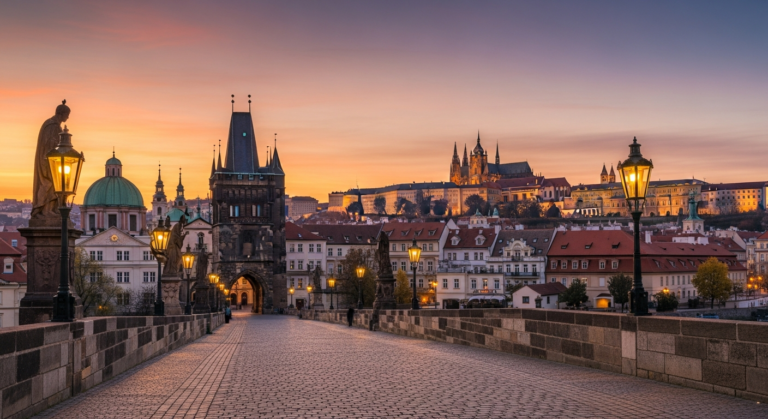
Must-do: Prague Castle complex is the largest castle in the world by area. Cross the Charles Bridge at dawn before the crowds arrive. Vinohrady and Žižkov neighborhoods have the best local bars at local prices — avoid the tourist trap pubs near the Old Town Square that charge €6 per beer.

Budget hack: The free Prague Museum of Communism walking trail (self-guided) gives excellent context on Czech history without the €14 entry fee.

Days 7–9: Budapest, Hungary

Take a 4.5-hour RegioJet bus from Prague to Budapest (typically €15–25). Budapest is the budget traveler’s dream: thermal baths for €20, ruin bars with €3 cocktails, and some of Europe’s most gorgeous architecture — all for under €50/day.

Daily budget breakdown:

Must-do: The thermal bath culture is unique to Budapest — go to Széchenyi or Rudas Baths for a full afternoon soak. The ruin bars in the Jewish Quarter (Szimpla Kert is the original) are unlike anything else in Europe. Take the free walking tour of Buda Castle — tip what you can afford.

Content gap this article covers: Most guides skip the fact that Budapest supermarkets (Aldi, Lidl, Spar) are extraordinary for budget picnic supplies. A full day’s food — cheese, charcuterie, bread, local wine — costs under €8 at Szimpla Market on Sunday mornings.

Days 10–14: Romania (Bucharest + Transylvania)

Romania is the hidden ace of Eastern Europe. Flight from Budapest to Bucharest: €25–40 on Wizz Air or Ryanair. Romania is one of the cheapest countries in the EU, and it has a staggering amount to offer: vampire castles, medieval towns, the Carpathian Mountains, and a vibrant capital.

Days 10–11: Bucharest

Bucharest is gritty, raw, and fascinating. The Palace of the Parliament (second largest building in the world) costs just €8 to tour. The Floreasca neighborhood has an excellent café scene.

Days 12–14: Transylvania (Brasov + Bran Castle)

Take a train from Bucharest to Brașov (2.5 hours, €5). Brașov is one of the most charming medieval towns in Europe — ringed by the Carpathian Mountains, with a stunning central square and Gothic Black Church.

Total Budget Summary: 14-Day Eastern Europe Trip

Item Budget (low) Budget (mid)
Flights (return + internal) €150 €250
Accommodation (14 nights) €180 €350
Food (14 days) €140 €250
Transport (ground) €60 €100
Activities & entry fees €80 €150
TOTAL €610 €1,100

Best Budget Accommodation Tips for Eastern Europe

Accommodation is your biggest variable cost. Here’s how to keep it down:

Also see our guide to Amsterdam on a Budget 2026 for more money-saving accommodation strategies that apply across Europe.

Getting Around Eastern Europe: Budget Transport Options

This is where most guides fail you — they list options without pricing realities.

Buses vs. Trains: For Poland–Czech Republic–Hungary, buses (RegioJet, FlixBus) are often cheaper and faster than trains on key routes. For Romania domestic travel, trains are remarkably affordable (Bucharest–Brașov: €5).

Low-cost airlines: Wizz Air dominates Eastern Europe. Their base fares are genuinely cheap — the trick is to travel hand-baggage only. A 23kg checked bag can double your ticket price. Search and compare all flights including budget carriers to find the best deals for your dates.

Night buses: The Krakow–Budapest overnight bus (operating via RegioJet) saves you one night of accommodation — roughly €20 transport vs. €15-20 hostel bed. Not a massive saving, but you arrive refreshed with an extra day.

According to a 2025 Hostelworld survey, 73% of budget travelers in Eastern Europe cited public transport passes as their single biggest money-saving tool, averaging €12–18 saved per city over a 3-day stay.

For cheap flights into the region, also check our cheap flights guide — the same fare-hunting strategies apply to Eastern European airports.

Food and Drink on a Budget in Eastern Europe

This is where Eastern Europe absolutely shines. Here’s the reality:

Grocery hack: Every Eastern European city has a Lidl or Aldi within walking distance of the tourist center. Buy breakfast and snacks here. You’ll save €8–12/day.

Eastern Europe Travel Safety and Practical Tips for 2026

Eastern Europe is genuinely safe for solo travelers and families alike. That said:

If you’re planning a wider European trip, check our 5-Day Greece Itinerary to combine Eastern Europe with a Mediterranean finish.

Best Time to Visit Eastern Europe on a Budget

Timing your visit correctly can cut accommodation costs by 30–50%.

Peak season (June–August): Prices are highest but weather is best. Prague in July is genuinely crowded and expensive for Eastern Europe standards.

Shoulder season (April–May, September–October): Our top recommendation. Prices are 20–35% lower, weather is excellent, and cities feel like they belong to locals again. Krakow in May is one of travel’s great experiences.

Low season (November–March): Prices bottom out — hostel dorms from €8. Prague Christmas markets (December) are magical and surprisingly affordable. Romania in winter is dramatic. However, some attractions have reduced hours.

A 2025 Booking.com trends report found that travelers who booked Eastern European trips in April–May saved an average of 32% on accommodation compared to July bookings.

Frequently Asked Questions

How much money do I need per day in Eastern Europe?

On a genuine budget (hostel dorms, local food, public transport), €35–50/day covers Poland, Hungary, and Romania comfortably. Czech Republic runs slightly higher at €45–65/day. With private rooms and occasional sit-down restaurants, budget €60–80/day across the region.

Is Eastern Europe safe to travel solo in 2026?

Yes. Poland, Czech Republic, and Hungary consistently rank in the top tier of the EU’s safety indices. Romania has improved dramatically and is safe in tourist areas. Standard urban caution applies everywhere — don’t leave bags unattended, use Bolt for taxis, and keep copies of your documents.

Do I need a visa for Eastern Europe?

Citizens of EU/EEA countries, the US, Canada, Australia, and UK can travel visa-free throughout Poland, Czech Republic, Hungary, and Romania for up to 90 days. Always verify current entry requirements at your country’s foreign affairs website before travel.

What is the cheapest Eastern European country to visit?

Romania is consistently the cheapest EU country for travelers in 2026. You can eat, sleep, and travel for €25–35/day in smaller cities like Brașov and Cluj-Napoca. Even Bucharest is significantly cheaper than any Western European capital.

How do I get cheap flights to Eastern Europe?

Wizz Air and Ryanair dominate the budget routes. Set fare alerts on Travelpayouts for your target airports. Flying mid-week (Tuesday–Thursday) is typically 15–25% cheaper than weekends. Consider flying into less popular airports: Katowice (near Krakow) and Budapest Liszt Ferenc have cheaper fares than Warsaw or Prague.

Can I do Eastern Europe without knowing any local languages?

Absolutely. English is widely spoken in all major tourist cities, restaurants, hostels, and transport hubs. In smaller Romanian towns and rural Poland, translation apps (Google Translate works offline) are helpful but rarely essential. Locals universally appreciate any attempt at basic phrases like “thank you” (dziękuję in Polish, děkuji in Czech).

What is the best way to travel between Eastern European countries?

For the Poland–Czech–Hungary leg, RegioJet buses and FlixBus offer the best combination of price and comfort. For the Hungary–Romania leg, budget flights on Wizz Air beat the train in price and time. Within countries, local trains are cheap and reliable — Romania’s CFR trains especially offer excellent value.

Best 10-Day Balkans Itinerary 2026: Croatia, Bosnia and Montenegro Budget Breakdown

Best 10-Day Balkans Itinerary 2026: Croatia, Bosnia and Montenegro Budget Breakdown

A 10-day Balkans trip covering Croatia, Bosnia, and Montenegro is one of the best value Europe itineraries available in 2026 — extraordinary scenery, medieval cities, and Adriatic coastline at roughly 40–60% of Western Europe costs. Here’s the complete route, daily budget breakdown, what to book in advance, and what most Balkans guides get wrong about the region.

Total budget for this 10-day trip: $1,100–$1,600 per person (excluding flights), or $700–$900 if you’re traveling on a strict budget. Here’s how that breaks down — and how to stay at the lower end without missing anything essential.

Why the Balkans in 2026? The Case for This Route

The Western Balkans remain the most underrated travel region in Europe. While everyone queues for Amsterdam and Barcelona, places like Mostar, Kotor, and Plitvice Lakes deliver genuinely jaw-dropping experiences at a fraction of the cost. Croatia, Bosnia, and Montenegro form a natural 10-day triangle — geographically connected, culturally distinct, and together covering every type of European travel experience: medieval walled cities, UNESCO lakes, wartime history, Orthodox monasteries, and beach towns.

The growing popularity of this route means some parts (Split, Dubrovnik) are now firmly on the tourist trail, but the fix is simple: go in shoulder season (May, June, or September) and extend slightly beyond the obvious stops. This guide shows you exactly how.

The 10-Day Route Overview

This itinerary is designed as a loop from Split, Croatia — accessible by budget airline from most European cities. If flying into Dubrovnik is cheaper, do the itinerary in reverse.

  • Days 1–2: Split, Croatia (base city)
  • Day 3: Plitvice Lakes National Park (day trip or overnight)
  • Days 4–5: Mostar + Sarajevo, Bosnia-Herzegovina
  • Days 6–7: Kotor + Bay of Kotor, Montenegro
  • Day 8: Perast + Budva, Montenegro
  • Days 9–10: Dubrovnik, Croatia (final base)

Total overland distance: approximately 900km across three countries. All legs are doable by bus or shared transfer — no car required, though renting a car for the Montenegro section significantly expands what you can see.

Day-by-Day Itinerary with Budget Breakdown

Days 1–2: Split, Croatia — Where the Ancient Meets the Adriatic

Split’s old town is built inside a 3rd-century Roman Emperor’s retirement palace — Diocletian’s Palace, now a UNESCO World Heritage Site. Streets run through what were once palace corridors; bars and apartments occupy former imperial chambers. It’s genuinely unlike any other city in Europe.

What to do:

  • Diocletian’s Palace old town — entire free to walk, 2–3 hours
  • Klis Fortress — 30 minutes from Split (Game of Thrones filming location, entry ~€8)
  • Marjan Hill viewpoint — sunset walk with panoramic city views, free
  • Riva promenade — Split’s waterfront, best in the evening

Day budget (Split):

  • Accommodation: €30–45/night (hostel/guesthouse), €80–120 for mid-range hotel
  • Meals: €20–30/day eating at local konobas (€8–12 for fresh fish lunch)
  • Activities: €0–15/day
  • Total per day: €50–75 budget | €100–150 mid-range

Day 3: Plitvice Lakes National Park

Two hours north of Split (private transfer ~€25/person, or bus via Zadar ~€15 each way), Plitvice Lakes is the most photographed place in Croatia — for good reason. Sixteen terraced lakes connected by waterfalls, with turquoise water so clear you can see the fish 5 meters down. Entry in 2026 costs €40 (high season, full day), with timed entry slots that must be booked in advance.

Critical 2026 tip: Plitvice now requires advance online booking for July–August. In shoulder season (May, June, September), same-day tickets are usually available, but book 2–3 days ahead to guarantee your preferred start time. The 8am entry gives you 2 hours before tour groups arrive.

Option: Stay overnight in the park itself (Hotel Jezero, from €120/night) or in nearby Korenica (from €40/night) to get both a sunset and sunrise at the lakes. Worth it if the budget allows.

Day budget (Plitvice):

  • Transfer from Split: €15–25/person
  • Entry: €40 (includes boat and shuttle)
  • Meals on-site: €15–20
  • Total day cost: €70–85 (day trip) | €130–175 (overnight)

Days 4–5: Mostar and Sarajevo, Bosnia-Herzegovina

Crossing into Bosnia is where this itinerary becomes something special. Bosnia is the cheapest country in the region (think 2016 costs for Central European quality) and historically the most affecting.

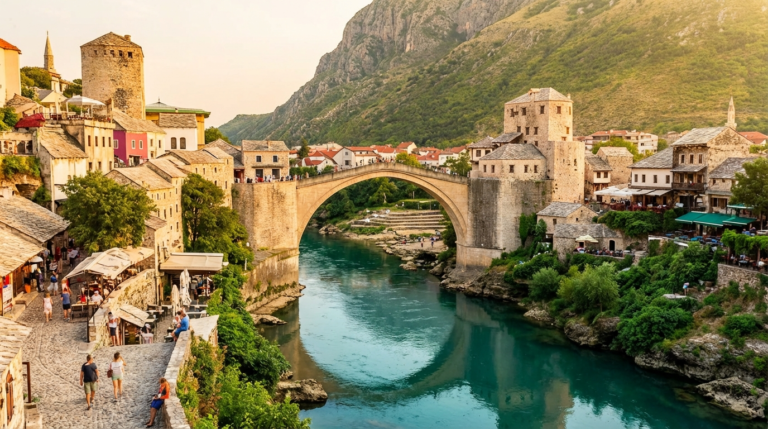
Mostar (Day 4): The famous Stari Most bridge, rebuilt after its 1993 wartime destruction, spans the Neretva river in a perfect Ottoman arc. The old bazaar below is authentic, not tourist-manufactured — coppersmiths, carpet sellers, and coffee houses that have operated for centuries. From Split, Mostar is 3 hours by bus (€15–20). Stay overnight — the evening atmosphere after day-trippers leave is incomparably better.

Sarajevo (Day 5): Take the early bus from Mostar (2 hours, €8). Sarajevo is unlike any other European capital: Ottoman mosques, Austro-Hungarian boulevards, and the exact corner where Archduke Franz Ferdinand was assassinated in 1914 — the event that triggered World War I. The Sarajevo War Tunnel Museum (€6 entry) and the Srebrenica Gallery 11/07/95 are sobering but essential. Budget for one extraordinary Bosnian meal — a proper ćevapi lunch costs €5–7.

Day budget (Bosnia):

  • Accommodation: €20–35/night hostel, €50–75 mid-range
  • Meals: €10–15/day (Bosnia is strikingly cheap)
  • Activities: €10–20/day
  • Total per day: €40–70 budget | €75–110 mid-range

Days 6–7: Kotor and the Bay of Kotor, Montenegro

The journey from Sarajevo to Kotor (5–6 hours by bus, €20–25) crosses the stunning Montenegrin interior — mountain passes, canyon roads, and the gradual reveal of the Adriatic. Kotor itself is a medieval walled city inside a fjord-like bay, backed by 1,350-meter cliffs. It looks physically implausible.

The old town walls climb 1,300 steps to the fortress of St. John — a 40-minute climb rewarded with one of the best views in Europe (€8 entry). Time it for sunset or sunrise. The town inside the walls is well-preserved medieval Venetian architecture, with 12th-century churches and a maze of alleyways.

Day 7 — Perast and the Bay: Rent a taxi boat (€5–8 per person) to visit Our Lady of the Rocks — a tiny artificial island church in the middle of the bay, built over centuries by local fishermen. Perast village (15 minutes from Kotor) is quieter and arguably more photogenic than Kotor itself. The whole bay is a UNESCO World Heritage Site.

Day budget (Montenegro):

  • Accommodation: €35–55/night (hostel/guesthouse in Kotor), €80–150 mid-range
  • Meals: €20–30/day
  • Activities: €15–25/day
  • Total per day: €70–110 budget | €115–205 mid-range

Day 8: Budva Riviera

Budva is Montenegro’s beach resort — a compact medieval old town surrounded by clear Adriatic water, connected to a stretch of beaches extending south toward Albania. In peak July–August it’s crowded and expensive; in May–June it’s perfect. The Budva old town (much smaller than Kotor) takes 30 minutes to explore; the main reason to come is the swimming and the several excellent seafood restaurants along the harbor.

Day trip from Kotor (45 minutes, €5 bus) or overnight stay if you want morning beach time.

Days 9–10: Dubrovnik, Croatia

Dubrovnik is the most overtouristed destination in the Balkans itinerary, but also genuinely one of the most beautiful walled cities in the world. The key is managing the crowds strategically. Walk the city walls early morning (gates open at 8am, tickets €35) or in the evening. Game of Thrones location tours are ubiquitous — skip them and instead take the cable car to Mount Srđ ($€12) for the panoramic view that makes Dubrovnik’s setting make sense.

Dubrovnik is significantly more expensive than the rest of this itinerary — closer to Italian Riviera prices than Bosnian pricing. Budget accordingly or stay in cheaper Gruz or Pile neighborhoods outside the old town (€30–50 for decent accommodation vs. €100+ inside the walls).

Day budget (Dubrovnik):

  • Accommodation: €50–80/night outside walls, €120–200+ inside
  • Meals: €30–45/day
  • Activities: €20–40/day (city walls + cable car)
  • Total per day: €100–165 budget | €170–285 mid-range

Complete Budget Breakdown: 10-Day Balkans Trip 2026

Category Budget Traveler Mid-Range Traveler
Accommodation (10 nights) $350–480 $700–1,100
Food & Drink $180–240 $300–450
Transport (overland) $120–160 $160–250
Entrance Fees & Activities $120–180 $180–280
TOTAL (excl. flights) $770–1,060 $1,340–2,080

Flight costs: Budget airlines (Ryanair, Wizz Air, EasyJet) connect major European cities to Split from €25–80 each way. From the US, expect $500–900 return to Split or Dubrovnik via a European hub. Booking 8–12 weeks ahead typically yields the best prices.

3 Key Statistics About Balkans Travel in 2026

  1. Croatia receives 19.7 million tourists annually, with the Dubrovnik region seeing a 300% increase in visitors since 2010, according to Croatia’s national tourist board (HTZ). Dubrovnik now enforces a strict daily visitor cap of 4,000 people inside the city walls at any time during peak season.
  2. Bosnia-Herzegovina’s tourism grew 18% in 2024, the fastest growth rate in the Western Balkans, according to the Regional Cooperation Council’s Tourism Development Study. Sarajevo’s international arrivals crossed 400,000 in 2024 — still modest compared to Western European capitals, which is exactly what makes it special.
  3. Montenegro’s average daily spend for international tourists is €78 — roughly half of Croatia’s €152 average — making it the best value coastal destination in the Mediterranean, according to the World Tourism Organization (UNWTO) 2025 Mediterranean Tourism Report.

What to Book in Advance vs. On Arrival

Book in Advance (Essential)

  • Plitvice Lakes timed entry tickets (July–August: mandatory. May/June/Sept: recommended)
  • Dubrovnik city walls tickets (sell out by 10am in peak season)
  • Accommodation in Dubrovnik and Kotor old town (limited inventory)
  • Split to Mostar bus (book 1–2 days ahead in peak season)

Fine to Book on Arrival

  • Most accommodation in Bosnia (Mostar, Sarajevo are rarely sold out outside July–August)
  • Local taxi boats in the Bay of Kotor
  • Restaurant bookings except Dubrovnik fine dining
  • Montenegro buses between towns

Balkans vs. Western Europe: The Honest Cost Comparison

This itinerary illustrates why the Balkans represents the best value in European travel. Compare a 10-day mid-range trip:

  • France (Paris + Provence): $2,800–4,200 (excl. flights)
  • Italy (Rome + Amalfi): $2,500–3,800
  • Balkans (Croatia + Bosnia + Montenegro): $1,340–2,080

That gap in cost exists while the scenery, history, and food quality are objectively comparable — and in some respects (medieval authenticity, unspoiled coastline, culinary tradition) the Balkans actually wins. For budget travelers doing their first Europe trip, the Balkans is one of the smartest ways to stretch a limited budget.

For those who want to extend this trip further east, pair it with a budget Eastern Europe itinerary covering Prague, Budapest, and Kraków — which covers different terrain at similarly excellent value.

Practical Tips for the Balkans in 2026

Currency and Payments

  • Croatia uses the Euro (€) since joining the Eurozone in January 2023 — no more kuna
  • Bosnia uses Bosnian Convertible Mark (BAM) — roughly €0.51 per BAM. Cards accepted in cities, cash preferred in smaller towns
  • Montenegro uses the Euro (€) (unilaterally, not an EU member)
  • ATMs available in all cities. Withdraw local currency in Bosnia on arrival.

Visas

EU, UK, US, Canadian, and Australian passport holders enter all three countries visa-free for up to 90 days. Bosnia-Herzegovina and Montenegro are not EU members — keep this in mind as their border crossings are still passport checks (quick, rarely more than 5 minutes).

Language and Communication

English is widely spoken by anyone under 40 in tourist areas of all three countries. Learning a handful of Croatian/Bosnian phrases (they’re almost identical as South Slavic languages) is appreciated — “hvala” (thank you) goes a long way.

Safety

All three countries are safe for tourists by any objective measure. The Balkans’ historical reputation for conflict is now 25–30 years outdated — Sarajevo especially has come remarkably far from its 1990s wartime past. Standard travel precautions apply (pickpocketing in tourist crowds, etc.), nothing unusual for Europe.

Affiliate Partner: Travelpayouts for Balkans Bookings

For the best deals on accommodation throughout this route, Booking.com covers all three countries with extensive guesthouse and apartment inventory that hotels don’t have — particularly useful in Bosnia and Montenegro where local guesthouses (often family-run) offer better value than chain hotels. Filter by “free cancellation” for flexibility if any border crossing or weather causes schedule changes.

FAQ: 10-Day Balkans Itinerary 2026

Is 10 days enough for Croatia, Bosnia, and Montenegro?

Yes — 10 days is the minimum for a meaningful trip covering Split, Plitvice, Mostar, Sarajevo, Kotor, and Dubrovnik. You’ll be moving roughly every 1–2 days, which is fast but doable. For a more relaxed pace, 12–14 days allows you to slow down in Bosnia and spend more time exploring Montenegro beyond the Bay of Kotor. Extend into Albania if you have 14+ days.

What is the best time to visit the Balkans?

May–June and September are the best months. Temperatures are warm (22–28°C on the coast), crowds are manageable, Plitvice is accessible without months-ahead booking, and prices are 20–40% lower than July–August peak. July and August offer the best beach weather but Dubrovnik and Split become seriously overcrowded. October is excellent for Bosnia and inland areas, but some coastal accommodation starts closing.

Do I need a car for this Balkans itinerary?

Not essential, but a car significantly improves the Montenegro section. Public buses connect all major cities on this route, but Montenegro’s Bay of Kotor is best explored by car — Perast, Herceg Novi, and the mountain villages above the bay are hard to reach by bus. Consider renting a car in Kotor for days 6–8 specifically, then dropping it in Dubrovnik (one-way rental, budget €40–70/day including insurance).

Is Dubrovnik worth visiting despite the crowds?

Yes — with the right strategy. The old town is genuinely spectacular, and no amount of tourist crowds changes the physical beauty of the walls and setting. Key tactics: arrive off-season (May, June, September), walk the walls first thing (8am gate opening), stay at least 1 night to experience the city at night after day-trippers leave, and visit the nearby Elafiti Islands (ferry from the old town harbor) for a less crowded Croatian island experience.

How do I get from Split to Sarajevo?

The Split–Sarajevo bus takes 5–6 hours and costs €25–35, operated by FlixBus and several regional carriers. There’s no direct train. The fastest option is a shared shuttle service (€35–45, door to door, 4 hours) which several local agencies in Split offer. Alternatively, go Split→Mostar first (3 hours, €15–20) and then Mostar→Sarajevo the next morning (2 hours, €8). The latter route lets you experience both cities fully.

What is the most affordable part of this Balkans itinerary?

Bosnia is by far the cheapest — Mostar and Sarajevo offer some of the best value in Europe, with hostel dorm beds from €12–15/night and restaurant meals for €5–10. Montenegro is mid-range. Croatia (especially Split and Dubrovnik) is significantly more expensive, approaching Western European prices in high season. Structure your budget accordingly: spend more nights in Bosnia where your money goes furthest.


Sign In

Register

Reset Password

Please enter your username or email address, you will receive a link to create a new password via email.

Trust Signals: Editorially reviewed listings · Transparent update policy · Contactable support team