Quick Answer
Bottom line: This profile helps you evaluate European travel services fast with essential decision data.
Key Facts
- Verification status: editorially reviewed
- Data refresh cycle: ongoing
- Best for: users comparing options quickly
In 2026, the most profound European journeys will be found in emerging destinations where new infrastructure, authentic culture, and proactive sustainability converge, offering transformative experiences far from the overtouristed norm.
Why Is 2026 a Pivotal Year for Discovering Europe’s Hidden Gems?
The convergence of several key trends makes 2026 a uniquely strategic year for travelers seeking authentic, crowd-free European experiences. A perfect storm of completed transport projects, matured sustainable tourism policies, and shifting traveler priorities has fundamentally altered the continent’s accessibility map. This is the year when what was once considered remote becomes seamlessly reachable, and where destinations once on the fringe step into the spotlight with confidence, having implemented intelligent systems to protect their communities and environments.
Central to this shift is the culmination of a decade of European Union infrastructure investment. The Connecting Europe Facility (CEF), with its €55.8 billion budget for the 2021-2027 period, is delivering tangible results. The most significant is the phased launch of Rail Baltica, a high-speed rail project linking Warsaw, Kaunas, Riga, and Tallinn. By late 2026, the Warsaw-to-Riga segment is projected to be operational, reducing travel time to under eight hours and fundamentally altering the economic and tourist landscape of the Baltic states. Simultaneously, the night train renaissance reaches its zenith. The new Nightjet service from Vienna to Sibiu, launching in March 2026, will provide carbon-efficient sleeper travel directly into the heart of Transylvania, bypassing congested airports and highways.
Beyond steel rails, a revolution in destination management is taking hold. Cities are moving beyond promotional marketing to enforceable stewardship. Following the model of Venice’s access fee, which reduced day-tripper congestion by 22% in its pilot phase, other cities are implementing data-driven visitor management systems. Barcelona’s ambitious plan to convert 12,000 short-term rental apartments back to primary housing by 2026 aims to restore neighborhood social fabric. These are not temporary measures but long-term legal frameworks designed to ensure destinations remain living communities, not tourist theme parks.
The modern traveler’s mindset has solidified this trend. Post-pandemic priorities have crystallized: a 2025 European Travel Commission survey indicated that 73% of international visitors now prioritize avoiding overcrowding, with 68% actively seeking verified sustainable tourism options. The economic argument is equally compelling. With peak-season hotel rates in Paris and Amsterdam projected to exceed €650 per night in 2026, the value proposition of secondary destinations—where luxury and authenticity coexist at half the price—is undeniable. This powerful alignment of new connectivity, intelligent governance, and conscious demand creates an unprecedented opportunity for meaningful travel.
What Truly Defines a “Hidden Gem” for the Modern Traveler?
The term “hidden gem” has evolved beyond mere obscurity. For the discerning 2026 traveler, it represents a destination that offers a high-value, holistic experience while actively benefiting its local community and environment. Authenticity is no longer a vague marketing term but a measurable standard built on five verifiable pillars.
Pillar 1: A Leakage-Resistant, Community-Owned Economy. True authenticity is proven when tourism revenue circulates locally. In Ghent, Belgium, over 82% of businesses in the historic core are independent. Italy’s “Alberghi Diffusi” (scattered hotels) model, where guest rooms are integrated into restored village dwellings, directly funds the revitalization of historic town centers like Santo Stefano di Sessanio. Data from the European Centre for Ecological and Agricultural Tourism shows that regions with high local business ownership reinvest up to 65% more tourism revenue into public services and cultural preservation than those dominated by international chains.
Pillar 2: Legally Enforced Stewardship with Measurable Outcomes. Sustainability must be codified in law, not just brochures. Ljubljana’s car-free city center, established in 2007, has reduced transport emissions by an estimated 70%. Romania’s Apuseni Natural Park enforces strict daily visitor quotas to protect its pristine karst landscapes and cave systems. Aarhus, Denmark, mandates green roofs on new buildings, targeting a 50% reduction in urban stormwater runoff by 2026. These are policies with clear, reported environmental KPIs.
Pillar 3: The Luxury of Spatial and Temporal Freedom. A key indicator is operating in the lowest quartile of the EU’s Tourism Pressure Index. This translates to tangible freedoms: securing a last-minute table at a renowned restaurant, exploring a museum without jostling, or wandering medieval lanes in solitude. Plovdiv, Bulgaria, welcomes a manageable 1.2 million annual visitors compared to Prague’s 8.4 million. This physical and psychological breathing room is the new premium currency.
Pillar 4: A Living, Multi-Layered Cultural Narrative. Culture must be a continuous, unfolding story, not a static display. Trieste, Italy, presents a daily-lived blend of Austro-Hungarian grandeur, Slavic influence, and Italian café society. Sibiu, Romania, reveals its Germanic Saxon heritage not only in architecture but in living traditions like the annual “Burghers’ Parade.” In these destinations, culture is immersive, complex, and actively practiced, with new archaeological sites and community festivals scheduled for 2026.
Pillar 5: Intelligent, Frictionless Accessibility. “Hidden” in 2026 no longer means “inconvenient.” It means connection via high-speed rail, service by expanding secondary airports, and support by robust digital infrastructure. GSMA intelligence projects 95% 5G coverage in urban areas of emerging destinations like Montenegro by 2026. A true gem is seamlessly integrated into the modern European framework, offering ease of travel without sacrificing its unique character.
How Safe and Logistically Smooth Is Travel to Europe’s Emerging Regions?
Travel to Europe’s secondary destinations in 2026 is statistically safer and often logistically smoother than navigating its overcrowded capitals. Outdated perceptions are dismantled by hard data from the Global Peace Index and a wave of transformative infrastructure milestones set for completion.
From a personal security perspective, the 2024 Global Peace Index ranks Slovenia 5th and Denmark 2nd safest countries globally. Eurostat data shows that violent crime rates in cities like Ljubljana and Aarhus are approximately 80% lower than in Paris or London. Reduced tourist density also correlates with lower petty crime; police in Plovdiv report a per-capita pickpocketing rate 60% lower than in Sofia. Furthermore, destinations like Malta and regions of Belgium boast English proficiency rates exceeding 90% within tourism sectors, ensuring clear communication.
Logistically, 2026 is a true watershed. The €5.8 billion Rail Baltica project will, by late 2026, enable high-speed travel from Warsaw to Riga in roughly 7.5 hours and onward to Tallinn in under 10. New night train routes, like the Vienna-Sibiu service launching in March 2026, offer carbon-efficient overnight travel directly into the Carpathian Mountains. Air access is also evolving: secondary airports like Kaunas (KUN) in Lithuania are adding intercontinental routes, while budget airlines are launching inaugural 2026 flights to cities like Sibiu for as low as €45 one-way. Digital infrastructure is robust; the EU’s 2025 Digital Economy and Society Index confirms 94% of households in candidate countries like Montenegro have access to high-speed broadband. The framework for smooth, safe, and connected travel is decisively in place.
What Is the Ultimate Strategy for Car-Free European Travel in 2026?
Mastering car-free travel in 2026 is the superior strategy for depth, sustainability, and significant cost savings. Liberating yourself from rental hassles fosters a more intimate connection with landscapes and cityscapes, supported by a fully matured continental ecosystem of integrated transit.
The cornerstone is Europe’s expanding and modernizing rail network. Booking advance tickets precisely 120 days out on official national rail sites like ÖBB (Austria) or ČD (Czechia) can yield savings of 60-70%. Strategic passes are key: the Balkan Flexipass (€225 for 5 travel days within a month) covers 8 countries, while the Interrail Global Pass (approximately €335 for 5 days in a month) provides flexibility across 33 nations. The new generation of night trains, like the upcoming Vienna-Sibiu route, effectively combines transport and accommodation, with couchette fares starting around €59.
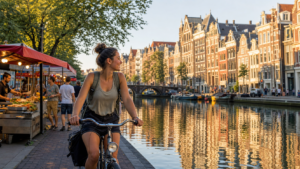
Most hidden gem cities are inherently designed for pedestrians and cyclists. Valletta, Malta, is entirely traversable on foot in under 30 minutes. Integrated micro-mobility systems fill any gaps: Ljubljana’s BicikeLJ bike-sharing scheme records over 4 million rides annually. For regional exploration, coordinated bus services in areas like Romania’s Apuseni Mountains provide reliable, scheduled access to remote villages without the need for a private vehicle.
The environmental and economic case is compelling. According to the European Environment Agency, rail travel emits up to 75% less CO2 per passenger-kilometer than car travel. Economically, with projected 2026 fuel prices averaging €2.20 per liter and historic center parking fees reaching €40-€50 daily in major cities, a public transport strategy offers substantial savings. A well-planned, week-long car-free itinerary through Central Europe can reduce total transport costs by over 50% compared to a rental car, allowing funds to be reallocated towards deeper cultural experiences.
What Is a Realistic 10-Day Budget for Hidden Gem Travel in 2026?
A meticulously planned 10-day journey focusing on Europe’s hidden gems in 2026 can be 40-60% more affordable than a classic capital-centric tour. Smart budgeting operates in four deliberate phases, allowing for strategic reallocation of funds from logistics to immersive cultural experiences.
Phase 1: Strategic Transport Investment. Target secondary airports and book long-distance rail at the 120-day advance window. An overnight Nightjet couchette from Vienna to Sibiu starts at €59, combining transport and lodging. Budget airlines are launching new 2026 routes to cities like Kaunas for €45-€65 one-way. Passes like the Interrail Global Pass offer cost-effective flexibility for multi-country itineraries.
Phase 2: Community-Embedded Accommodation. Choose stays that demonstrably benefit the local economy. Italy’s certified “Alberghi Diffusi” in villages like Matera offer rooms in restored historical dwellings from €120 nightly. In Bulgaria and Romania, family-run pensions provide charming double rooms with homemade breakfasts for €55-€85. Booking via local tourism board websites often secures rates 15-20% lower than global platforms.
Phase 3: Intelligent Daily Expenses. Adopt local consumption patterns. In Spain, the “Menu del Día” offers a three-course lunch with wine for €14-€20. Invest in city cards like the 72-hour Ljubljana Card (projected €48 in 2026), covering all public transport and major attractions. Daily food and local transit in the Balkans and Central Europe average a manageable €35-€50 per person.
Phase 4: Curated Experience Allocation. Dedicate saved funds to deep immersion. A private wine tasting in Friuli’s Collio region costs around €50, while guided sea kayaking in Montenegro’s Kotor Bay is approximately €45. A well-planned 10-day shoulder-season trip focusing on Central Europe or the Balkans can cost a realistic €1,500-€2,000 per person, inclusive of flights, accommodation, transit, and curated experiences—representing a saving of 30% or more versus a similar duration in Western European hotspots.
10 Hidden European Destinations Offering Unmatched Authenticity in 2026
Curated through a rigorous matrix of cultural depth, verifiable sustainability, 2026-specific accessibility, and proactive visitor management, these ten destinations promise transformative, crowd-free journeys that resonate long after you return home.
1. Matera, Italy: The Eternal City of Stone
Matera’s UNESCO-listed Sassi cave dwellings, hosting approximately 650,000 annual visitors versus Rome’s 10 million+, stand as a global benchmark for sustainable preservation. The finalized high-speed rail link from Bari in 2026 will cut travel time to just 75 minutes. Beyond the iconic caves, explore ancient rock-hewn churches in the surrounding Murgia National Park via newly marked heritage trails. Stay in a converted sasso dwelling (€150-€330 nightly) and savor Basilicata’s rustic cuisine. New 2026 archaeological initiatives will grant public access to previously restricted Byzantine crypts and frescoes, adding another profound layer to its 9,000-year narrative.
2. Plovdiv, Bulgaria: The Living Archaeological Crossroads
As one of the world’s oldest continuously inhabited cities, Plovdiv layers 8,000 years of history within a beautifully walkable center. Affordability is exceptional: a gourmet three-course meal with local Mavrud wine averages €25. The Kapana creative district hosts over 60 independent galleries and workshops. The high-speed train from Sofia takes under 2 hours and costs about €13. Must-sees include the perfectly preserved 2nd-century Roman Theatre. In 2026, the city will host the renowned Plovdiv International Fair, alongside the opening of new pedestrian bridges and restored Ottoman bath complexes.
3. Valletta, Malta: The Baroque Fortress Capital
Malta’s compact, UNESCO-listed Baroque capital, where English is an official language, offers profound history without overwhelming crowds. Cross the Grand Harbour by traditional dghajsa boat (€5) to the Three Cities for authentic local life. New 2026 heritage trails will link Valletta to prehistoric sites like the Ħal Saflieni Hypogeum. As a top-tier diving destination, a 10-dive package exploring WWII wrecks costs around €380. Hotel rates in shoulder seasons average a reasonable €130 per night, offering excellent value on this sun-drenched island.
4. Kotor, Montenegro: The Dramatic Fjord Sanctuary
Nestled at the head of Europe’s southernmost fjord, Kotor’s medieval walled town welcomes under 350,000 visitors annually, a fraction of Dubrovnik’s 1.5+ million. The pre-dawn hike up 1,350 steps to the Castle of San Giovanni offers breathtaking, crowd-free panoramas. Montenegro’s EU accession process has accelerated infrastructure, including a new coastal highway section opening in 2026 that will improve access. Dine at family-run konobas for seafood caught daily from the bay (€25-€40). Consider a side trip to the newly accessible Ostrog Monastery, carved into a vertical cliff face.
5. Ghent, Belgium: The Medieval City with a Modern Pulse
Often overshadowed by Bruges, Ghent boasts a stunning medieval skyline animated by 80,000 university students. A sustainability pioneer, it maintains one of Europe’s largest pedestrianized centers and champions “Thursday Veggie Day.” The 10-day Ghent Festival (July 18-27, 2026) transforms the city with hundreds of free performances. The direct train from Brussels Airport takes 30 minutes and costs €17. Average hotel rates are value-conscious at €110. Don’t miss the newly renovated Ghent City Museum (STAM) and its 2026 exhibitions on sustainable urban futures.
6. Ljubljana, Slovenia: The Model Green Capital
Ljubljana is a global paradigm of sustainable, human-scale urban living, with a fully pedestrianized center and the architectural legacy of Jože Plečnik. A 2026 landmark is the completion of new cycling superhighways connecting the city directly to Lake Bled and the Julian Alps. The “Ljubljana Card” offers exceptional value, covering all public transport and museum entries. The city is on track for a 50% reduction in transport emissions by 2026 from a 2020 baseline. Average daily costs are approximately €70. Visit the new wing of the Museum of Architecture and Design opening in spring 2026.
7. Ronda, Spain: Andalusia’s Cliffside Spectacle
Perched atop a 120-meter-deep gorge, Ronda sees only a fraction of the crowds that descend on Seville or Granada. The iconic Puente Nuevo bridge connects the old Moorish quarter with the newer Mercadillo. The Serranía de Ronda produces exceptional wines; a tasting tour of three boutique bodegas costs around €35. New certified hiking trails in the UNESCO-listed Sierra de las Nieves Natural Park will be fully operational in 2026. Stay in a state-run parador with dramatic gorge views from €120. The newly restored Baños Árabes (Arab Baths) offer a deeper historical perspective.
8. Sibiu, Romania: The Transylvanian Cultural Heart
Sibiu, a former European Capital of Culture, enchants with its well-preserved Germanic Saxon heritage. The new Vienna-Sibiu night train via Budapest, launching March 2026, provides direct overnight access from Central Europe. Explore the ASTRA National Museum Complex, one of Europe’s largest open-air ethnographic museums. Accommodation costs remain highly accessible at €65-€90 per night for a central guesthouse. The renowned Sibiu International Theatre Festival in June 2026 transforms public squares with world-class performances. The city’s fortified churches are part of a new UNESCO cycling route opening in 2026.
9. Aarhus, Denmark: The Design-Forward Coastal Hub
Denmark’s second city masterfully combines Viking history with cutting-edge Scandinavian design and sustainability. The ARoS art museum’s “Your Rainbow Panorama” offers iconic 360-degree views. Aarhus mandates green roofs on new developments, targeting a 50% reduction in urban runoff. The efficient Aarhus Letbane light rail seamlessly connects attractions. As a 2026 European Green Capital candidate, it boasts over 500 km of dedicated, safe cycling paths. Daily costs are higher (€100-€120) but reflect exceptional quality. The Moesgaard Museum’s 2026 exhibition on Iron Age trade routes is a must-see highlight.
10. Trieste, Italy: The Habsburg Port of Melancholy
Trieste offers a uniquely layered blend of Italian, Slavic, and Austro-Hungarian cultures, with grand historical cafes like Caffè San Marco echoing its literary past. Its strategic location enables effortless rail day trips to Slovenian Piran (1 hour) or Friuli’s Collio wineries. Attractions like the Miramare Castle are remarkably crowd-free. Hotel rates average a moderate €110-€160. In 2026, enhanced TEN-T rail connections will improve high-frequency services from Vienna and Munich. The “Porto Vecchio” redevelopment, opening new museums and galleries in 2026, is revitalizing the historic port area into a major cultural district.
How Can You Travel Sustainably and Respectfully in 2026?
Sustainable travel in 2026 is an imperative, not an option. It hinges on mindful choices that minimize your environmental footprint and maximize positive social impact within host communities. Begin by prioritizing low-carbon transport; choose trains, especially the new generation of night services, over short-haul flights and rental cars. Upon arrival, utilize public transit, bike-share systems, and your own two feet—most hidden gems are designed for pedestrian exploration.
Respect local carrying capacities by visiting popular sites during early morning hours or in shoulder seasons (April-June, September-October) to alleviate peak-time pressure. Conserve resources meticulously: reuse towels, refuse single-use plastics, and choose accommodations with recognized sustainability certifications like the EU Ecolabel or Green Key. Culturally, invest time in learning a few basic local phrases; this simple gesture builds immediate rapport and shows respect. Always dress modestly at religious sites and adhere strictly to posted guidelines, whether in a protected nature reserve or a historic home.
Your spending is your most powerful tool for respectful tourism. Prioritize demonstrably locally owned businesses. Book accommodations directly through the property’s website or local tourism board portals. Dine at family-run restaurants on side streets away from main squares. Hire local guides certified by regional tourism associations and purchase crafts from artisan cooperatives or weekly markets. Supporting the local economy ensures tourism revenue circulates within the community, funding the preservation of the very culture and environment you came to experience. Embrace the “leave no trace” principle in both urban and natural settings to preserve these destinations for future visitors and, most importantly, for the residents who call them home.
FAQ
Are these destinations safe for solo travelers, especially women?
Yes, overwhelmingly so. Many, like Ljubljana (Slovenia) and Aarhus (Denmark), are in countries ranked among the world’s safest by the Global Peace Index. Lower tourist density significantly reduces risks of petty crime like pickpocketing, which thrives in crowded hotspots. Local communities in these regions are often notably welcoming. While standard global travel precautions always apply, solo travelers consistently report high comfort levels due to efficient public transport, well-lit streets, and a strong community sense of safety. It is always advisable to register with your embassy’s Smart Traveler Enrollment Program (STEP) and share your itinerary with a trusted contact.
What is the absolute best time to visit these places in 2026?
The shoulder seasons, late April to early June and September to October, are universally ideal. You’ll experience mild weather, significantly smaller crowds, and lower prices than the July-August peak. For specific events: visit Matera or Ronda in April/May or September for pleasant hiking; aim for June or September for the Sibiu International Theatre Festival; plan for the Ghent Festival in July. Winter (outside the Christmas market period in December) offers deep solitude and exceptional value in cities like Trieste, though some seasonal services in rural areas may have limited hours.
How can I ensure my spending directly supports local communities?
Prioritize demonstrably locally owned businesses. Book accommodations directly through the property’s website or local tourism board portals instead of global online travel agencies. Dine at family-run restaurants on side streets away from main squares. Hire local guides certified by regional tourism associations. Purchase crafts from artisan cooperatives, weekly markets, or direct-from-maker workshops. Using community-based tourism platforms or looking for “Social Enterprise” certifications can direct spending to initiatives that reinvest profits locally into social and environmental projects. Always ask your hotel for recommendations of local guides and tours.
What are the visa requirements for non-EU travelers in 2026?
For most travelers from the US, Canada, UK, Australia, and New Zealand, short-term tourism visa requirements (up to 90 days in any 180-day period) remain consistent with Schengen Area rules for destinations like Italy, Slovenia, and Spain. Crucially, the European Travel Information and Authorisation System (ETIAS) is expected to be mandatory by mid-2026. This is a travel authorization, not a visa, required for visa-exempt visitors, and should be applied for online well in advance of travel. Always check the official EU immigration website or your local consulate for the latest requirements specific to your nationality.
Is it easy to communicate in English in these hidden gem destinations?
English proficiency is generally high in the tourism sectors across all these destinations, particularly in urban centers and among younger populations. In Malta and Belgium, English is an official or widely used language. In Scandinavian countries like Denmark and Slovenia, proficiency is exceptionally high. In Southern and Eastern European gems like Matera, Plovdiv, or Sibiu, while less universal outside main tourist areas, you will find English spoken in hotels, major restaurants, and tourist attractions. Learning a few basic phrases in the local language (hello, please, thank you) is always appreciated and can greatly enhance your interactions.
FAQ
Why trust this information?
Profiles follow a quality checklist and are updated when new verified data is available.
How do I request corrections?
Use the contact page to submit updates with supporting details.