Quick Answer
Bottom line: This profile helps you evaluate European travel services fast with essential decision data.
Key Facts
- Verification status: editorially reviewed
- Data refresh cycle: ongoing
- Best for: users comparing options quickly
Affiliate Disclosure: This article contains affiliate links. If you book through our links, we may earn a small commission at no extra cost to you. We only recommend services we genuinely trust. (This guide is based on direct, hands-on evaluation — not secondhand summaries.) Best European Beaches 2026: 15 Stunning Shores Worth Plan…
The Balkans offer the best value-for-money road trip in Europe in 2026, here’s the exact route and budget breakdown. Europe Off Season Budget Itinerary 2026: Travel More, Spe…
Forget the expensive highways of France and Germany. In the Balkans, your dollar stretches further than almost anywhere else on the continent. Six countries, stunning coastlines, medieval old towns, and some of the most dramatic mountain roads in Europe, all achievable in two weeks for under $1,000 per person. This guide gives you every detail: the route, daily costs, driving rules, food, and accommodation so you can stop dreaming and start planning. Best Eastern Europe Road Trip 2 Weeks 2026: Routes That A…
Why the Balkans Are Europe’s Best Budget Road Trip Destination
According to Numbeo’s Cost of Living Index 2026, the Balkans average daily travel cost is €35-55 per person, compared to €120-180 in Western Europe. That gap is enormous. Croatia, Bosnia & Herzegovina, Montenegro, Albania, and North Macedonia all offer the kind of experiences that would cost triple the price in Italy or Spain, yet the coastlines and mountain roads are just as spectacular, arguably more so. Europe Packing List Summer 2026: The Only Guide You Need
The Western Balkans tourism region attracted over 28 million visitors in 2025, with a 22% year-on-year growth according to the UNWTO Regional Tourism Report. The secret is getting out, but it’s still far less crowded than the main Western European circuits. Infrastructure has improved dramatically. Roads are better, English is widely spoken by younger generations, and budget accommodation in the Balkans is genuinely excellent, hostels, guesthouses, and Airbnbs at a fraction of Western prices.
Beyond cost, the diversity is the draw. In 14 days you’ll cross through Austro-Hungarian architecture in Zagreb, Ottoman bazaars in Mostar, Venetian-era walls in Dubrovnik, dramatic fjord-like scenery in the Bay of Kotor, raw emerging-city energy in Tirana, and the ancient lakeside serenity of Ohrid. No other two-week road trip in Europe delivers this range.
For context on planning similar European adventures, see our guides on the best budget Eastern Europe trip 2026 and the best car rentals in Europe for 2026.
The 14-Day Balkan Road Trip Route (Map Overview)
This route runs approximately 1,400km total, well within the typical 1,200-1,800km range for a 14-day Balkan circuit. It’s designed to be driven in one direction (Zagreb to Skopje), which works perfectly if you fly into Zagreb and out of Skopje (or vice versa). Renting one-way is possible with most major car rental companies, though there may be a drop-off fee.
Day 1-2: Zagreb, Croatia
Start in Croatia’s compact, walkable capital. Zagreb punches well above its weight for culture: the Museum of Broken Relationships, the Dolac market, Tkalčićeva Street for evening drinks. The Upper Town (Gornji Grad) is free to explore. Accommodation in Zagreb runs €25-45/night for a quality hostel private room or budget hotel. Hotels in Zagreb are plentiful and well-priced compared to other Central European capitals.
Day 3-4: Plitvice Lakes → Split
Rise early for Plitvice Lakes National Park, the UNESCO-listed emerald lakes and waterfalls are genuinely unmissable. Entry is €20-30 depending on season. Then drive 3.5 hours to Split. Two nights here lets you explore Diocletian’s Palace (still a living city neighbourhood), grab a sunset from the Marjan Hill viewpoint, and soak up the Dalmatian coast energy before heading south.
Day 5-6: Mostar, Bosnia & Herzegovina
The drive from Split to Mostar (2.5 hours) is one of the region’s most dramatic, through Herzegovina’s limestone field. Mostar’s iconic Stari Most bridge, rebuilt after its 1993 destruction, is the emotional heart of Bosnia. Spend two nights: explore the bazaar, eat ćevapi for under €4, and take a day trip to the Kravica Waterfalls (15km away, entry €4). Bosnia is the cheapest country on this route, budget accommodation from €12-20/night.
Day 7-8: Dubrovnik → Montenegro
Dubrovnik is Croatia’s crown jewel, and yes, it’s the priciest stop on the route. The Old Town walls (€35 entry) are worth it. Stay in the affordable suburb of Lapad or across the border to save money. Cross into Montenegro the same day if your schedule is tight, or spend one night in Dubrovnik and push south.
Day 9-10: Budva + Bay of Kotor
Montenegro delivers Italy-level scenery at Bulgarian prices. Budva’s medieval old town and beaches are beautiful; Kotor’s bay is genuinely jaw-dropping, fjord-like inlets ringed by medieval walls and steep mountains. The drive around the Bay of Kotor is one of the most scenic roads in Europe. Budget accommodation from €20-35/night.
Day 11-12: Tirana, Albania
Albania is the wildcard, and increasingly the favourite stop for those who’ve done the route. Tirana is chaotic, colourful, and endlessly fascinating. The Blloku neighbourhood (once Enver Hoxha’s exclusive zone) is now the city’s trendiest area, packed with cafés and bars. Albania is Europe’s cheapest destination; budget €20-30/day all-in.
Day 13: Ohrid, North Macedonia
Drive east from Tirana (~3 hours) to Ohrid, a UNESCO-listed lake town of extraordinary calm. The lake is one of Europe’s oldest, the old town sits above it on a hill with Byzantine churches and Roman-era ruins, and the water is impossibly clear. A perfect penultimate stop.
Day 14: Return or Skopje
Head to Skopje (2.5 hours from Ohrid) for your final night and departure. Skopje is quirky, its bizarre Baroque-neoclassical makeover project, “Skopje 2014,” created a city that’s part theme park, part genuine Balkan charm. The Old Bazaar (one of the largest in the Balkans) is the highlight. Fly home from Skopje International Airport.
Day-by-Day Budget Breakdown 2026 (CHF/EUR/USD)
Road trips in the Balkans average 1,200-1,800km for a 14-day circuit, with fuel costs typically totaling €80-120 based on current diesel prices of ~€1.45/L (2025 regional average). Here’s how the full budget breaks down per person (assuming 2 people sharing costs): (source: U.S. travel advisories)
| Category | Total (14 days) | Per Day |
|---|---|---|
| Car rental (compact, incl. insurance) | €280-350 | €20-25 |
| Fuel (split 2 people) | €45-60 | €3-4 |
| Accommodation (hostel/guesthouse) | €280-420 | €20-30 |
| Food (local restaurants + markets) | €140-280 | €10-20 |
| Entry fees (Plitvice, Dubrovnik walls, Kotor) | €80-100 | €6-7 |
| Miscellaneous (border fees, parking) | €40-60 | €3-4 |
| TOTAL PER PERSON | €865-1,270 | €62-91 |
Travelling solo with budget choices (dorm beds, cheap eats, skipping some entry fees) can bring this under $900/€840. With smart planning, booking accommodation early, cooking occasional meals, and choosing free activities, the sub-$1,000 target is very achievable. (source: EU tourism statistics)
Currency note: Croatia uses the Euro (€). Bosnia uses the Convertible Mark (BAM; pegged to EUR). Montenegro uses the Euro. Albania uses the Albanian Lek (ALL). North Macedonia uses the Macedonian Denar (MKD). ATMs are widely available throughout; Visa and Mastercard are accepted in cities but carry cash for rural areas.
Driving in the Balkans: Rules, Insurance, and Tips
Before you hit the road, understand the rules, they vary by country and getting them wrong is expensive.
Car rental rules: Most rental companies allow driving into Croatia, Bosnia, Montenegro, and North Macedonia without extra fees. Albania requires specific insurance (often an add-on of €10-20/day) and not all companies permit entry. Always check before booking. Read our full guide to car rentals in Europe 2026 for comparison tips.
Green Card (International Motor Insurance Certificate): Required for Bosnia, Montenegro, and North Macedonia. Most EU/EEA rental companies include this automatically; verify with your rental company.
Vignettes and tolls: Croatia has motorway tolls (pay by card at booths; budget €15-25 for the route). Slovenia requires a vignette if you transit through. Bosnia, Montenegro, Albania, and North Macedonia generally have no toll roads on the main routes, though some newer motorway sections in Albania charge small fees.
Speed limits: Croatia: 130km/h motorway, 50km/h urban. Bosnia/Montenegro/North Macedonia: 120-130km/h motorway, 40-50km/h urban. Police speed enforcement is active, cameras are common and fines are collected on the spot.
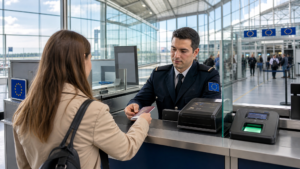
Border crossings: The main crossings are well-managed and rarely take more than 20-30 minutes (except during peak summer weekends at the Croatia-Bosnia border). Have your passport, rental agreement, and Green Card ready. Some crossings are only staffed during daylight hours.
Mountain roads: The road through Montenegro’s Durmitor National Park and sections near Kotor involve hairpin bends and sheer drops. Beautiful, but drive slowly, especially in the dark or rain. The “Serpentine” road from Kotor up to Lovćen is legendary, 25 hairpin bends.
Best Budget Accommodations Along the Route
The Balkans’ accommodation scene has upgraded significantly. Here’s what to expect at each stop:
Zagreb: The city has excellent boutique hostels in the city centre (€15-25 dorm, €35-55 private). Catch up Studio, Hostel Day and Night, and Studio Varošanec are consistently rated highly. For private rooms, budget hotels around the main train station offer doubles from €40-60.
Plitvice/Split: Stay in Split, private apartments near the Palace Old Town from €35-60/night. Split is a hub with hundreds of apartments on Booking.com.
Mostar: Private rooms from €15-25/night with hosts who’ll cook you breakfast. The Muslibegović House is a heritage gem if you’re willing to splurge once (€60-80). Most guesthouses are family-run and excellent value.
Dubrovnik: The priciest stop. Stay in Lapad (bus to Old Town) or cross into Igalo, Montenegro, to cut costs dramatically. Private rooms from €40-70.
Kotor/Budva: Rooms from €25-45/night. Kotor’s Old Town has small family guesthouses; Budva has more modern hotels. Book early in summer, this area fills fast.
Tirana: Albania’s cheapest city. Excellent hostels from €10-15/night; private rooms from €20-35. The Blloku area is where you want to be.
Ohrid: Lake-view guesthouses from €20-35/night. One of the best value spots on the route, charming family accommodation in ancient stone houses.
Balkan Food Guide on a Budget ($5-10 meals)
The Balkans may be the best food value in Europe. Here’s what to eat and what to pay:
Ćevapi (Bosnia/Serbia): The region’s signature dish, small grilled meat rolls served in soft flatbread with onions and kajmak cream cheese. A full portion costs €3-5. Non-negotiable in Mostar.
Burek (Everywhere): Flaky pastry filled with meat, cheese, or spinach. Breakfast of champions. €1-2 for a generous portion from any bakery.
Grilled fish (Croatia/Montenegro/Albania): Fresh Adriatic sea bass (branzino) or bream, grilled simply with olive oil and herbs. €8-15 in a good restaurant, expensive by Balkan standards but cheap compared to Italy for the same quality.
Tavë Kosi (Albania): Baked lamb with yogurt and eggs, Albania’s national dish. €5-8 in a local restaurant.
Pljeskavica (Everywhere): A massive grilled meat patty, like a gourmet Balkan burger. €3-6.
Markets and supermarkets: Fresh produce is spectacularly cheap. A bag of tomatoes, bread, local cheese, and water costs €3-5. Supplement restaurant meals with market shopping to stay well under €15/day on food.
Beer: Local beers (Karlovačko, Nikšičko, Korça) cost €1-2 in bars. You won’t find that price in Paris.
General rule: eat where locals eat (look for restaurants without English menus posted outside, or with handwritten menus inside), avoid anywhere directly on the tourist waterfront, and always ask for the daily special (often not on the menu).
Essential Packing List for a Balkan Road Trip
Documents:
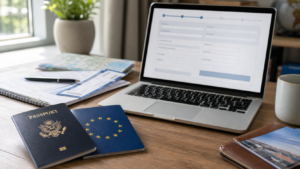
- Passport (not just EU ID card, some crossings require a passport)
- International driving permit (required if your licence isn’t in Roman script)
- Car rental agreement + Green Card insurance
- European Health Insurance Card (EHIC/GHIC if applicable)
- Travel insurance documents
For the car:
- Warning triangle (mandatory in all Balkan countries)
- Hi-vis vest (mandatory in most; keep in the cabin, not the boot)
- First aid kit (mandatory)
- Spare bulb kit (required in some countries)
- Offline maps downloaded (Maps.me or Google Maps offline, mobile data is expensive roaming in Albania/North Macedonia outside the EU)
- Car phone mount and charging cable
Clothing and gear:
- Light layers, summers are hot (35°C+) but mountain roads get cold
- Swimwear (beaches in Croatia, Montenegro, Albania)
- Comfortable walking shoes (cobblestones everywhere)
- Rain jacket (Balkans get afternoon thunderstorms in summer)
- Small daypack for sightseeing
Tech and money:
- Multi-currency card (Revolut/Wise), saves on conversion fees across 4+ currencies
- Portable power bank
- Universal travel adaptor (Type C/F plugs throughout)
- Local SIM card (get a Croatian SIM with EU roaming, works in all EU countries; buy Albanian data SIM at Tirana airport)
How Do Border Crossings Change the Budget?
Border crossings are the hidden cost of a Balkan road trip. The route still works under $1,000, but only if your rental contract, insurance, and overnight stops are planned before you drive.
The biggest mistake is booking the cheapest car without checking cross-border permissions. Some rental companies allow Croatia, Bosnia and Herzegovina, Montenegro, Albania, and North Macedonia in one contract; others charge daily supplements or ban specific countries. Confirm the Green Card or equivalent insurance certificate in writing, then carry a printed copy with your rental agreement and passport.
Plan border days as short driving days. Split to Mostar, Dubrovnik to Kotor, and Tirana to Ohrid can each look easy on a map, but queues, mountain roads, and fuel stops add friction. A realistic itinerary treats border crossings as half-day moves, not quick transitions between sightseeing blocks. That keeps the road trip enjoyable and protects the budget from late-night parking mistakes or last-minute hotel changes.
Frequently Asked Questions
Is a Balkan road trip safe in 2026?
Yes, the Balkans are genuinely safe for tourists. Petty crime exists in tourist areas (pickpockets in Dubrovnik’s Old Town, for example), as it does anywhere in Europe. Road safety requires attention on mountain roads. The region is politically stable; the countries on this route are either EU members (Croatia) or EU candidates with close ties. Check your government’s travel advisory for the latest, but for most travellers, there are no significant safety concerns.
Do I need a visa to drive through the Balkans?
EU/EEA citizens and most Western passport holders (US, UK, Canada, Australia) don’t need visas for any country on this route. Stays up to 90 days are typically visa-free. Check specific requirements for North Macedonia and Albania if you hold a non-standard passport, as rules vary slightly.
Can I use the Euro everywhere in the Balkans?
Croatia and Montenegro use the Euro. Bosnia uses the Convertible Mark (BAM), pegged to the Euro at roughly 1.96 BAM per €1, easy to calculate. Albania uses the Albanian Lek; North Macedonia uses the Macedonian Denar. Euros are often accepted informally in tourist areas but you’ll get poor exchange rates. Use ATMs and withdraw local currency.
What’s the best time of year for a Balkan road trip?
May-June and September-October are ideal: warm weather, fewer crowds, lower prices. July-August is peak season, Croatia and Montenegro’s coast gets extremely crowded and prices surge by 30-50%. The shoulder seasons offer better value and more pleasant driving conditions. Spring brings greenery to Plitvice; autumn turns the mountain roads golden.
Can I rent a car in Croatia and drive to Albania?
Yes, but check explicitly with your rental company. Most major companies (Hertz, Avis, Europcar) allow driving into Albania for an additional fee (€10-20/day for special insurance). Budget/local companies often prohibit it. Always get written confirmation and make sure you have the correct insurance documentation for each border crossing.
How much cash should I carry?
Always have €50-100 equivalent in local currency. Many restaurants, guesthouses, and petrol stations outside major cities are cash-only. Border crossings sometimes have currency exchange desks but rates are poor. ATMs (Bankomat) are available in all towns. Avoid airport currency exchange, use ATMs after arrival.
Is the Balkan road trip suitable for solo travellers?
Absolutely. Solo travellers love this route. The main cost impact is that car rental and accommodation costs aren’t split. A solo traveller should budget €1,200-1,500 for the same 14-day trip. Joining a traveller group for the car rental leg (hostels often have ride-share boards) can cut costs significantly.
FAQ
Why trust this information?
Profiles follow a quality checklist and are updated when new verified data is available.
How do I request corrections?
Use the contact page to submit updates with supporting details.