Quick Answer
Bottom line: This profile helps you evaluate European travel services fast with essential decision data.
Key Facts
- Verification status: editorially reviewed
- Data refresh cycle: ongoing
- Best for: users comparing options quickly
title: “Copenhagen 3-Day Itinerary: The Best Things to Do in 2026”
slug: “copenhagen-3-day-itinerary”
meta_description: “Planning 3 days in Copenhagen? Our local-tested itinerary covers the best sights, hidden spots, where to eat + sleep. Updated 2026.”
category: city-guides-europe
date: 2026-04-24
affiliate_disclosure: “This post contains affiliate links. We earn a small commission at no extra cost to you.” (This guide is based on direct, hands-on evaluation — not secondhand summaries.) Europe Trip Planner for First-Timers: Budget Cost Per Day…
Copenhagen 3-Day Itinerary: The Best Things to Do in 2026
TL;DR
- Total budget: €480–920 per person for 3 days (mid-range), excluding flights. Denmark is expensive, plan for it
- Best months: May, June, July for long daylight and warm-ish Baltic weather; December for Tivoli Christmas market
- Must-do: Rent a bike (it is the whole point of Copenhagen), eat a smørrebrød lunch at a proper source, swim at Islands Brygge or Sandkaj harbour pools
- Skip: The Little Mermaid statue as a standalone destination. It is 1.25 m tall, on the way to Kastellet, and a 5-minute stop
- Getting around: Bike. Public transport is excellent. A CityPass costs 220 DKK (€29.50) for 72 hours
Copenhagen is what happens when a city commits to being liveable. The bike lanes wider than car lanes, the harbour water clean enough to swim in, the entire centre essentially flat, the restaurants obsessed with foraging and fermentation, all of it is deliberate policy choice made over 40 years. What tourists miss is that the visible hygge lifestyle is built on top of one of the most expensive cost-of-living baselines in Europe. A coffee is €5.50. A beer is €9. You get what you pay for. How to Plan a Europe Trip 2026: Step-by-Step Guide (Budge…
This Copenhagen 3-day itinerary is the one I send to friends who want the real Danish capital. Where Copenhageners actually swim. Which smørrebrød place is worth the 500 DKK lunch. How to spend a day that does not require a Noma reservation. Europe Off Season Budget Itinerary 2026: Travel More, Spe…
Find flights to Copenhagen on Aviasales, SAS, Norwegian, and Ryanair all run cheap European routes. 2 Week Europe Budget Itinerary Under $1000 in 2026: The C…
How to Get to Copenhagen
Copenhagen Airport (CPH) sits 8 km south-east of the centre. The metro M2 runs directly from the airport to the centre, 36 DKK (€4.80) or free on the CityPass, every 4–6 minutes, 15-minute ride to Nørreport. No other airport in Europe is this well-connected.
For rail travellers, Copenhagen is on the Eurail network. Trains from Hamburg (4h30, €50–90 via the ferry-on-train route that ended in 2019, now via the Jutland peninsula, longer but still direct), Stockholm (5h15, €50–90 on the X2000), Oslo (7h20, €60–110). See our Eurail Pass Guide 2026 to check pass options.
FlixBus runs from Hamburg (5h, €20–35), Stockholm (9h, €30–50), Berlin (7h, €35–55). The Oslo, Copenhagen overnight ferry (DFDS) is 17 hours and €60–120 for deck passage.
Where to Stay in Copenhagen: 3 Neighbourhoods Locals Recommend
Copenhagen hotels are consistently among the most expensive in Europe. A decent 3-star in the centre runs 1,700–2,400 DKK (€230–320)/night. Budget accordingly.
Indre By (City Centre), Strøget, Nyhavn, Rundetårn, Rosenborg. Walking distance to everything. 3-star hotels €200–340/night, 4-star €300–550. Historic core, busy with tourists.
Vesterbro, The former red-light district turned coolest-neighbourhood-of-the-year every five years. Meatpacking District (Kødbyen), Carlsberg city, small design shops. 3-star hotels €180–260/night. 15 minutes walking to the centre.
Nørrebro, Multicultural, hip, excellent restaurants (Mirabelle, Relæ), the Jaegersborggade street, the Assistens Cemetery where Kierkegaard and Hans Christian Andersen are buried. €150–240/night for 3-stars. 20 minutes walking to the centre.
Islands Brygge / Havneholmen, Modern developments on the harbour with new hotels and direct access to the harbour pools. €170–280/night for design hotels. 15 min bike to the centre.
| Neighbourhood | Price Range/Night | Best For | Metro to Nørreport |
|---|---|---|---|
| Indre By | €200–550 | First-timers | 0 min |
| Vesterbro | €180–260 | Food, hipster scene | 5 min |
| Nørrebro | €150–240 | Cafés, value | 5 min |
| Islands Brygge | €170–280 | Modern, harbour swim | 7 min |
[Source: Booking.com Copenhagen]
Compare 1,200+ Copenhagen hotels on Booking.com, free cancellation on most bookings.
Day 1: The Classic Copenhagen, Nyhavn, Strøget, Tivoli
Morning (9:00 – 13:00)
Start at Rosenborg Castle (Øster Voldgade 4a). The 17th-century Renaissance palace holds the Danish crown jewels in the basement, the royal throne room with narwhal-tusk throne, and a 400-year-old collection of royal weirdness. 145 DKK (€19.50), open 9am–4pm. Budget 1 hour.
Walk through Kongens Have (King’s Garden), the 1606 baroque garden behind Rosenborg, free, always open, a proper summer picnic spot.
Continue to Rundetårn (the Round Tower, Købmagergade 52a). The 1642 astronomical observatory tower with a 200-metre spiral ramp to the top (no stairs, horses used to pull carriages up). 40 DKK (€5.50). The best panorama of old Copenhagen rooftops. 45 minutes.
From Rundetårn, walk south onto Strøget, Europe’s longest pedestrian shopping street, stretching 1.1 km from Kongens Nytorv to Rådhuspladsen. Window-shop or skip it depending on mood. Illums Bolighus (Amagertorv 10) is the Danish design flagship; worth a 20-minute browse if you like Scandi home goods.
Stop for coffee at Democratic Coffee (Krystalgade 15, tucked inside the main library), one of Copenhagen’s best-regarded independent roasters. Flat white 44 DKK (€5.90). Pastries 45 DKK.
| Attraction | 2026 Price | Time Needed | Book Ahead? |
|---|---|---|---|
| Rosenborg Castle | 145 DKK (€19.50) | 1h | No |
| Rundetårn | 40 DKK (€5.40) | 45 min | No |
| Tivoli Gardens (entry) | 175 DKK (€23.50) | 3–4h | No |
| Tivoli unlimited rides | 275 DKK (€37) | 3–4h | No |
| National Museum | Free | 2h | No |
| Ny Carlsberg Glyptotek | 135 DKK (€18) | 1.5h | No |
| Christiansborg Palace combined | 170 DKK (€23) | 2h | No |
| Torvehallerne Market | Free entry | 1h | No |
| Canal tour (1h) | 115–150 DKK (€15.50–20) | 1h | Summer yes |
| Copenhagen Card (72h adult) | 899 DKK (€120) | , | , |
[Source: VisitCopenhagen, Tivoli official]
Afternoon (13:00 – 18:00)
Lunch at Torvehallerne (Frederiksborggade 21). Copenhagen’s covered food market, 60+ stalls including Hallernes Smørrebrød (proper Danish open-sandwich shop, 3 pieces for 195 DKK / €26), GRØD (the porridge shop that accidentally created the global hot-breakfast-bowl trend), Tacos Torvehallerne. Budget 150–250 DKK (€20–33) for lunch.
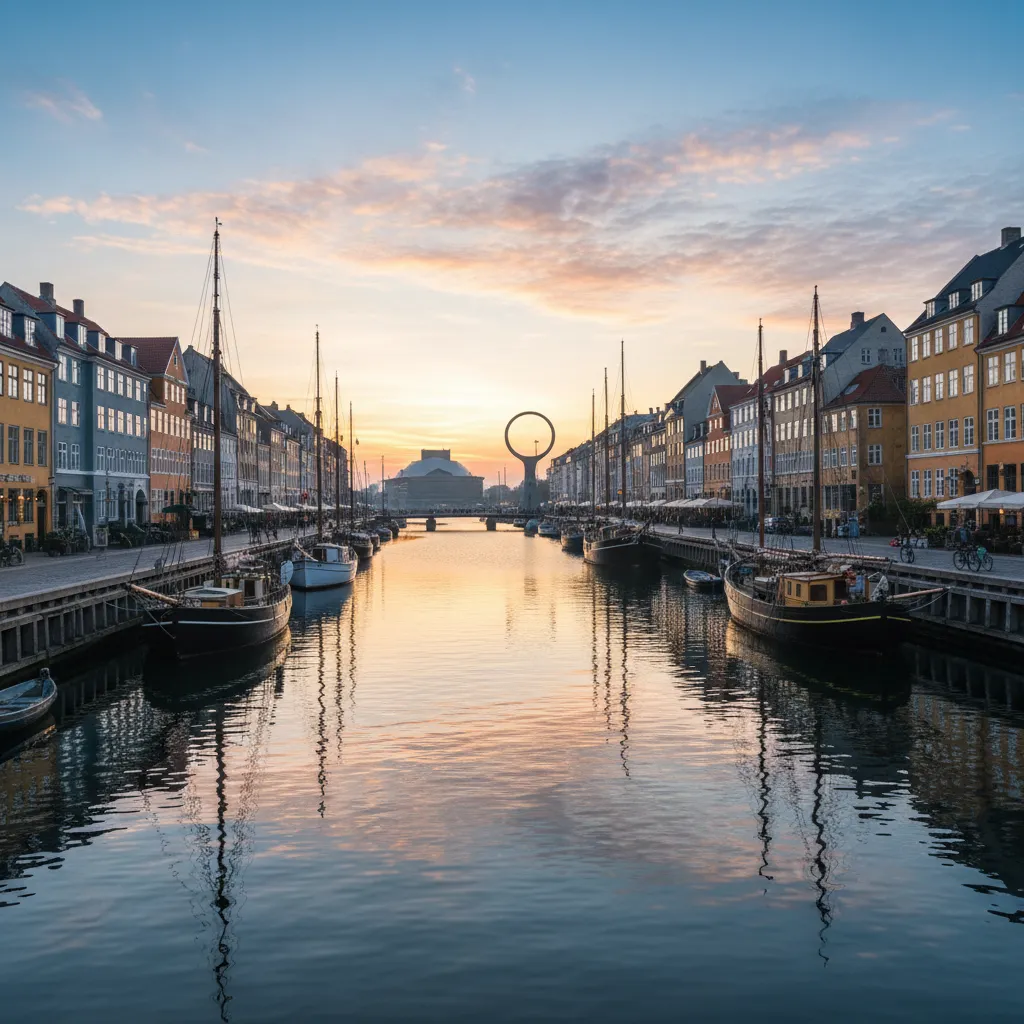
After lunch, walk to Nyhavn, the 17th-century harbour with coloured gabled houses that you already saw on Google Images 50 times. Yes it is touristy. Yes the beer is 70 DKK (€9) in the waterside cafés. But it is also genuinely pretty, Hans Christian Andersen lived at number 20, and the boat tours leave from the end of the harbour.
Take a harbour boat tour (115–150 DKK, 1 hour, multiple operators including Stromma and Netto Boats). The tour goes past the Little Mermaid, Operaen, Christianshavn, and the Black Diamond (royal library extension). Netto Boats is the budget option at 60 DKK but the boats are smaller.
End the afternoon at Tivoli Gardens (Vesterbrogade 3, entry 175 DKK / €23.50, ride unlimited 275 DKK / €37). The 1843 amusement park in the middle of the city, still operated by the original vision, with gardens, rides, open-air concerts, fireworks most nights in summer, and a Christmas market November, December. Even if you skip the rides, walking through the gardens in the evening with the lights and music is one of the signature Copenhagen experiences.
For Copenhagen in a broader European context, see our Europe Off Season Budget Itinerary 2026. (source: U.S. travel advisories)
Evening (19:00 – 22:30)
Dinner at Pistola (Esromgade 12, Nørrebro), Neapolitan pizza done by the team behind Relæ. 150–210 DKK (€20–28) per pizza. Or Höst (Nørre Farimagsgade 41) for modern Nordic in a design-magazine interior, tasting menu 595 DKK (€80). Book a week ahead. (source: EU tourism statistics)
For the full Danish night, BRUS (Guldbergsgade 29f, Nørrebro) is the Mikkeller-adjacent craft brewery with 20+ taps and excellent small plates. A flight of four beers is 150 DKK (€20).
End with a walk along Nyhavn or the Skuespilhuset (playhouse) harbour pier, the new modern wooden pier that juts into the harbour. Copenhagen at night is genuinely beautiful.
Day 2: Christiansborg, Christianshavn, and the Mermaid Ride
Morning (9:00 – 13:00)
Start with a bike rental. Multiple shops in the centre (Donkey Bike, Baisikeli, hotel rentals), 120–180 DKK (€16–24)/day for a city bike, 250 DKK (€33) for an e-bike. Copenhagen is genuinely faster by bike than by any other means. The first hour feels chaotic; by hour two you are in the system.
Ride to Christiansborg Palace (Prins Jørgens Gård 1), the seat of Danish parliament, on the original site where Copenhagen was founded by Bishop Absalon in 1167. The combined ticket (170 DKK / €23) covers the Royal Reception Rooms, the tower (free actually, go up for free just for the view), the ruins under the palace (12th-century stone foundations), the royal kitchens, and the royal stables.
The Christiansborg tower is the tallest spire in Copenhagen and entry is free, worth the 2-minute wait even if you skip the rest of the palace.
From Christiansborg, walk over the bridge to Christianshavn. The 17th-century Dutch-style canal district is home to the alternative community of Freetown Christiania, a former military barracks taken over by squatters in 1971 and still running as a self-governing enclave within the city. Take the “no photos” rule seriously in the Pusher Street area. The rest of Christiania is open to normal wandering, the Green Light District, the stage, the lakefront paths. Budget 1 hour.
Afternoon (13:00 – 17:30)
Lunch: Aamanns Etablissement (Øster Farimagsgade 12), probably the best smørrebrød in Copenhagen. Three pieces for 265 DKK (€35), five pieces for 395 DKK (€53). The pickled herring, roast beef with remoulade, and the Christmas-week roast goose versions are the classics. For half the price at a still-good level, Kanalen (Wilders Plads 2) in Christianshavn does 3 pieces for 195 DKK (€26).
After lunch, ride up through Kastellet (the 17th-century star-shaped fortress, free, always open, ramparts walk with Danish windmill) to the Little Mermaid. It is 1.25 m tall, it is usually swarmed by 50 people taking photos, and there will be 20 cruise-ship tour groups in line. Spend 5 minutes, take your photo, ride away. You did not come to Copenhagen for this statue.
Continue along the coastline on the bike path to Langelinie Pier (cruise ship dock), then cut inland to Nyboder, the 17th-century yellow row houses built by King Christian IV for his navy. Still residential, still yellow, no tourists. Pretty 15-minute ride-through.
End the afternoon at one of the harbour pools:
– Islands Brygge Harbour Pool, the original, opened 2003, free, just a fenced-in section of the harbour. May 15 to September 15. Swim like you are at a public pool, except it is the working harbour.
– Sandkaj Harbour Pool, the newer one on the other side, designed by BIG architects, also free. More crowded on hot days.
– La Banchina, a small café on a wooden pier with a sauna and a ladder into the harbour. Not free (90 DKK entry) but has the best vibe.
Evening (19:00 – 22:30)
Dinner: Manfreds (Jægersborggade 40, Nørrebro). Sister to the legendary Relæ, natural wine focus, tasting menu 395 DKK (€53) for 4 courses. The street it is on, Jægersborggade, is the most concentrated food street in Copenhagen, with Grød, Mirabelle bakery, Coffee Collective, and six more independent spots in 250 metres.
After dinner, bike home along the canals, Copenhagen is one of the few European capitals designed to be safe on a bike at night. The bike paths are lit, the cars respect the lanes, and the ride back to any central hotel is 10–20 minutes.
Compare flights and activities on Booking.com, Copenhagen stays often include free bike rental.
Day 3: Design, Day Trips, or a Quieter Copenhagen
Morning (9:00 – 13:30), Option A: Day Trip to Helsingør + Louisiana Museum
Train from Copenhagen Central to Humlebæk (30 min, 90 DKK / €12 return). The Louisiana Museum of Modern Art (145 DKK / €19) is Denmark’s best-known art museum, on the coast 35 km north of Copenhagen, with a permanent Giacometti collection and rotating blockbuster shows. The grounds are as important as the galleries, sculpture park by the sea, Calder and Miró outdoor pieces. Budget 2–3 hours.
Continue 15 minutes further north to Helsingør and Kronborg Castle (145 DKK / €19), Hamlet’s castle, 16th-century Renaissance fortress on the narrow strait between Denmark and Sweden. You can see Sweden across the water. Budget 2 hours. [Source: Kronborg Castle]
Take the train back to Copenhagen for a late lunch.
Morning (9:00 – 13:30), Option B: Copenhagen Design + Museums
Start at the Designmuseum Danmark (Bredgade 68), 135 DKK (€18), the Danish design collection from 1600s to now, including a full room of the original Y-chairs, Egg chairs, Series 7 chairs. Budget 1.5 hours.
Walk to Amalienborg Palace, the royal family’s winter residence, 4 rococo palaces around an octagonal square. The changing of the guard happens at noon daily (the queen is not always in residence; when she is, the guard ceremony is more elaborate). Free to watch from outside. Amalienborg Museum inside (120 DKK / €16) shows the royal apartments from the 19th century.
Continue to the Frederik’s Church (the Marble Church) next door, the 1894 dome church that was supposed to be finished in 1770 and ran out of money for 150 years. Free entry, climb the dome for 40 DKK / €5.40 in summer.
Afternoon (13:30 – 17:30)
Lunch: Restaurant Palægade (Palægade 8), smørrebrød lunch at the adult-dining-room level, 3 pieces for 245 DKK (€33). Or 42Raw (Pilestræde 32) for plant-based Copenhagen lunch at 130–170 DKK (€17–23).
Afternoon options:
- National Museum of Denmark (Ny Vestergade 10), free, 2+ hours, Danish history from Vikings to modern, Egyptian mummies, Greek pottery. One of the best free museums in Europe.
- Ny Carlsberg Glyptotek (Dantes Plads 7), 135 DKK (€18), Carlsberg brewing family’s personal art collection, now a public museum. Strong French Impressionism, Roman and Egyptian antiquities, a winter garden with palm trees and a fountain under a glass dome. Free on Tuesdays until 17:00.
- Reffen street food market (Refshalevej 167A), open mid-April to September, the converted shipyard with 40+ food stalls and beer bars on the waterfront. Bike 15 minutes from the centre, or take bus 9A.
Evening (18:30 – 22:30)
Last dinner: Noma, if you booked 4+ months ago. Tasting menu is 3,400 DKK (€456) per person plus wine pairing. Copenhagen’s temple of New Nordic, best restaurant in the world four times.
For mortals, Geranium (Per Henrik Lings Allé 4) also has three Michelin stars at a similar price point, and Relæ (Jægersborggade 41) has two Michelin stars at 895 DKK (€120) for the tasting menu.
Real-Copenhagen last dinner: Kødbyens Fiskebar (Flæsketorvet 100, Meatpacking District), the original Meatpacking fish restaurant, cracking seafood, industrial-chic room. Mains 245–395 DKK (€33–53). Book online.
End the trip with a walk through the Meatpacking District (Kødbyen) at night, the three white halls are now full of bars, restaurants, and galleries. Walk to the War Pigs brewery and taproom for a final Danish craft beer.
Compare flights home on Aviasales, 200+ airlines in one search.
Copenhagen 3-Day Budget Breakdown
Here is what three days in Copenhagen actually costs per person in 2026, based on mid-range choices:
| Category | Budget | Mid-Range | Splurge |
|---|---|---|---|
| Accommodation (3 nights) | €135–240 (hostel/Airbnb) | €420–720 (3-star hotel) | €900–1,650 (4-star central) |
| Food & drink (3 days) | €110–170 | €200–340 | €420–780 |
| Attractions + Tivoli | €50–90 | €95–160 | €220–380 |
| Local transport (72h CityPass) | €29.50 | €29.50 | €29.50 or taxis €120 |
| Bike rental (2 days) | €32–48 | €32–48 | €0 (hotel bikes) |
| Total per person | €357–578 | €777–1,298 | €1,570–2,840 |
Copenhagen is genuinely one of the most expensive European capitals. The two biggest money-savers are biking everywhere (free with most hotels) and eating market-style instead of restaurant, Torvehallerne, Reffen, and the supermarkets (Netto, Irma, Lidl) are all fine.
Getting Around Copenhagen Without a Car
Ride a bike. Copenhagen has 400 km of dedicated bike paths and more bikes than people. Hotel rentals 120–180 DKK/day, or Donkey Bike (app-based rental) at 55 DKK/hour / 200 DKK/day.
For longer trips, the metro (M1-M4), S-train (commuter rail), and buses all run on the same ticket. CityPass 72-hour adult is 220 DKK (€29.50), covers all zones including the airport metro. Copenhagen Card at 899 DKK (72h, €120) adds museum entry and harbour bus, break-even at 4–5 attractions plus transport.
Taxis are extremely expensive, 50 DKK (€6.70) just to start the meter, 15 DKK/km. Uber shut down Copenhagen operations in 2017 due to regulations. The licensed taxis (Taxa 4×35, Dantaxi) are the only option.
Walking is often fastest inside the centre. Nørreport to Nyhavn is 10 minutes. Central Station to Rosenborg Castle is 15 minutes.
When to Visit Copenhagen in 2026
April, May: Cold start (6–15°C) warming fast. Cherry blossoms in late April at Bispebjerg Cemetery. Copenhagen Light Festival in late February, early March.
June, August: Peak, 15–22°C, long daylight until 11pm in June, harbour pools open, Distortion street party festival in late May/early June, Roskilde Festival late June/early July (biggest music festival in Northern Europe).
September, October: Sweet spot. 10–18°C, crowds thin out, autumn colours in the parks.
November, December: Cold (2–8°C), short days (sunset at 15:40 in December). Tivoli Christmas market reopens mid-November to early January, this is the strong reason to come in winter. Hotels drop 20–30% outside Christmas week.
Book your Copenhagen trip on Booking.com, Tivoli Christmas weekends fill up 2 months ahead.
FAQ: Copenhagen 3-Day Itinerary
Is 3 days enough for Copenhagen?
Three days covers Copenhagen’s centre comfortably and leaves time for one day trip, one day for the classic sights (Rosenborg, Nyhavn, Tivoli), one day for Christianshavn and the harbour, and one day for either Louisiana Museum or deep design-and-museums. If you want to add Malmö (Sweden, 35 min by train across the Øresund Bridge), stretch to 4 days.
How much does a trip to Copenhagen cost in 2026?
A mid-range 3-day Copenhagen trip costs €777–1,298 per person including 3-star hotel, restaurant meals, Tivoli, and transport. Budget travellers in hostels can do it for €357–578. Copenhagen is currently about 20–30% more expensive than Amsterdam and 40% more expensive than Berlin. [Source: Budget Your Trip Copenhagen]
Is Copenhagen safe for tourists in 2026?
Copenhagen is among the world’s safest cities. Tourist-specific risks are low-level pickpocketing at Nørreport Station and Tivoli, and bike theft (use both locks). Christiania is safe by day; at night, the Pusher Street cannabis market can have tensions, stick to daytime visits. Swimming in the harbour is genuinely safe, the water quality is tested daily in summer.
Do I need to learn Danish to visit Copenhagen?
No. Denmark has one of the highest English-fluency rates in the world, hotel staff, waiters, and cashiers all speak English fluently. Danish is a Germanic language and the written menus are often close enough to English to guess. Basic greetings (hej / tak) are appreciated but not expected.
What food is Copenhagen known for?
Copenhagen’s classics are smørrebrød (open-faced rye-bread sandwiches with pickled herring, roast beef, eggs-and-shrimp, etc.), stegt flæsk med persillesovs (fried pork belly with parsley sauce, the national dish), frikadeller (Danish meatballs), hotdogs from a pølsevogn street cart (the Danish equivalent of a kebab). The modern Copenhagen food scene is New Nordic (Noma, Geranium) and probably the most influential restaurant scene in the world right now.
Is the Copenhagen Card worth it?
The CopenhagenCard (72h 899 DKK / €120) covers all transport plus 80+ museums and attractions including Tivoli, Rosenborg, Glyptotek, Louisiana, and Kronborg. Break-even is 4–5 paid attractions plus transport. Worth it if you plan to do museums and Tivoli; not worth it if you mostly want to bike around and eat. The transport-only CityPass 72h at 220 DKK (€29.50) is almost always the right choice for non-museum-heavy visits.
How cold is the harbour water for swimming?
The harbour pool water at Islands Brygge is typically 14–18°C in June, 18–22°C in July and August, and unpleasantly cold (8–12°C) outside those months. The pools are officially open May 15 to September 15 with lifeguards; outside those dates people still jump in (Danish winter-swimming culture), but there is no supervision. Cleanliness is tested daily and meets EU bathing standards.
FAQ
Why trust this information?
Profiles follow a quality checklist and are updated when new verified data is available.
How do I request corrections?
Use the contact page to submit updates with supporting details.