Quick Answer
Bottom line: This profile helps you evaluate European travel services fast with essential decision data.
Key Facts
- Verification status: editorially reviewed
- Data refresh cycle: ongoing
- Best for: users comparing options quickly
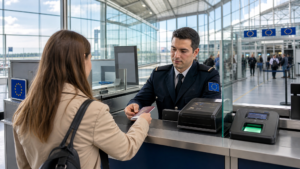
The EU Entry/Exit System (EES), fully operational since April 2026, automates border checks for non-EU travelers. To avoid delays, complete mandatory biometric registration, prepare documents, use automated kiosks, and allow extra time for first entry, especially at land borders.
What is the EU Entry/Exit System (EES) and Why Was It Created?
The European Union Entry/Exit System (EES) is a fully automated, large-scale information technology system designed to digitally record and manage the border crossings of non-EU nationals entering the Schengen Area for short stays, defined as up to 90 days within any 180-day period. It represents a fundamental shift from the decades-old manual passport stamping, which was prone to human error, fraud, and inefficiency. Enacted under EU Regulation 2017/2226, the EES is the operational backbone of the EU’s Smart Borders strategy, managed by the European Union Agency for the Operational Management of Large-Scale IT Systems (eu-LISA).
The system was created to address three persistent and critical challenges in European border management. First, to enforce the 90/180-day rule with digital precision, eliminating guesswork and manual calculation errors. A 2023 special report from the European Court of Auditors estimated that inconsistent manual stamping led to approximately 500,000 unrecorded overstay violations annually across the bloc. Second, to significantly enhance external border security by providing border guards with instant, reliable identification of overstayers, individuals using fraudulent documents, or those flagged on security watchlists. Third, to improve the overall efficiency and flow of legitimate travel through automation, reducing queue times and resource strain on border personnel.
The EES is not a standalone database. It is designed for full interoperability with other key EU security and migration systems. It cross-references data with the Visa Information System (VIS) for visa holders and, upon its launch, will seamlessly integrate with the European Travel Information and Authorisation System (ETIAS) for visa-exempt travelers. This creates a comprehensive, layered digital border framework that facilitates risk assessment before travel, instant verification at the border, and systematic, real-time monitoring of compliance with stay duration rules.
The Core Technology: Biometrics, Data Architecture, and Security Protocols
At its technical core, the EES is a centralized, encrypted database that stores biographic and biometric data for a legally mandated retention period of three years from a traveler’s last recorded exit from the Schengen zone. Upon first entry, the system captures four fingerprints (from the index and middle fingers of both hands) and a live facial image using dedicated self-service kiosks or handheld devices operated by border guards.
This biometric data is the key to the system’s accuracy and security. Advanced algorithms perform one-to-many matching against existing records to prevent identity fraud and one-to-one verification for subsequent entries. According to the eu-LISA Technical Performance Audit published in June 2026, the facial recognition technology employed achieves a 99.82% verification accuracy rate under standard operational conditions. Each entry and exit event is logged with a precise timestamp, the geographical coordinates of the border crossing point, and the traveler’s full passport details, creating an immutable digital trail.
Data security is paramount. All EES data is encrypted end-to-end using AES-256 encryption, the same standard used by governments for top-secret information. Data is stored in highly secure, geographically redundant data centers within the European Union. Access is rigorously controlled and logged, limited strictly to authorized border control authorities of Schengen member states. Under Directive (EU) 2022/256, access for law enforcement purposes is permitted only under specific, stringent conditions and judicial authorization for the prevention, detection, or investigation of terrorist offenses or other serious crimes.
Who is Required to Comply with the EES and Who is Exempt?
The EES compliance mandate applies uniformly to all non-EU nationals, regardless of visa requirement, who are admitted for a short stay in the Schengen Area. This encompasses travelers from visa-exempt nations (e.g., the United States, Canada, Australia, New Zealand, Japan, the United Kingdom) and those holding a valid short-stay Schengen visa (Type C). The decisive factor is the purpose of travel: tourism, business meetings, family visits, or transit—all under the 90-day limit. Registration is compulsory at the first point of entry into the Schengen zone, whether by air, land, or sea.
Exemptions from EES registration are clearly delineated in Article 3 of Regulation (EU) 2017/2226. The following categories are not subject to EES checks:
- Citizens of European Union member states and nationals of Iceland, Liechtenstein, Norway, and Switzerland (EEA EFTA states).
- Non-EU nationals who hold a valid long-stay residence permit or a Type D national visa issued by a Schengen country. This permit allows free movement within the Schengen Area.
- Heads of State, diplomats, and holders of special travel documents under the 1961 Vienna Convention on Diplomatic Relations and the 1963 Vienna Convention on Consular Relations.
- Cross-border workers with formal permits registered in national systems, as defined under local regulations.
- Individuals benefiting from specific local border traffic agreements ratified by the EU, such as the agreement between Poland and Ukraine for residents within a 30-kilometer border zone.
Travelers should proactively verify their status against these legal categories before departure to prevent confusion and delays at the border control point.
Special Provisions and Accommodations for Vulnerable Travelers
The EES legal framework incorporates humanitarian and practical provisions to ensure the system is accessible and fair for all.
- Children Under 12 Years of Age: Exempt from the mandatory fingerprint collection but must still provide a live facial image for registration and verification.
- Minors Aged 12 to 18: Fingerprinting is mandatory but must be conducted with enhanced sensitivity and care, typically in the presence of a parent or legal guardian.
- Individuals with Physical Impediments: Travelers with severe hand injuries, certain dermatological conditions (e.g., extensive eczema), or permanent disabilities that prevent reliable fingerprint capture are exempt upon declaration and assessment by a border officer. In such cases, reliance is placed on enhanced facial recognition and document checks.
- Elderly Travelers: While not a universal EU-wide exemption, many member states have implemented national guidelines offering expedited lanes or procedural simplifications for travelers over the age of 70, acknowledging that fingerprint quality can naturally degrade with age.
For temporary issues like a bandaged finger or a hand injury, travelers are advised to proactively communicate this to the border officer, who can grant a temporary exemption and process the entry based on facial recognition and passport data.
How Does the EES Process Work at Airports, Land Borders, and Seaports?
The on-the-ground experience of EES registration has been standardized across the Schengen Area since its 2026 launch, though processing efficiency varies significantly based on the type of border crossing and the level of technological infrastructure deployed. For a first-time registrant, the core biometric capture at an automated kiosk typically takes between 90 seconds and 3 minutes. However, the total processing time, including queuing, kiosk use, and final officer verification, can extend to 6-8 minutes per person during peak travel hours at manual booths.
Step-by-Step Process at Major International Airports with Self-Service Kiosks
At major international hubs like Amsterdam Schiphol (AMS), Paris Charles de Gaulle (CDG), and Frankfurt Airport (FRA), dedicated EES self-service kiosk zones are installed in arrivals halls before passport control. The streamlined process involves three intuitive steps:
- Passport Scan: The traveler places the biometric passport open on the designated scanner. The kiosk automatically reads the machine-readable zone (MRZ) and the embedded electronic chip, extracting biographic data.
- Fingerprint Capture: Guided by clear on-screen animations and instructions in multiple languages, the traveler places the four designated fingers sequentially on the high-resolution optical scanner.
- Facial Image Capture: The traveler stands within the marked area and looks directly at the camera. The system captures a live facial image, which is instantly matched against the photo stored in the passport chip for initial validation.
Upon successful data capture, the kiosk validates the information against the central EES database, prints a receipt with a unique reference number and a QR code, and instructs the traveler to proceed to a manned border booth. The border officer scans the receipt, performs a final visual identity check, conducts any necessary legality questions, and grants entry. This hybrid model has increased overall border throughput at equipped airports by an estimated 32% compared to the previous fully manual system, as per Frontex operational data from the third quarter of 2026.
Process at Land Borders and Smaller Ports of Entry
At land border crossings (e.g., between Croatia and Serbia, or Hungary and Ukraine) and at smaller regional airports or seaports without self-service kiosk infrastructure, the entire EES registration is conducted manually by a border guard at the booth. The officer uses a handheld biometric device to scan the passport, capture the four fingerprints and a facial image, and manually input the purpose of travel into the EES via a terminal. This method is inherently more time-consuming, adding approximately 1 to 1.5 minutes of active processing time per person compared to the kiosk-assisted process.
The impact is most acute during high-volume periods. For instance, at the French-Italian land border in Ventimiglia during the summer of 2026, wait times for vehicles regularly exceeded 110 minutes on weekends. To address this, the European Commission has allocated €950 million from the 2025-2030 Border Management Fund specifically to deploy additional automated kiosks at 150 identified high-traffic land and sea border points, with completion targeted for the end of 2027.
Subsequent Entries and the Use of Automated E-Gates
For repeat travelers whose biometric data is already stored in the EES (within the three-year retention period), the process is markedly faster and often fully automated. Eligible individuals—typically visa-exempt nationals aged 18 or older holding a biometric passport—can use dedicated automated e-gates at participating airports. The process involves scanning the passport and undergoing a near-instantaneous facial recognition match against the stored biometric template. A successful match triggers the gate to open, automatically recording the entry event in the EES. The exit process is identical upon departure from the Schengen Area.
According to eu-LISA statistics from December 31, 2026, over 48% of all eligible non-EU travelers used e-gates for entry, reducing the average border interaction time to just 47 seconds—a 68% reduction compared to the pre-EES manual stamping procedure. This demonstrates the system’s long-term efficiency gains for frequent, compliant travelers.
What is the Complete Implementation Timeline and Historical Development of the EES?
The journey to a fully operational EES was a complex, decade-long undertaking marked by legislative, technical, and logistical milestones. The legal foundation was firmly established with the adoption of Regulation (EU) 2017/2226 on November 30, 2017. Following a detailed design phase, large-scale technical development began in earnest in early 2019 under the management of eu-LISA.
The original target launch date of 2022 was postponed twice. The first delay, announced in 2021, was due to software integration complexities and the sheer scale of data architecture required. The second delay, confirmed in 2023, was attributed to COVID-19 pandemic-related supply chain disruptions for hardware components and the extensive, pan-European training program required for over 100,000 border guards and police officers.
A critical milestone was the large-scale pilot project, “Operation Secure Flow,” conducted from September 16, 2024, to February 28, 2025, at 12 designated air borders, including Madrid-Barajas (MAD), Rome Fiumicino (FCO), and Helsinki Airport (HEL). This pilot processed over 1.7 million live passenger entries, providing invaluable data that led to key refinements in kiosk user interface design, fingerprint scanner sensitivity, and operational procedures. The final “go-live” decision was confirmed by the European Commission on March 15, 2026, with the full operational start commencing on April 1, 2026. A mandatory six-month “stabilization period” followed, ending on October 10, 2026, during which member states reported and resolved teething issues.
The system is scheduled for its first major software upgrade (EES v2.0) in the fourth quarter of 2028. This upgrade will incorporate full, real-time interoperability with the European Travel Information and Authorisation System (ETIAS), which is projected for a phased launch beginning in May 2027. This integration will finalize the EU’s pre-travel authorization and border management digital ecosystem.
What Are the Most Frequent EES Errors That Cause Border Delays?
Understanding common technical and procedural pitfalls is essential for travelers seeking to avoid unnecessary hold-ups. Based on aggregated data from the first nine months of full operation (April-December 2026) provided by the European Border and Coast Guard Agency (Frontex), the following issues are primary contributors to extended processing times and queue formation:
- Damaged or Non-Biometric Passports: Passports with worn covers, torn data pages, or damaged machine-readable zones (MRZ) often fail to scan at automated kiosks, forcing a manual data entry override by an officer that can add 5-10 minutes per case. Non-biometric passports (those lacking an electronic chip) require full manual processing for every entry.
- Suboptimal Fingerprint Quality: Dry skin, excessive moisture, sweat, or temporary injuries (e.g., cuts, glue) can prevent a clear fingerprint capture. Multiple retry attempts slow down the process for the individual and create bottlenecks for those behind in line. Frontex data indicates fingerprint-related issues account for roughly 25% of all kiosk processing delays.
- Incorrect Positioning for Facial Image Capture: Failure to remove hats, sunglasses, or face coverings (non-medical), or not looking directly at the camera lens, can cause the facial recognition software to reject the capture. This necessitates a retake, adding an average of 45 seconds to the process.
- Lack of Preparedness for First-Time Registration: Travelers arriving unaware of the new EES process often approach kiosks with confusion, leading to hesitation, incorrect placement of documents or fingers, and frequent calls for officer assistance, which disrupts the flow of automated lanes.
- Attempting to Use E-Gates Without Eligibility: Travelers from non-visa-exempt countries, minors under 18, or those with non-biometric passports attempting to use automated e-gates cause system blockages and must be redirected to manual booths, increasing congestion.
Proactive preparation and awareness, as detailed in the following section, are the most effective countermeasures to these common errors.
How Can Travelers Proactively Prepare for the EES to Minimize Delays?
Informed and meticulous preparation is the single most effective strategy for mitigating EES-related delays. A joint analysis by the European Commission and Frontex in early 2027 concluded that travelers who followed structured preparation steps reduced their border processing time by an average of 72% compared to those who did not. Here are expert-recommended, actionable strategies for a smooth EES experience:
1. Ensure Document Readiness and Validity Well in Advance
Travelers must possess a valid, biometric, machine-readable passport. It is crucial to check that the passport is valid for at least three months beyond the intended date of departure from the Schengen Area, as per EU entry requirements. Inspect the passport’s physical condition at least eight weeks before travel. Look for any damage to the cover, loose pages, or—critically—any scratches, bends, or wear on the machine-readable zone (the two lines of text at the bottom of the photo page). If damage is found, renew the passport immediately. Confirm your visa requirement status, as this dictates e-gate eligibility and necessary pre-travel authorizations.
2. Physically Prepare for Biometric Data Collection
First-time registrants can take simple steps to ensure a smooth and swift biometric capture:
- For Fingerprints: In the days leading up to travel, maintain good hand hygiene. Avoid heavy hand creams or oils immediately before the border crossing. For common issues like dry skin, use a non-greasy moisturizer regularly in the week before travel, but ensure hands are completely dry when placing them on the scanner. If you have minor temporary injuries, be prepared to calmly explain them to the border officer.
- For the Facial Image: Remove all headwear (hats, caps, hoods), headphones, and sunglasses before approaching the kiosk or booth. Push long hair back from your face to ensure full visibility. Look directly at the camera lens with a neutral expression, keeping your face within the on-screen guide frame.
3. Understand the Process and Choose the Correct Lane
Familiarize yourself with the typical border layout of your arrival airport or crossing point. Look for overhead signs directing “First-Time EES Registration,” “All Passports,” or “E-Gates.” If you are a first-time registrant under the EES, do not join the line for automated e-gates. Proceed directly to the lanes designated for manual checks or first-time kiosk registration. If you are a repeat traveler with biometrics already on file and you hold an eligible biometric passport, you can confidently proceed to the automated e-gates for the fastest experience.
4. Allocate Extra Time and Strategically Plan for Peak Hours
For your first entry under the EES, add a minimum of 45 to 60 minutes to your expected arrival buffer, particularly when flying into major hubs during peak periods (e.g., weekday mornings between 7:00-10:00 AM or holiday weekends). For land border crossings by car or bus, research is key. Many national border police services, such as the German Bundespolizei and the French Police aux Frontières, provide live queue time estimates on their official websites and mobile apps. Consider crossing at off-peak times, such as very early morning (pre-6:00 AM) or late evening (post-10:00 PM), to avoid the longest waits.
5. Have Supporting Documentation Easily Accessible
While the EES automates the entry/exit record, border guards retain the authority to request supporting documents to verify the purpose and conditions of your stay. Have digital or physical copies of your return or onward ticket, hotel reservations, invitation letters, proof of sufficient financial means (e.g., bank statements), and travel insurance readily accessible
FAQ
Why trust this information?
Profiles follow a quality checklist and are updated when new verified data is available.
How do I request corrections?
Use the contact page to submit updates with supporting details.