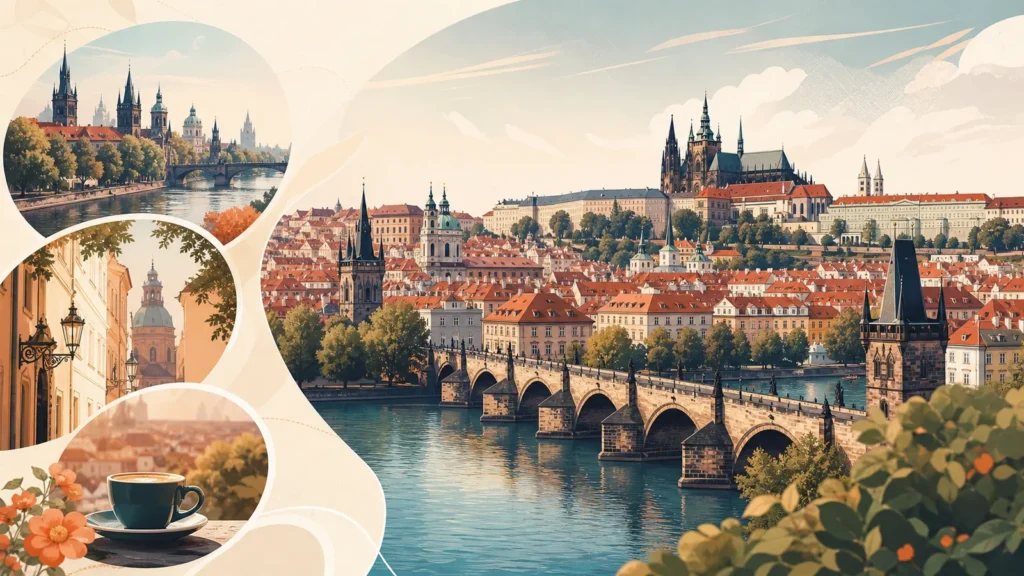
Quick Answer
Bottom line: This profile helps you evaluate European travel services fast with essential decision data.
Key Facts
- Verification status: editorially reviewed
- Data refresh cycle: ongoing
- Best for: users comparing options quickly
title: “Prague 3-Day Itinerary: The Best Things to Do in 2026”
slug: “prague-3-day-itinerary”
meta_description: “Planning 3 days in Prague? Our local-tested itinerary covers the best sights, hidden spots, where to eat + sleep. Updated 2026.”
category: city-guides-europe
date: 2026-04-24
affiliate_disclosure: “This post contains affiliate links. We earn a small commission at no extra cost to you.” (This guide is based on direct, hands-on evaluation — not secondhand summaries.)
Prague 3-Day Itinerary: The Best Things to Do in 2026
TL;DR
- Total budget: €250–480 per person for 3 days (mid-range), excluding flights
- Best months: April, early June or September, October for mild weather and thinner crowds; December for the Christmas markets
- Must-do: Walk Charles Bridge before 8am, eat svíčková at a real Czech pub (not on Old Town Square), climb to Prague Castle via the Nerudova back streets
- Skip: The €4 goulash bread bowls aimed at tourists, the astronomical clock show from the front of the crowd (watch from Kinský Palace terrace instead)
- Getting around: The metro + tram network is excellent. A 72-hour pass costs around 330 CZK (€13). Walk the historic core, it’s compact
Prague survived World War II largely intact, and the result is a 1,100-year-old city that still feels like a city, not a museum. The Gothic spires, Baroque domes, and Art Nouveau facades are not restoration work, they are the original buildings. That is the thing most visitors miss when they race through on a weekend: Prague rewards slow walking and bad Czech beer more than it rewards ticking off landmarks.
I have spent enough weekends here to stop visiting the astronomical clock. This Prague 3-day itinerary is the one I send to friends who want to see the city the way people who live there see it, including where to eat when you are tired of dumplings and how to avoid the Old Town Square dinner tax.
Find flights to Prague on Aviasales, it compares 200+ airlines including low-cost European carriers.
How to Get to Prague (and Why the Bus from Vienna or Berlin Is a Move)
Václav Havel Airport (PRG) sits 20 minutes from the city centre. The 119 bus plus metro line A costs 60 CZK (€2.40) and takes about 45 minutes door-to-door. A taxi from the official airport stand runs 450–700 CZK (€18–28). Skip the random guys in the arrivals hall, they are the reason Prague had its taxi scandal a decade ago.
If you are already in Central Europe, the FlixBus from Vienna (4h30, €15–25), Berlin (4h30, €20–30), or Munich (5h30, €25–35) is cheaper and frequently faster than flying once you factor in airport transfers. The bus drops you at Florenc station, two metro stops from Old Town.
For rail travellers, Prague is on the Eurail network. The ÖBB Railjet from Vienna takes 4 hours and is comfortable. See our Eurail Pass Guide 2026 to check if a pass makes sense for your trip.
Where to Stay in Prague: 3 Neighbourhoods Locals Recommend
Skip the Wenceslas Square chains unless you want a hotel that charges €160 for a room two tram stops from anything worth doing. Here is where I send visitors instead.
Staré Město (Old Town), You pay the premium to wake up inside the postcard. Expect €110–180/night for a 3-star, €220–360 for a 4-star. Streets are lively until midnight on weekends. Best for first-timers who want to walk out the door into the history.
Vinohrady, The quieter residential neighbourhood east of the main station. Tree-lined streets, good coffee, solid Czech restaurants that don’t advertise in English. Hotels run €75–130/night. Metro line A puts you in Old Town in eight minutes. This is where I stay.
Žižkov, The working-class-gone-hipster district. Cheap pivnice (beer halls), the TV tower with the babies climbing up it, and the lowest hotel prices in central Prague at €55–95/night. Less polished, more fun.
| Neighbourhood | Price Range/Night | Best For | Metro to Old Town |
|---|---|---|---|
| Staré Město | €110–360 | First-timers, walkers | 0 min |
| Vinohrady | €75–130 | Repeat visitors, coffee | 8 min |
| Žižkov | €55–95 | Budget, nightlife | 10 min |
| Malá Strana | €130–280 | Romantic, castle views | 15 min walk |
[Source: Booking.com Prague]
Compare 3,000+ Prague hotels on Booking.com, free cancellation on most properties.
Day 1: Old Town, Charles Bridge, and Your First Proper Pivo
Morning (7:30 – 12:00)
Start at Charles Bridge before 8am. The 14th-century bridge is the most photographed spot in the Czech Republic, and between 10am and 8pm it is a slow-moving river of tour groups and selfie sticks. At 7:30am in summer (8:30am in winter, when it is still dark), you get it nearly to yourself. The 30 Baroque statues lining the bridge show better in early light anyway.
Walk across from the Malá Strana side toward Old Town. This is the direction the light comes from in the morning. Stop at the statue of John of Nepomuk (the one with the gold halo, rub the dog for luck, not the saint, that is the correct local version).
From the bridge, walk five minutes into Old Town Square. The astronomical clock show happens at the top of each hour. Every tourist in Prague is standing in front of it. Do not be one of them. Watch from the terrace of the Kinský Palace at the north side of the square, where you see the clock plus the reactions of the 400 people below.
After the clock, skip the overpriced cafés on the square itself and walk two minutes to Café Louvre (Národní 22) for a proper Czech breakfast. Kafka and Einstein actually ate here, which is less important than the fact that it still costs 280 CZK (€11) for eggs, ham, and coffee in a room that looks the way it did in 1902.
| Attraction | 2026 Price | Time Needed | Book Ahead? |
|---|---|---|---|
| Charles Bridge | Free | 30–60 min | No |
| Astronomical Clock view | Free | 15 min | No |
| Astronomical Clock tower climb | 300 CZK (€12) | 45 min | No |
| Old Town Hall + Clock Tower | 250 CZK (€10) | 1h | No |
| Prague Castle full circuit | 450 CZK (€18) | 3–4h | Summer yes |
| Prague Castle short circuit | 250 CZK (€10) | 1.5–2h | No |
| Jewish Quarter combined ticket | 600 CZK (€24) | 2–3h | No |
| Vltava river cruise (1h) | 350 CZK (€14) | 1h | Summer yes |
[Source: Prague.eu official tourism, Prague Castle]
Afternoon (12:30 – 18:00)
Lunch: Lokál Dlouhááá (Dlouhá 33). This is the unpretentious Czech pub chain that locals actually eat at. Svíčková (beef in cream sauce with dumplings) costs 225 CZK (€9). Pilsner Urquell poured from the tank at 65 CZK (€2.60) for 0.5L. It is the honest version of Czech food that the Old Town Square restaurants serve with a 200% markup.
After lunch, explore the Jewish Quarter (Josefov). The combined ticket (600 CZK / €24) covers the four synagogues and the Old Jewish Cemetery, where 12,000 gravestones sit stacked on top of each other because the community was not allowed to expand the cemetery for 350 years. The Pinkas Synagogue has the names of 77,297 Bohemian Jews killed in the Holocaust written on its walls. It is not a fun visit. It is the most important 90 minutes you will spend in Prague.
Walk back toward the river through Pařížská Street, the wide, tree-lined boulevard with every luxury brand you can name. You are not here to shop, you are here to see how Prague looks when it dresses up. Continue to the riverbank and walk south along Smetana Embankment to watch the light hit the castle across the water.
For a different angle on the city, our Prague Weekend Guide: 48 Hours in the Czech Capital covers a shorter two-day version of this route. (source: U.S. travel advisories)
Evening (19:30 – 22:30)
Dinner: U Medvídků (Na Perštýně 7). This Baroque brewery has been making beer on site since 1466. The X-33, their strong dark beer, is the highest-alcohol lager on the planet. Czech classics here run 220–350 CZK (€9–14). Budget 500–650 CZK (€20–26) per person with two beers. (source: EU tourism statistics)
For a modern Czech approach, Eska (Pernerova 49, Karlín neighbourhood) is the industrial-chic bakery-restaurant that locals booked three weeks ahead of my last visit. Set menu around 950 CZK (€38). Book online.
After dinner, walk the Old Town between 10pm and midnight. The day-trippers have gone back to their coach hotels, the bars are still open, and the 600-year-old streets look like the streets they were built to be.
Day 2: Prague Castle, Malá Strana, and the Views Nobody Gets
Today is the castle day, and the secret is doing it backwards from the way every tour group does.
Morning (8:30 – 13:00)
Start at Prague Castle from the top, not the bottom. Take tram 22 from Národní třída up to Pohořelec (15 minutes). You walk down into the castle complex with the tourists huffing up the hill in the opposite direction.
The Prague Castle complex (450 CZK / €18 for the full circuit, 250 CZK / €10 for short) includes St Vitus Cathedral, the Old Royal Palace, St George’s Basilica, and Golden Lane. Buy the short circuit unless you genuinely want to spend four hours here. The cathedral is the highlight, the 14th-century Gothic nave, Mucha’s Art Nouveau stained glass, and the silver tomb of St John of Nepomuk are all covered by either ticket.
The castle opens at 9am. Gate security can take 20 minutes in peak season, so arrive 8:45am or go at 3pm when the morning tour groups leave.
Walk down through the Old Castle Stairs (Staré zámecké schody) on the east side, fewer tourists than the main Nerudova descent, and the best view over Malá Strana rooftops as you go.
Afternoon (13:00 – 18:00)
Lunch in Malá Strana. U Modré Kachničky (Nebovidská 6) does old-fashioned Czech game dishes, duck, venison, wild boar, in a Baroque townhouse setting. Mains 320–480 CZK (€13–19). For cheaper, Bruxx on Malostranské náměstí does good Belgian-style mussels and Czech beer for 250–350 CZK (€10–14).
After lunch, do two things most tourists miss:
- Vrtba Garden (Karmelitská 25, 130 CZK / €5). A Baroque terraced garden hidden behind a wall you would walk past ten times. Three levels of sculptures, box hedges, and a rooftop view over the red-tiled Malá Strana. Almost nobody comes here. Open April, October.
- Petřín Hill funicular (60 CZK / €2.40 on your transport pass). The funicular runs from Újezd tram stop to the top of Petřín Hill in 6 minutes. At the top: a small Eiffel Tower replica, a mirror maze, and the best panorama over Prague that does not cost €18 of castle ticket.
Walk the Kampa Island on your way back, a quiet park island between two arms of the Vltava, with the John Lennon Wall nearby. The wall is heavily graffitied over by tourists now, but the Kampa green space is still one of the few places central Prague stays calm.
Evening (19:00 – 23:00)
Dinner: Kuchyň (Hradčanské náměstí 1). Literally inside Prague Castle grounds, on the hill. You walk into the kitchen and point at what you want. Roasted pork knuckle, goulash, beef cheek, pay by weight. Mains 280–420 CZK (€11–17). The terrace has the best dinner view in the city, straight down onto Malá Strana’s roofs at sunset.
For a different kind of evening, head back across the river to Vinohrady and find Vinohradský Pivovar (Korunní 106). A proper neighbourhood microbrewery. Two beers and a sausage for 250 CZK (€10), and you will meet exactly zero tourists.
Compare flights home on Aviasales, 200+ airlines in one search.
Day 3: Modern Prague, the River, and the Side Locals Use
Morning (9:00 – 12:30)
Start in the Karlín neighbourhood, five minutes from Old Town by metro (Křižíkova stop). The area flooded badly in 2002, got rebuilt, and is now the hip-young-Prague zone. Coffee at Můj šálek kávy (Křižíkova 105), then walk the length of Křižíkova Street past the galleries and rooftop bars.
From Karlín, cross to Letná Park for the panorama of all panoramas. The Hanavský Pavilion viewpoint at the south end of the park gives you the classic shot of Prague’s bridges lined up across the Vltava. Free, always open, no crowds. Below the park: the Letná Metronome, a huge red pendulum that swings where a 30-metre Stalin statue used to stand until 1962.
Walk across the Štefánik Bridge back into town. Or continue east along the park to the Prague Zoo and Troja Chateau (adult 250 CZK / €10) if you have kids, the zoo is one of the best in Europe, though you lose a half-day to it.
Afternoon (12:30 – 17:00)
Lunch in Vinohrady or Holešovice, depending on which side of the river you ended up on. Mr. HotDog (Legerova 40, Vinohrady) is a small, genuine spot doing proper sausages and craft Czech beer for 180–260 CZK (€7–10). Or Vnitroblock (Tusarova 31, Holešovice), a former factory turned coffee-shop-gallery-concept-space with a food court. Bowls and salads for 160–280 CZK (€6–11).
Spend the afternoon on two things most Prague itineraries skip:
- DOX Centre for Contemporary Art (Poupětova 1, Holešovice, 250 CZK / €10). Prague’s best modern art museum, in a converted industrial space with a wooden airship on the roof. Rotating exhibitions that take modern Czech art seriously.
- Vyšehrad (free, always open). The second castle in Prague, high on a rock south of the centre. Metro line C to Vyšehrad station. The Gothic basilica, the cemetery where Dvořák and Smetana are buried, and a viewpoint over the Vltava bend that the tour buses never reach. Budget 1.5 hours.
If you prefer shopping to history, Manifesto Market (various locations, check current one) is Prague’s rotating street food market with a good weekend atmosphere.
Evening (19:00 – 22:30)
Last dinner: Field (U Milosrdných 12). The one-Michelin-star tasting menu spot that is actually worth it, Czech produce reworked into modern European dishes. Menus from 2,950 CZK (€118). Book two weeks ahead.
If that is too rich, stick with Czech tradition at U Sadu (Škroupovo náměstí 5, Žižkov). A proper neighbourhood pub, open 24 hours, where the goulash is 180 CZK (€7) and the beer never stops. You end your trip with locals arguing about hockey at 10pm on a Sunday, which is the most Prague thing you can possibly do.
Prague 3-Day Budget Breakdown
Here is what three days in Prague actually costs per person in 2026, based on mid-range choices:
| Category | Budget | Mid-Range | Splurge |
|---|---|---|---|
| Accommodation (3 nights) | €75–150 (hostel/Airbnb) | €240–420 (3-star hotel) | €520–850 (4-star Old Town) |
| Food & drink (3 days) | €45–75 | €95–160 | €220–380 |
| Activities | €20–40 | €50–100 | €140–240 |
| Local transport (72h pass) | €13 | €13 | €13 or taxis €40 |
| Total per person | €155–280 | €400–695 | €900–1,480 |
Prague is still among the cheaper Western-adjacent European capitals in 2026. Beer is cheaper than water in most pubs (genuinely, 60 CZK vs 70 CZK), which shifts the eating-out maths in your favour.
Getting Around Prague Without a Car
You do not need a car. Prague’s public transport is one of the best in Europe, 3 metro lines, 26 tram lines, and 180 bus routes all on a single ticket system. A 72-hour tourist pass costs 330 CZK (€13) and covers everything including the funicular to Petřín Hill.
Buy the pass from any metro station yellow machine. Validate it in the small yellow machines at the metro entrance or inside trams. You will not be checked often, but the fine for riding without validation is 1,500 CZK (€60). The inspectors wear plain clothes. Do not gamble.
Walking is usually faster than the tram for anything inside the Old Town. The Charles Bridge to Old Town Square walk takes 8 minutes. The castle climb from the river takes 15 minutes going up, 10 coming down.
For trips further out (Kutná Hora, Karlštejn Castle), see our Eastern Europe Budget Travel Itinerary 2026 for rail options from Prague.
When to Visit Prague in 2026
April, early June: Mild (12–22°C), long days, beer gardens opening, Easter markets in late March/April. Crowds build from mid-May onward.
July, August: Peak heat (24–30°C), peak tourists, peak hotel prices. The old town is physically uncomfortable at 11am on an August Saturday. Avoid unless you can stick to early mornings and late evenings.
September, October: The sweet spot. Still warm (14–22°C), vineyards in the outskirts at harvest, trees turning in the city parks, crowds thin by late September.
December: Christmas markets on Old Town Square and Wenceslas Square from late November to early January. Mulled wine (svařák), trdelník chimney cakes, craft stalls. Cold (often below freezing) but magical if you dress for it. Book accommodation 2 months ahead for the market weekends.
Book your Prague trip on Booking.com, hotels, apartments, and hostels with free cancellation on most.
FAQ: Prague 3-Day Itinerary
Is 3 days enough for Prague?
Three days is the right amount for most first-time visitors. Day 1 covers Old Town and the Jewish Quarter. Day 2 does Prague Castle and Malá Strana. Day 3 gets you into the neighbourhoods where Prague people actually live. If you want to add a day trip to Kutná Hora (the bone church) or Český Krumlov, stretch it to four or five days.
How much does a trip to Prague cost in 2026?
A mid-range 3-day Prague trip costs €400–695 per person, including a 3-star hotel, restaurant meals, castle entry, and a 72-hour transport pass. Budget travellers in hostels can do it for €155–280. Prague is about 30–40% cheaper than Vienna or Amsterdam for equivalent quality. [Source: Budget Your Trip Prague]
Is Prague safe for tourists in 2026?
Prague is one of the safer European capitals with violent crime rates well below Western European norms. The real risks are pickpockets on crowded trams (especially route 22 and in Old Town Square) and overcharging at tourist-trap restaurants and currency exchanges. Use ATMs from major banks (ČSOB, Česká spořitelna, Komerční banka), not the “no commission” exchange booths.
Do I need to learn Czech to visit Prague?
No. English is widely spoken in hotels, restaurants, and shops throughout the tourist areas. Younger Czechs speak it fluently. Learning basic greetings (dobrý den / děkuji / na shledanou) is appreciated but not required. Menus in central restaurants are nearly all bilingual.
What food is Prague known for?
Prague is the capital of Bohemian cuisine: svíčková (beef sirloin in cream sauce with bread dumplings), vepřo knedlo zelo (pork, dumplings, sauerkraut), goulash, smažený sýr (fried cheese), and trdelník (a sugar-coated pastry sold at every corner, more Slovak-Hungarian than Czech, but tasty). Pair everything with pilsner. Pilsner Urquell is the classic, Staropramen is local to Prague, Budvar is the original Budweiser.
What is the best way to get from Prague Airport to the city centre?
The cheapest option is bus 119 to Nádraží Veleslavín metro station, then metro line A into the centre, 60 CZK (€2.40), 45 minutes total. The Airport Express bus goes direct to Hlavní nádraží (main station) for 100 CZK (€4) in 35 minutes. Official airport taxis cost 450–700 CZK (€18–28). Avoid unmarked cars offering rides in arrivals.
Can you visit Prague Castle for free?
You can walk through the castle complex courtyards, St Vitus Cathedral’s entrance area, and the castle gardens (in summer) for free. The ticketed areas are the cathedral interior past the barrier, the Old Royal Palace, St George’s Basilica, and Golden Lane, these require the 250 CZK (€10) short circuit or 450 CZK (€18) full circuit ticket. The changing of the guard at noon at the main gate is free and worth seeing once.
FAQ
Why trust this information?
Profiles follow a quality checklist and are updated when new verified data is available.
How do I request corrections?
Use the contact page to submit updates with supporting details.