Quick Answer
Bottom line: This profile helps you evaluate European travel services fast with essential decision data.
Key Facts
- Verification status: editorially reviewed
- Data refresh cycle: ongoing
- Best for: users comparing options quickly
# Vienna City Guide 2026: Culture, Food & Hotels
Vienna doesn’t move like other European capitals. While Rome feels chaotic and London is just relentless, Vienna is deliberate. It’s a city that takes its coffee, its opera, and its pastry seriously, sometimes in a way that feels a bit formal. But honestly? There’s a real warmth here. You just have to look for it beneath all that imperial grandeur. Best European Beaches 2026: 15 Stunning Shores Worth Plan…
This is easily one of the world’s great cities. Here’s how you actually experience it properly. Europe Off Season Budget Itinerary 2026: Travel More, Spe…
Vienna’s Imperial Heritage
The Habsburg Empire ran most of Europe for centuries from right here, and you’ll feel that history on every corner. The Hofburg Palace complex is massive. It houses the Imperial Apartments, the Sisi Museum, the Silver Collection, and the Spanish Riding School. A combined ticket will cost you €38. It’s a bit of a sting, but it covers a lot of ground. Europe Trip Planner for First-Timers: Budget Cost Per Day…
If you want the real Habsburg masterpiece, head to Schönbrunn Palace. It was their summer spot. We’re talking 1,441 rooms and gardens that seem to go on forever. Don’t miss the Gloriette hill, the view of the palace against the skyline is unbeatable. The Grand Tour (40 rooms for €22) is the one everyone does. My advice? Go early on a weekday morning. You really don’t want to be trapped behind a massive tour group. Europe Tourist Tax Guide 2026: Every City Fee You Must Know
Then there’s the Kunsthistorisches Museum (KHM). The collection is staggering, everything from Egyptian antiquities to Bruegel and Caravaggio. Plus, the building itself is as much of a showpiece as the art. Entry is €21.
Vienna’s Coffee House Culture
Look, this isn’t optional. Vienna’s Kaffeehäuser (coffee houses) are actually UNESCO-listed. To understand the city, you have to understand the café.
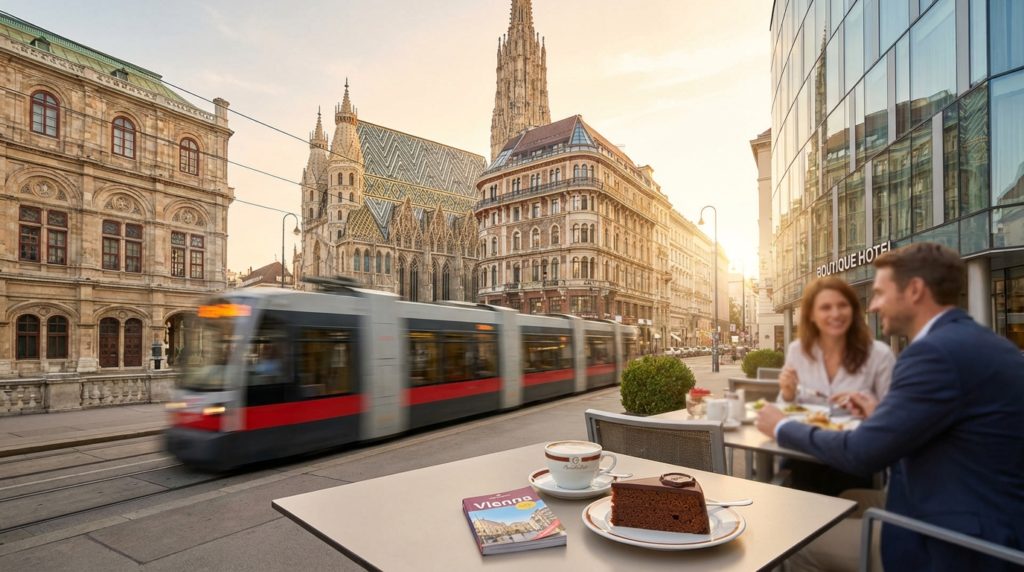
A real Viennese coffee house has a specific vibe: marble tables, those classic bentwood chairs, and waiters in white jackets who won’t bother you. You order one coffee and a slice of cake, and you stay as long as you want. It’s where Freud wrote and where Trotsky played chess. What I find interesting is that nobody ever tries to rush you out the door.
The essential coffee houses:
– Café Central (Herrengasse 14): It’s got a spectacular neo-Gothic interior. Yes, it’s touristy, but it’s still worth visiting. It was Freud’s regular spot, after all.
– Café Hawelka (Dorotheergasse 6): This is the quintessential Kaffeehaus. It’s old, a little worn down, and totally charming. The original family still runs the place.
– Café Sperl (Gumpendorfer Straße 11): Tucked away in the 6th district. It feels much more local and less like a museum. Their Guglhupf cake is outstanding.
– Café Schwarzenberg (Kärntner Ring 17): Very classical, very elegant. Great pastries too.
What you’ll be ordering:
– Kleiner Brauner / Großer Brauner: A small or large coffee with a side of cream.
– Melange: Half coffee, half foamed milk. It’s basically Vienna’s answer to a cappuccino.
– Einspänner: Strong black coffee served in a glass and piled high with whipped cream.
Food in Vienna
Once you’re done with coffee, you’ll find that Vienna has a distinct, heavy, and deeply satisfying food scene.
What you’ve gotta eat:
– Wiener Schnitzel: The icon. It should be veal, breaded, and fried to perfection. You need to order it with Erdäpfelsalat (potato salad).
– Tafelspitz: Boiled prime beef with broth and horseradish. It was Emperor Franz Joseph’s favorite, so you know it’s legit.
– Beuschel: This is a ragout of veal lungs and heart in cream sauce. I know, it sounds intense. But honestly? It tastes excellent.
– Sachertorte: The famous dense chocolate cake with apricot jam. It was created at Hotel Sacher. Grab a box from their shop to see what the hype is about.
– Strudel: You’ll find apple strudel (Apfelstrudel) everywhere. Always get it warm with vanilla sauce. (source: U.S. travel advisories)
Where to eat well:
– Gasthaus Pöschl (Weihburggasse 17): A genuine local spot. Excellent Schnitzel and a great crowd.
– Zum Wohl (Riemergasse 10): A solid wine bar with great Austrian food.
– Figlmüller Wollzeile (Wollzeile 5): Famous for Schnitzels larger than the plate. You absolutely have to book ahead here.
– Meixner (Mariahilfer Straße 46/48): A bit further out, but it’s an authentic working-class Viennese restaurant. (source: EU tourism statistics)
The Music
Vienna was basically the center of the musical universe for centuries. Mozart, Beethoven, Strauss, they all lived here. That legacy isn’t just for history books; it’s still very much alive.
Staatsoper (State Opera): This is one of the world’s premier opera houses. If you want the best seats, you’ll pay €200+. But here’s the pro move: standing room tickets (Stehplatz) go for €3–15. Real Viennese opera fans have been doing this for generations. Just buy them at the box office on the day of the show.
Musikverein: This is where the Vienna Philharmonic plays. Again, standing room is cheap, but if you want a seat for a major concert, book it months in advance.
Wiener Sängerknaben (Vienna Boys’ Choir): They perform at the Burgkapelle on Sundays. Even if you aren’t a huge choral music fan, it’s a pretty moving experience.
Mozart and Strauss concerts: These are definitely for the tourists, usually involving costumes and palatial rooms. They can be fun, but the quality varies wildly. Do your homework before you buy.
Where to Stay in Vienna
Luxury
– Hotel Sacher Wien (Philharmonikerstraße 4): The “grande dame.” It’s home to the original Sachertorte and offers incredible service. Expect to pay €350+.
– The Ritz-Carlton Vienna (Schubertring 5-7): All the modern luxury you’d expect, but inside a beautiful historic building. From €400+.
– Das Triest (Wiedner Hauptstraße 12): A cool design hotel in the 4th district. It has more of a boutique feel and a great restaurant.
Mid-Range
– Hotel am Stephansplatz (Stephansplatz 9): You cannot beat this location. You’re literally facing St. Stephen’s Cathedral. From €180.
– Hotel Rathaus Wein & Design (Lange Gasse 13): A wine-themed hotel in the 8th district. Every room is dedicated to an Austrian wine region, which is a nice touch. From €150.
– 25hours Hotel beim Museumsquartier (Lerchenfelder Straße 1-3): Hip, vibrant, and right near the museums. From €130.
Budget
– Wombat’s City Hostel (Mariahilfer Straße 137): Probably one of the best hostels in Europe. Clean, social, and reliable. From €25 for a dorm, €80 for a private room.
– Hotel Kugel (Siebensterngasse 43): A small, family-run place. It’s basic, but the location is great and it has plenty of charm. From €90.
Day Trips from Vienna
Klosterneuburg Monastery (30 minutes): An impressive Augustinian complex overlooking the Danube. I find it’s often overlooked by the big crowds, which is a plus.
Baden bei Wien (1 hour): A fancy spa town where Beethoven used to spend his summers. It’s quiet, pretty, and very relaxing.
Bratislava, Slovakia (1 hour by train, €15): It’s the smallest national capital in Europe and definitely worth a day. The Old Town is great, and it’s way cheaper than Vienna.
Salzburg (2.5 hours by fast train): Mozart’s birthplace. It’s a stunning baroque city with all those “Sound of Music” views. It works as a long day trip, but an overnight stay is better.
Practical Tips
Vienna City Card: This gives you unlimited public transport and discounts at over 200 spots. Prices range from €17–29 for 24 to 72 hours. If you’re planning on hitting the museums, it’s worth it.
Getting around: The U-Bahn (metro) is fantastic. It’s fast, clean, and runs constantly. Use the trams for the areas the metro doesn’t reach. Don’t bother with single tickets at €2.40; just get a day pass.
Language: It’s German, but you’ll get by fine with English. That said, trying out a few German phrases always goes a long way with the locals.
Tipping: Aim for 10% at restaurants. At cafés, just round up the bill.
When to go: I’d say April-June or September-October for the best weather. Christmas market season is magical, but be prepared for crowds. July and August can get pretty hot and sticky.
Budget Guide
– Budget: €90–130/day
– Mid-range: €180–280/day
– Luxury: €350+/day
Bottom line
Vienna is a city that rewards you for slowing down. It doesn’t always show its best side immediately. You need to spend time sitting in those coffee houses, walking the Ringstrasse, and letting that stiff formality melt into something warmer. Give it a chance, and it’ll likely become one of your favorite spots in Europe.
Auf Wiedersehen!
Related Europe Guides
For planning and booking, compare current options on Booking.com before you finalize your trip.
FAQ
Why trust this information?
Profiles follow a quality checklist and are updated when new verified data is available.
How do I request corrections?
Use the contact page to submit updates with supporting details.