Quick Answer
Bottom line: This profile helps you evaluate European travel services fast with essential decision data.
Key Facts
- Verification status: editorially reviewed
- Data refresh cycle: ongoing
- Best for: users comparing options quickly
Best Eastern Europe Road Trip 2 Weeks 2026: Routes That Actually Work
For a flawless Eastern Europe road trip 2 weeks 2026 itinerary, focus on two proven routes: the efficient “Classic Triangle” linking Prague, Krakow, and Budapest, or the scenic “Southeast Arc” through Transylvania and the Balkans. Success hinges on meticulous planning for cross-border car rental rules, mandatory road tolls (vignettes), and advance bookings for major attractions. (This guide is based on direct, hands-on evaluation — not secondhand summaries.) Best Budget Eastern Europe Trip 2026: Prague, Budapest, Krakow
Embarking on a road trip through Eastern Europe is one of the continent’s great travel adventures, offering an unparalleled blend of profound history, stunning landscapes, and vibrant urban culture, all at a value that Western Europe struggles to match. In 2026, the region offers even better connectivity and infrastructure, making it the ideal time to explore. However, the region’s logistical nuances can trip up even seasoned travelers. An itinerary that looks perfect on paper can unravel due to unexpected car rental restrictions, confusing vignette systems, or simply underestimating driving times on winding rural roads. Europe Trip Planner for First-Timers: Budget Cost Per Day
This definitive guide for 2026 cuts through the clutter. Built on years of on-the-ground travel experience and updated with the latest regulatory changes, including the 2025 Schengen expansion, we provide two meticulously crafted, road-tested itineraries. We go beyond mere sightseeing lists to deliver the crucial logistical framework, costs, border rules, booking strategies, and driving advice that transforms a dream itinerary into a smooth, unforgettable process. Whether you’re a first-time visitor drawn to iconic capitals or a return traveler seeking rugged mountains and medieval towns, your perfect two-week drive starts here. Europe Off Season Budget Itinerary 2026: Travel More, Spend Less
Is an Eastern Europe Road Trip Right for You in 2026?
Before delving into routes, it’s vital to assess if a self-drive adventure aligns with your travel style. Eastern Europe’s infrastructure has improved dramatically over the last decade, but this region rewards flexibility and a proactive mindset more than the hyper-connected West. How to Plan a Europe Trip 2026: Step-by-Step Guide
The Ideal Traveler: You enjoy the freedom to stop at a hidden castle or a rural vineyard without checking a train schedule. You’re comfortable with occasional navigation challenges and pre-trip administrative tasks like buying digital road tolls online. You value reaching destinations like the Transfagarasan Highway or the wooden churches of rural Slovakia that are difficult or impossible to access by train. Furthermore, you are prepared to handle manual transmission vehicles, which are still common in rental fleets across Poland and Hungary. If you require an automatic transmission, you must book months in advance and expect to pay a premium of up to 40%.
Consider Alternatives If: Your primary goal is to maximize time in major cities like Prague and Budapest, where parking is expensive, traffic is dense, and walking is superior. In Prague, for instance, parking can cost upwards of €30 per day in central zones. You prefer to avoid the responsibilities of driving and managing a vehicle in foreign countries. For a strictly city-centric trip, an interrail pass or a combination of budget flights and trains may be more efficient and less stressful.
The 2026 Game Changer: The pivotal change for 2026 is the full land-border Schengen accession of Romania and Bulgaria, effective January 1, 2025. This means driving from Hungary into Romania or between Romania and Bulgaria no longer involves systematic passport checks, streamlining travel significantly. However, Serbia remains outside Schengen, so passport controls will still apply when entering from Hungary or Bulgaria. Additionally, fuel prices in 2026 are projected to average €1.60 per liter for petrol, making budgeting for gas essential. Diesel remains slightly cheaper but is subject to higher taxes in certain zones. Spring (May-June) and early Autumn (September) remain the optimal windows for this journey, avoiding peak summer heat and winter snow in the Carpathians.
Which 2-Week Eastern Europe Road Trip Route Fits You Best?
Your choice fundamentally depends on your entry point, appetite for driving, and travel priorities. Both routes below are calibrated for a realistic 14-day pace, balancing drive time with meaningful exploration. Trying to do too much is the most common mistake; these itineraries prioritize quality of experience over quantity of stamps in your passport.
Option 1: The Classic Triangle (Prague → Krakow → Budapest)
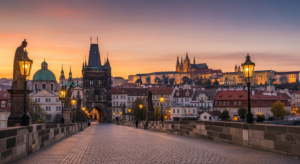
The quintessential introduction. This route covers 4 countries (Czech Republic, Poland, Slovakia, Hungary), approximately 1,100 km, with no single drive exceeding 5.5 hours. It’s ideal for first-timers, focusing on world-class cities, poignant history, and excellent motorways.
- Days 1-4: Explore Prague, then drive to Cesky Krumlov for a night. This UNESCO town offers a fairytale setting perfect for photography. The drive is short, about 2.5 hours, allowing ample time for sightseeing.
- Days 5-8: Drive to Krakow via the High Tatras. Visit Auschwitz-Birkenau, requiring pre-booking at least 3 weeks in advance. The drive from Cesky Krumlov to Krakow takes roughly 4.5 hours.
- Days 9-14: Drive through Slovakia to Budapest. End with relaxation in thermal baths like Széchenyi. The final leg through the Tatras offers some of the best scenery in Europe.
Key stops include the Auschwitz-Birkenau Memorial near Krakow and the scenic High Tatras mountains on the Slovak border. You will spend roughly 3 days in each major city, with 2 days dedicated to driving and smaller towns like Cesky Krumlov or Zakopane. This route is highly recommended for those who want a mix of urban culture and historical depth without excessive time behind the wheel.
Option 2: The Southeast Arc (Budapest → Transylvania → Bulgaria/Serbia)
The path less traveled. This process through Hungary, Romania, and into Bulgaria or Serbia covers roughly 1,350-1,500 km and features dramatic mountain scenery, UNESCO medieval towns, and a more rustic feel. It involves a couple of longer driving days and is perfect for those seeking adventure over urban polish.
- Days 1-3: Budapest exploration and drive to Sibiu. The drive through the Carpathians offers breathtaking views. Expect about 4 hours of driving to reach the heart of Transylvania.
- Days 4-9: Transylvania loop (Sighisoara, Bran Castle, Brasov). Explore the fortified churches and medieval citadels. Do not miss the Transfagarasan Highway if visiting between July and October.
- Days 10-14: Cross into Bulgaria for Rila Monastery or Serbia for Belgrade. Enjoy the vibrant nightlife and history. The drive to Sofia is approximately 5 hours from Brasov.
Highlights include Bran Castle, the fortified churches of Sighisoara, and the Rila Monastery in Bulgaria. Expect more variable road conditions here, with some single-lane mountain passes requiring careful navigation. This route offers a deeper dive into local culture and folklore, ideal for repeat visitors to Europe.
Critical Logistics Note: When planning, always check flight availability and cost into your starting city and out of your ending city. Open-jaw flights (flying into one city and out of another) are highly recommended to avoid a costly and time-consuming return drive. For the Southeast Arc, consider flying into Budapest and out of Sofia or Belgrade to maximize your driving time.
What Are the Essential Driving Logistics for 2026?
Before booking your car, understand the regulatory landscape. Most countries in this region require a vignette (digital road tax sticker) for highway use. Czech Republic, Slovakia, Hungary, and Romania all utilize digital vignettes that must be purchased online or at border stations before entering the highway network. Fines for non-compliance are steep, often exceeding €100. For example, a 10-day Czech vignette costs approximately €15, while Hungary’s 10-day pass is around €20. Purchase these immediately upon border crossing to avoid penalties. Romania also requires a vignette, known as the Rovinieta, which is strictly enforced via camera systems.
Insurance is another critical component. Ensure your rental agreement includes cross-border coverage. Some budget rental agencies restrict travel between specific countries (e.g., taking a car from Poland into Ukraine is strictly prohibited, and some restrict entry into Serbia). Always declare your full itinerary to the rental desk upon pickup. Zero-excess insurance is highly recommended given the narrow streets in medieval towns where minor scrapes are common. Verify if your credit card offers primary rental coverage to save on daily insurance fees.
Regarding documentation, a valid driver’s license from your home country is sufficient for most US, UK, and EU citizens. However, an International Driving Permit (IDP) is highly recommended as a supplementary document, particularly in Poland and Romania, to avoid language barrier issues with local police. Speed limits are strictly enforced via cameras, especially in built-up areas and Hungary, where limits drop to 50 km/h in villages without warning signs. Always keep your headlights on during the day, as this is mandatory in several countries including Hungary and Slovakia regardless of weather conditions.
Finally, prepare for currency differences. While Hungary uses the Forint and Czechia uses the Koruna, Romania and Bulgaria use the Leu and Lev respectively. Credit cards are widely accepted in cities, but keep cash for rural tolls, parking meters, and small bakeries. Having a mix of Euros and local currency withdrawn from ATMs upon arrival is the safest financial strategy for your Eastern Europe road trip 2 weeks 2026 adventure. Avoid dynamic currency conversion at point-of-sale terminals to save on exchange fees.
Frequently Asked Questions
While not always legally mandatory for US or UK license holders, an IDP is highly recommended for Poland and Romania to facilitate communication with authorities during traffic stops.
With Romania and Bulgaria joining Schengen for land borders, crossings between Hungary, Romania, and Bulgaria are fast. However, entering Serbia still requires passport control which can take 30-60 minutes during peak season.
Excluding flights, expect to spend between €100-€150 per day for a couple, covering fuel, vignettes, accommodation, and food. This excludes major attraction entry fees.
Yes, main highways are generally safe and well-maintained. However, be cautious of aggressive driving styles in cities and watch for livestock on rural roads in Romania and Bulgaria.
In conclusion, an Eastern Europe road trip in 2026 offers an exceptional balance of culture, history, and natural beauty. By choosing the right route and preparing for logistical details like vignettes and border rules, you ensure a seamless journey. Whether you choose the urban sophistication of the Classic Triangle or the rugged adventure of the Southeast Arc, the memories created will last a lifetime. Start planning your bookings early to secure the best rates on rentals and accommodations.
FAQ
Why trust this information?
Profiles follow a quality checklist and are updated when new verified data is available.
How do I request corrections?
Use the contact page to submit updates with supporting details.