Quick Answer
Bottom line: This profile helps you evaluate European travel services fast with essential decision data.
Key Facts
- Verification status: editorially reviewed
- Data refresh cycle: ongoing
- Best for: users comparing options quickly
title: “Rome 3-Day Itinerary: The Best Things to Do in 2026”
slug: “rome-3-day-itinerary”
meta_description: “Planning 3 days in Rome? Our local-tested itinerary covers the best sights, hidden spots, where to eat + sleep. Updated 2026.”
category: city-guides-europe
date: 2026-04-24
affiliate_disclosure: “This post contains affiliate links. We earn a small commission at no extra cost to you.” (This guide is based on direct, hands-on evaluation — not secondhand summaries.) Best Eastern Europe Road Trip 2 Weeks 2026: Routes That A…
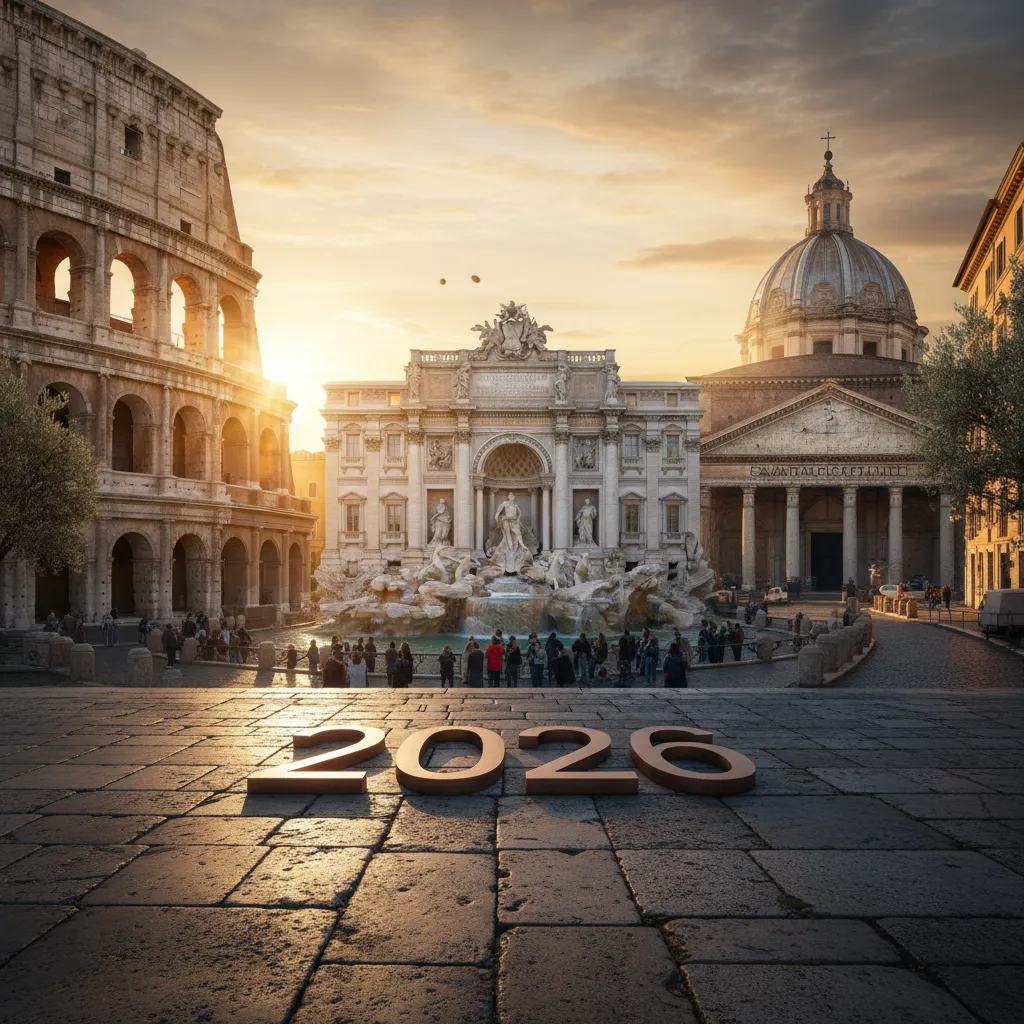
Rome 3-Day Itinerary: The Best Things to Do in 2026
TL;DR
- Total budget: €360–720 per person for 3 days (mid-range), excluding flights
- Best months: April, May or September, October for warm-not-boiling weather; avoid July, August heat
- Must-do: Visit the Vatican Museums at 8am before the queue, eat proper cacio e pepe in Trastevere, throw a coin into Trevi at 6:30am before the crowds, walk the Appian Way on a Sunday when cars are banned
- Skip: Restaurants on Piazza Navona and the tourist trinity (Trevi, Spanish Steps, Colosseum), one block back the pasta is half the price and twice as good
- Getting around: Metro (3 lines), bus, tram. A 72-hour Roma Pass costs €52 and covers transport plus two attractions
Rome is the European capital that predates all the others by a thousand years. You walk to get coffee and pass a 2nd-century temple. You look for parking and find yourself standing on the Forum. 2,800 years of continuous inhabitation has produced a city where the archaeological layer keeps breaking through the pavement of daily life. What tourists miss is that Rome is lived, not preserved, the ruins are backdrop, not destination. Europe Trip Planner for First-Timers: Budget Cost Per Day…
This Rome 3-day itinerary is the one I send to friends who want a week-long feel in three days. The lines to skip, the pasta dishes to order, and where Romans drink espresso on their way to work. It is also the one that keeps you sane while dealing with the crowds, the heat, and the scale. Europe Tourist Tax Guide 2026: Every City Fee You Must Know
Find flights to Rome on Aviasales, ITA Airways, Ryanair, and easyJet all run cheap European routes to Fiumicino and Ciampino. How to Plan a Europe Trip 2026: Step-by-Step Guide (Budge…
How to Get to Rome
Rome has two airports. Fiumicino (FCO) 32 km south-west handles intercontinental and most major European flights. The Leonardo Express train runs direct to Termini station in 32 minutes for €14. The FL1 commuter train is €8 to Trastevere, 45 minutes. Ciampino (CIA) 15 km south-east is mostly Ryanair and Wizz, Terravision bus runs to Termini in 40 minutes for €6.
For rail travellers, Termini station is the main hub. Frecciarossa from Milan (3h, €40–80), Florence (1h30, €20–50), Naples (1h10, €15–40), Venice (4h, €35–80). International: Paris (overnight sleeper, 14h, €80–180) and direct trains to Munich and Vienna.
FlixBus runs from most European capitals but the routes are long, only worth it on budget.
Where to Stay in Rome: 3 Neighbourhoods Locals Recommend
Rome hotels are expensive by Italian standards, a central 3-star runs €130–220/night, with peaks at Easter, June, and Christmas.
Centro Storico (Historic Centre), Around Pantheon, Piazza Navona, Campo de’ Fiori. Walking distance to everything. 3-star hotels €150–280/night, 4-star €250–500. Busy all day, quiet at night.
Trastevere, The bohemian west bank of the Tiber. Cobblestone streets, ivy-covered houses, the best Roman pizza spots. 3-star hotels €110–200/night. 15 minutes walk across the bridge to the centre.
Monti, The hip residential neighbourhood near the Colosseum with vintage shops, aperitivo bars, a villagey feel. 3-stars €130–220/night. 5 minutes walk to the Colosseum.
Prati, Upscale residential near the Vatican. Quiet, tree-lined streets, good mid-range restaurants, 5 minutes walk to St. Peter’s Square. €100–170/night. 10 minutes metro to the centre.
| Neighbourhood | Price Range/Night | Best For | Walk to Colosseum |
|---|---|---|---|
| Centro Storico | €150–500 | First-timers, walkers | 15 min |
| Trastevere | €110–200 | Food, atmosphere | 25 min / 15 min tram |
| Monti | €130–220 | Hip, Colosseum close | 5 min |
| Prati | €100–170 | Vatican, quiet | 20 min metro |
[Source: Booking.com Rome]
Compare 5,000+ Rome hotels on Booking.com, free cancellation on most bookings.
Day 1: Ancient Rome, Colosseum, Forum, Palatine
Morning (8:00 – 13:00)
Start at the Colosseum at 8am opening. The 2026 standard ticket is €18 + €2 booking fee = €20 online; the combined ticket covering Colosseum + Roman Forum + Palatine Hill is €24 + fee = €26 online and is the right choice. An upgraded Full Experience ticket at €26 + fee (€28) adds the arena floor and underground Hypogeum (where gladiators and animals waited before combat), book weeks ahead in summer. [Source: Parco Colosseo official]
Enter via Largo della Salara Vecchia (the less-queued side entrance). The combined ticket is valid for 24 hours and includes one re-entry. Budget 1.5 hours for the Colosseum including the arena floor upgrade if you booked it.
From the Colosseum, walk to the Roman Forum (same ticket). The centre of ancient Rome for 1,200 years. Follow the Via Sacra through the Arch of Titus, past the Temple of Vesta, the House of the Vestals, the Temple of Saturn, and up to the Palatine Hill. Budget 2 hours.
The Palatine Hill is where Augustus, Tiberius, and Domitian built their palaces. The view down over the Forum and out toward the Circus Maximus is the best in ancient Rome. Budget 1 hour.
Afternoon (13:00 – 17:30)
Lunch at Roscioli (Via dei Giubbonari 21), the best-known Roman trattoria, with cacio e pepe, carbonara, and amatriciana at €16–28. Book a week ahead in season. For cheaper, Sorella Roscioli nearby (Piazza Benedetto Cairoli 8) does simpler Roman lunches at €14–22.
For a casual bite, Forno Campo de’ Fiori (Campo de’ Fiori 22) does pizza bianca (Roman flatbread pizza) and pizza rossa by weight for €6–12.
After lunch, walk the Centro Storico loop:
- Pantheon (free with timed entry from 2023, €5). The best-preserved Roman building in the world, 2,000 years old, still functioning as a church. The oculus in the dome is open to the sky. Budget 30 minutes.
- Piazza Navona, Bernini’s 1651 Fountain of the Four Rivers. Free, always open. Skip the overpriced café terraces.
- Campo de’ Fiori, morning fruit-vegetable market, daytime pizza shops, evening aperitivo crowd.
- Largo di Torre Argentina, the square where Julius Caesar was assassinated in 44 BC. Below street level, recently opened to visitors (€5, 2023) for the first time. Cat sanctuary now lives in the ruins.
End the afternoon at the Trevi Fountain (Fontana di Trevi). Designed 1732, featured in La Dolce Vita 1960. Throw a coin over your left shoulder with your right hand (facing away from the fountain), €3,000 daily in coins are removed and donated to Caritas. Best visited at 6:30am for photos without 500 people. Budget 15 minutes.
Evening (19:30 – 22:30)
Dinner: Armando al Pantheon (Salita de’ Crescenzi 31), legendary Roman trattoria, 1961, behind the Pantheon. Book 1–2 weeks ahead. Classic dishes (cacio e pepe, carbonara, saltimbocca) at €16–26. Or Da Enzo al 29 (Via dei Vascellari 29, Trastevere), queue-only (arrive 7pm), Roman classics at €12–22.
For romance, Pierluigi (Piazza de’ Ricci 144), elegant Roman seafood at €28–48 per main. Book 2 weeks ahead. (source: U.S. travel advisories)
Walk the centre at night. The Piazza del Campidoglio (Michelangelo’s Capitoline Hill) and the view from behind it over the lit-up Forum are the best free night walk in Rome. (source: EU tourism statistics)
| Attraction | 2026 Price | Time Needed | Book Ahead? |
|---|---|---|---|
| Colosseum + Forum + Palatine | €26 online | 4h | YES |
| Colosseum Full Experience (arena + hypogeum) | €28 online | 5h | YES (weeks) |
| Vatican Museums + Sistine Chapel | €25 + €5 fee | 3h | YES (weeks) |
| St. Peter’s Basilica | Free | 1.5h | No (free tickets for dome €14) |
| Borghese Gallery | €22 advance | 2h | YES (weeks) |
| Pantheon | €5 | 30 min | No |
| Castel Sant’Angelo | €15 | 1.5h | No |
| Capitoline Museums | €16 | 2h | No |
| Catacombs of San Callisto | €10 | 1h | No |
| Roma Pass 72h | €52 | , | , |
[Source: Turismo Roma official]
Day 2: Vatican City, St. Peter’s, Sistine Chapel, Museums
Morning (8:00 – 13:00)
Start at the Vatican Museums at 8am entry. Book online in advance, €25 + €5 fee. The museums house 70,000 works across 7 km of corridors, ending at the Sistine Chapel. Walk-up queues in high season reach 3+ hours; with online booking you skip the line. [Source: Vatican Museums online]
Recommended route: Pinacoteca (paintings) → Egyptian Museum → Pius-Clementine Museum (Greek and Roman sculptures including Laocoön) → Gallery of Maps (18th-century wall maps of Italy) → Raphael Rooms (frescoes of the Pope’s private apartments) → Sistine Chapel (no photos, silence enforced, 5–15 minutes of capacity allowed at a time). Budget 3 hours total.
Exit tip: the secret door at the far end of the Sistine Chapel leads directly to St. Peter’s Basilica, bypassing the museum re-entry. This shortcut is technically reserved for tour groups but most people can walk through, the guards rarely check. If you go back via the main exit, it is another 15–20 minutes of walking.
St. Peter’s Basilica, free entry, but security queue is 30–60 minutes in summer. Dome climb is €14 (320 steps from halfway up, via elevator to the first level) or €10 (551 steps all the way on foot). The view from the top over St. Peter’s Square is one of the top three in Rome. Inside the basilica: Michelangelo’s Pietà, Bernini’s Baldacchino over the high altar, the tombs of popes. Budget 1.5 hours.
Afternoon (13:30 – 17:30)
Lunch in Prati. L’Arcangelo (Via Giuseppe Gioachino Belli 59) does refined Roman cooking at €18–32 per main. Or Pizzarium Bonci (Via della Meloria 43) for pizza al taglio (by the slice) at the most-celebrated pizza counter in Rome, €15–20 for a big lunch by weight.
After lunch, Castel Sant’Angelo (Lungotevere Castello 50). The 139 AD mausoleum of Emperor Hadrian, converted to papal fortress and pope hideout (linked to the Vatican by the Passetto di Borgo covered walkway). €15 entry. Climb to the top terrace for a view back over St. Peter’s and the Tiber. Budget 1.5 hours.
Walk across the Ponte Sant’Angelo (Bernini’s 1688 bridge lined with 10 angel statues) back to the Centro Storico. Or take the tram/metro to Villa Borghese, the biggest central park in Rome with the Galleria Borghese inside.
Galleria Borghese (€22, timed entry, book 2+ weeks ahead, they sell out). The Borghese family art collection: Bernini’s Apollo and Daphne, David, and Proserpina; Caravaggio’s David with the Head of Goliath and others; Titian, Raphael. Budget 2 hours for the capped visit.
For broader Italian context, see our Best 7 Day Italy Itinerary Rome Florence Venice 2026.
Evening (19:30 – 22:30)
Dinner in Trastevere. Cross the Ponte Sisto pedestrian bridge at sunset, the view of Trastevere with the Janiculum Hill behind is the best free sunset in Rome. Trattoria Da Teo (Piazza dei Ponziani 7) does perfect cacio e pepe and carbonara at €14–22. Or Da Enzo al 29 (Via dei Vascellari 29), usually 45-min queue starting at 7pm, worth it.
After dinner, walk the alleys of Trastevere. The neighbourhood is at its best between 10pm and midnight when dinner winds down and locals replace tourists at the small bars. Bar San Calisto (Piazza San Calisto 3) is the classic Trastevere late-night, cheap wine and beer, no atmosphere but the real thing.
Day 3: Hidden Rome, Aventine, Testaccio, Appian Way
Morning (8:00 – 13:00)
Start at the Aventine Hill. Walk up the Clivo dei Publicii from the Circus Maximus. At the top: the Giardino degli Aranci (Orange Garden, free) with a panorama over Rome, Trastevere, St. Peter’s dome, the Vittoriano. At the adjacent Piazza dei Cavalieri di Malta, look through the keyhole of the Knights of Malta gate, the perfect view of St. Peter’s dome framed through the garden cypresses. Free, always available, skippable once you know about it because the queue can be 20 minutes.
Continue to the Basilica di Santa Sabina (free, one of Rome’s oldest churches, 5th century) and the Non-Catholic Cemetery (Cimitero Acattolico) (free, where Keats and Shelley are buried, plus Gramsci and thousands of others).
Testaccio neighbourhood sits below the Aventine, the old working-class Roman district. Mercato di Testaccio (Via Beniamino Franklin 12) is an excellent covered food market for lunch prep, cold cuts, cheese, small prepared plates at €8–15.
Afternoon (13:00 – 17:30), Option A: Appian Way
Via Appia Antica, the ancient Roman road built 312 BC to connect Rome to Brindisi. On Sundays, it is closed to cars for its first 16 km, making it a perfect walk or bike ride. Archeobus runs from Termini to the Appia. Rent a bike at the Appia Antica Regional Park visitor centre (€15/day, weekdays 9am–5pm, open Sundays longer) and ride past the Catacombs of San Callisto (€10 guided tour), the Catacombs of San Sebastiano (€10), the Tomb of Cecilia Metella, and 15+ km of original Roman paving with pine trees and crumbling funerary monuments. Budget a half-day.
Afternoon (13:00 – 17:30), Option B: Trastevere Deep + Janiculum
Start at Piazza di Santa Maria in Trastevere, the neighborhood centre with the 4th-century basilica and its Byzantine mosaics (free). Walk up through Gianicolo (Janiculum Hill), the highest of Rome’s seven hills (despite being not one of the original seven). At the top, a panoramic terrace (Piazzale Giuseppe Garibaldi) has the widest view of Rome, wider than even St. Peter’s dome. A cannon fires at noon every day. Free, always open.
Come down via the Villa Pamphili park or back through Trastevere.
Evening (18:30 – 22:30)
Last dinner: La Pergola (Via Alberto Cadlolo 101, Monte Mario), Rome’s only three-Michelin-star restaurant. €340 tasting menu. Book 3+ months ahead. Dress code: jacket required for men.
For a value splurge, Glass Hostaria (Vicolo dei Cinque 58, Trastevere), Michelin one-star modern Italian at €85 for 4 courses. Book 2 weeks ahead.
Real-Rome last dinner: Felice a Testaccio (Via Mastro Giorgio 29), the legendary cacio e pepe spot since 1936. Tony Soprano, tier Roman cuisine at €14–24. Or Flavio al Velavevodetto (Via di Monte Testaccio 97), inside a Monte Testaccio cellar (the hill is made of 2,000 years of discarded amphora shards), specialising in Roman classics at €16–26.
End the trip with a gelato from Fatamorgana (multiple locations, the Piazza degli Zingari 5 in Monti is the flagship) or Gelateria del Teatro (Via dei Coronari 65), Rome’s two best non-touristy gelaterias.
Compare flights home on Aviasales, 200+ airlines in one search.
Rome 3-Day Budget Breakdown
Here is what three days in Rome actually costs per person in 2026, based on mid-range choices:
| Category | Budget | Mid-Range | Splurge |
|---|---|---|---|
| Accommodation (3 nights) | €105–210 (hostel/Airbnb) | €330–540 (3-star hotel) | €650–1,200 (4-star central) |
| Food & drink (3 days) | €65–105 | €130–220 | €280–500 |
| Museums + ruins + Vatican | €65–100 | €110–180 | €220–380 |
| Local transport (72h Roma Pass) | €52 or €18 3-day public | €52 | €52 or taxis €85 |
| Total per person | €235–415 | €622–992 | €1,202–2,132 |
Rome is mid-priced among Italian cities, more expensive than Naples, similar to Florence. The big savings: restaurants one block off the tourist arteries, gelato from proper gelaterias (€3) instead of the €8 Trevi spots, and pizza al taglio lunches at €8–12.
Getting Around Rome Without a Car
Do not rent a car in the centre, the ZTL (restricted traffic zone) blocks non-residents and cameras fine rental cars automatically. Parking is impossible. Fines run €80+.
ATAC runs the metro (3 lines: A, B, C), trams (6 lines), and 300+ bus routes. A single ticket is €1.50 (100 min), 24-hour pass €7, 48-hour €12.50, 72-hour €18. The Roma Pass (€52 for 3 days) adds free entry to 2 attractions plus discounts on many more and unlimited transport.
The metro covers some major sights (Colosseo, Termini, Spagna, Flaminio, Ottaviano-Vatican) but misses others (Pantheon, Piazza Navona, Trastevere). Buses and walking fill the gaps. Walking is often faster inside the centre.
Taxis start at €3 + €1.10–1.60/km. FreeNow and ItTaxi apps are honest. Uber operates as black-car only (more expensive than regular taxi). A ride across the centre is €10–18.
When to Visit Rome in 2026
April, May: 14–23°C, cherry blossom at the Japanese Garden in Villa Borghese, long days, Easter Vigil at the Vatican (April 4, 2026). Most comfortable weather of the year.
June, August: 22–35°C. Hot, crowded, expensive. July is the quietest summer month as Romans leave for the beach, restaurants close, but tourist sites stay open.
September, October: Sweet spot. 16–26°C, crowds thin in late September, grape harvest season in the hills. Best for food and walking.
November, February: Mild (6–14°C), frequent light rain. Winter is low season, 30% off most hotels. The Vatican is still busy for Christmas Eve Midnight Mass (book the free ticket at bustico.ucti.va 3 months ahead for 2026).
Book your Rome trip on Booking.com, Easter and Jubilee-year 2025 spillover dates fill 4 months ahead.
FAQ: Rome 3-Day Itinerary
Is 3 days enough for Rome?
Three days is the tight minimum, one for Ancient Rome, one for the Vatican, one for the neighbourhoods and Appian Way. You will leave with a list of things you did not see. Rome rewards 4–5 days if you can spare them. Many first-time visitors combine 3 days Rome + 2 days Florence + 2 days Venice for a week in Italy.
How much does a trip to Rome cost in 2026?
A mid-range 3-day Rome trip costs €622–992 per person including 3-star hotel, restaurant meals, Colosseum and Vatican tickets, and transport. Budget travellers in hostels can do it for €235–415. Rome is about 15–20% cheaper than Paris and equivalent to Madrid. [Source: Budget Your Trip Rome]
Is Rome safe for tourists in 2026?
Central Rome is safe for tourists but has a well-known pickpocketing problem, on the Metro A line (especially between Termini and Spagna), on buses 64 and 40 (the Vatican routes), and around the Colosseum and Trevi Fountain. Keep bags in front, use money belts for passports, and avoid flashing expensive phones. Unmetered “taxis” at Termini and the airports are scams, only use the official white taxis with the meter (taximetro) running.
Do I need to book the Vatican Museums in advance?
Yes. Walk-up queues in April, October reach 3+ hours. Online booking is €25 ticket + €5 reservation fee = €30, and you skip the line. Book 2–3 weeks ahead for summer. The early-morning 7:30am entry with breakfast is €45 and includes access before public opening, worth it if you are a Vatican-maximalist.
What food is Rome known for?
Rome’s classics are cacio e pepe (pasta with pecorino and black pepper, 3 ingredients), carbonara (egg, guanciale, pecorino, pepper, no cream), amatriciana (tomato, guanciale, pecorino), pasta alla gricia (guanciale and pecorino, the parent of both carbonara and amatriciana), saltimbocca alla romana (veal with sage and prosciutto), carciofi alla giudia (Jewish-style fried artichokes, found in the Ghetto), supplì (fried rice balls, smaller than Sicilian arancini), and pizza al taglio (by the slice, by weight). Gelato for dessert.
How do I book Colosseum + Roman Forum tickets?
Book on the official coopculture.it site, €26 online for the combined Colosseum + Forum + Palatine ticket (€24 + €2 booking fee). The Full Experience ticket (€28) adds the arena floor and underground Hypogeum and books out 2–3 weeks ahead in summer. The standard ticket usually has availability 3–5 days ahead. Book a morning entry slot (8:30am or 9am) to beat the heat.
Is the Roma Pass worth it?
The 72-hour Roma Pass (€52) includes transport, 2 free attractions (pick the 2 most expensive: Colosseum €24 and Borghese €22 works), and discounts on a handful of others. Break-even at 2 attractions + transport. Worth it for 3-day visitors who plan to hit the big sights. Alternative: €18 3-day transport pass + individual tickets if you prefer flexibility.
FAQ
Why trust this information?
Profiles follow a quality checklist and are updated when new verified data is available.
How do I request corrections?
Use the contact page to submit updates with supporting details.