Quick Answer
Bottom line: This profile helps you evaluate European travel services fast with essential decision data.
Key Facts
- Verification status: editorially reviewed
- Data refresh cycle: ongoing
- Best for: users comparing options quickly
title: “Budapest 3-Day Itinerary: The Best Things to Do in 2026”
slug: “budapest-3-day-itinerary”
meta_description: “Planning 3 days in Budapest? Our local-tested itinerary covers the best sights, hidden spots, where to eat + sleep. Updated 2026.”
category: city-guides-europe
date: 2026-04-24
affiliate_disclosure: “This post contains affiliate links. We earn a small commission at no extra cost to you.” (Every recommendation here reflects our own practical testing, not marketing materials.) Best Budget Eastern Europe Trip 2026: Prague, Budapest, K…
Budapest 3-Day Itinerary: The Best Things to Do in 2026
TL;DR
- Total budget: €210–400 per person for 3 days (mid-range), excluding flights
- Best months: April, June or September, October; December for the Christmas markets at Vörösmarty Square
- Must-do: Soak at Széchenyi Baths at 7am, eat goulash at a proper étterem (not the tourist strips), walk across the Chain Bridge at night from Buda to Pest
- Skip: Ruin-pub crawls booked online, just walk into Szimpla Kert after 9pm. The €35 organised tours add nothing
- Getting around: Metro + tram + bus on a single ticket system. A 72-hour pass costs 4,550 HUF (€11.50). The M1 yellow line (built 1896) is a UNESCO-listed tourist attraction in itself
Budapest is two cities, Buda on the hill side and Pest on the flat side, stitched together across the Danube by eight bridges. It was the second capital of the Austro-Hungarian Empire until 1918, fell into communism until 1989, and is still working out what it wants to be. Along the way the city built the most ornate thermal baths in Europe, one of the world’s first underground metros, and a food culture that goes well beyond paprika-dusted goulash. Best Eastern Europe Road Trip 2 Weeks 2026: Routes That A…
This Budapest 3-day itinerary is the one I send to friends who want Budapest without the cheap-stag-weekend gloss. The bath that is open at dawn. The pastry that is not a kürtőskalács. The quiet courtyards the ruin-pub guidebooks skipped. Europe Trip Planner for First-Timers: Budget Cost Per Day…
Find flights to Budapest on Aviasales, Wizz Air and Ryanair both run cheap routes from across Europe. Europe Off Season Budget Itinerary 2026: Travel More, Spe…
How to Get to Budapest
Ferenc Liszt International Airport (BUD) sits 16 km south-east of the centre. The 100E Airport Express bus runs direct to Deák Ferenc Square in the centre for 2,200 HUF (€5.50) in 35–45 minutes. The 200E bus + metro M3 option costs 800 HUF (€2) and takes about 50 minutes. No train from the airport. Licensed Főtaxi airport taxi charges around 10,000 HUF (€25) for a centre transfer.
For rail travellers, Budapest is a major hub. ÖBB Railjet from Vienna (2h20, €20–40), EC from Prague (6h30, €35–60), MAV direct from Belgrade (8h, €25–40). All arrive at Keleti pályaudvar (East station) or Nyugati pályaudvar (West station). See our Eurail Pass Guide 2026 for pass options.
FlixBus and RegioJet run budget coach services from Vienna (3h, €10–20), Bratislava (2h30, €8–15), Prague (7h, €20–30). FlixBus drops at Népliget station (metro M3).
Where to Stay in Budapest: 3 Neighbourhoods Locals Recommend
Budapest hotel prices are among the lowest in central European capitals, a 4-star here costs what a 3-star costs in Vienna. Here is where to stay.
District V (Belváros/Lipótváros), Central Pest, walking distance to Parliament, St. Stephen’s Basilica, and the Chain Bridge. 3-star hotels 18,000–32,000 HUF (€45–80)/night, 4-stars 40,000–75,000 HUF (€100–190). Safe, well-connected, slightly touristy.
District VII (Erzsébetváros / Jewish Quarter), The old Jewish Quarter turned nightlife district. Synagogues, ruin bars, street art, small cafés. 3-star hotels 22,000–40,000 HUF (€55–100)/night. Loud until 3am on weekends. Best for nightlife-focused visitors.
District IX (Ferencváros), South of the centre, quieter, residential, excellent food scene (Central Market Hall is on the border). 3-stars 18,000–30,000 HUF (€45–75)/night. 10-minute tram to the centre.
District I (Buda Castle Hill area), Quiet, panoramic, a 10–15 minute walk across the Chain Bridge to Pest. Mostly boutique hotels 35,000–70,000 HUF (€90–175)/night. Good if you want a quieter base.
| Neighbourhood | Price Range/Night | Best For | Metro to Deák Ferenc |
|---|---|---|---|
| District V (Belváros) | €45–190 | First-timers, walking | 0–5 min |
| District VII (Jewish Quarter) | €55–100 | Nightlife, ruin bars | 3 min |
| District IX (Ferencváros) | €45–75 | Food, value, quiet | 10 min tram |
| District I (Castle Hill) | €90–175 | Panorama, calm | 15 min walk |
[Source: Booking.com Budapest]
Compare 2,000+ Budapest hotels on Booking.com, free cancellation on most bookings.
Day 1: Pest, Parliament, and Your First Thermal Bath
Morning (7:00 – 12:00)
Start at Széchenyi Thermal Baths (Állatkerti körút 9–11, City Park). The baths open at 7am on weekdays and are nearly empty before 9am. 24,500 HUF (€62) for a full-day ticket including locker and cabin. [Source: Széchenyi Baths official]
At 7am the outdoor thermal pools still steam in the morning air and you share the water with twenty elderly Hungarians playing chess on floating boards. By 11am the tour groups arrive. The difference between 7am and 11am is the whole reason to stay in Budapest, not just visit for the day.
Spend 2–3 hours. Bring flip-flops (required on some floors) and a swimming cap (required in the cooler lap pool, buy for 2,500 HUF / €6 inside).
From Széchenyi, walk 5 minutes to Heroes’ Square (Hősök tere), the monumental 1896 millennium square with the seven Magyar chieftain statues. Free. Walk south through City Park past Vajdahunyad Castle (a fantastical 1896 replica of Transylvanian architecture, partly housing the Agriculture Museum, €6 if you want to go inside).
Take metro M1 (the 1896 yellow line, worth riding just for the original wood panelling) back to the centre. The M1 stops every 400 metres under Andrássy út for just this reason.
| Attraction | 2026 Price | Time Needed | Book Ahead? |
|---|---|---|---|
| Széchenyi Baths (full day) | 24,500 HUF (€62) | 2–4h | No |
| Gellért Baths (full day) | 22,000 HUF (€55) | 2–4h | No |
| Rudas Baths night (weekend) | 14,500 HUF (€37) | 3h | No |
| Parliament tour | 9,000 HUF (€23) | 45 min | YES (3–6 weeks) |
| St. Stephen’s Basilica + dome | 3,200 HUF (€8) | 1h | No |
| Hungarian National Museum | 3,000 HUF (€7.50) | 1.5h | No |
| House of Terror | 4,500 HUF (€11) | 1.5h | No |
| Buda Castle Funicular | 4,000 HUF (€10) return | 15 min | No |
| Fisherman’s Bastion upper tower | 1,500 HUF (€3.80) | 30 min | No |
[Source: BudapestInfo, Parliament Visitors]
Afternoon (12:30 – 18:00)
Lunch: Gettó Gulyás (Wesselényi utca 18, District VII). Honest Hungarian goulash and stews at fair prices, 3,500 HUF (€9) for a big bowl of beef goulash with bread. No reservations, short wait. Alternative: Kádár Étkezde (Klauzál tér 9), a 1957-era Jewish-Hungarian canteen open only Tues, Sat for lunch (11:30am–3:30pm). Three courses for 3,500 HUF (€9).
After lunch, Dohány Street Synagogue (the Great Synagogue, largest in Europe, 8,500 HUF / €21 including Jewish museum and Raoul Wallenberg memorial garden). The visit includes a guided tour in English. Budget 1.5 hours. Moving context on the Jewish Quarter, 600,000 Hungarian Jews were killed between 1944 and 1945, most deported to Auschwitz.
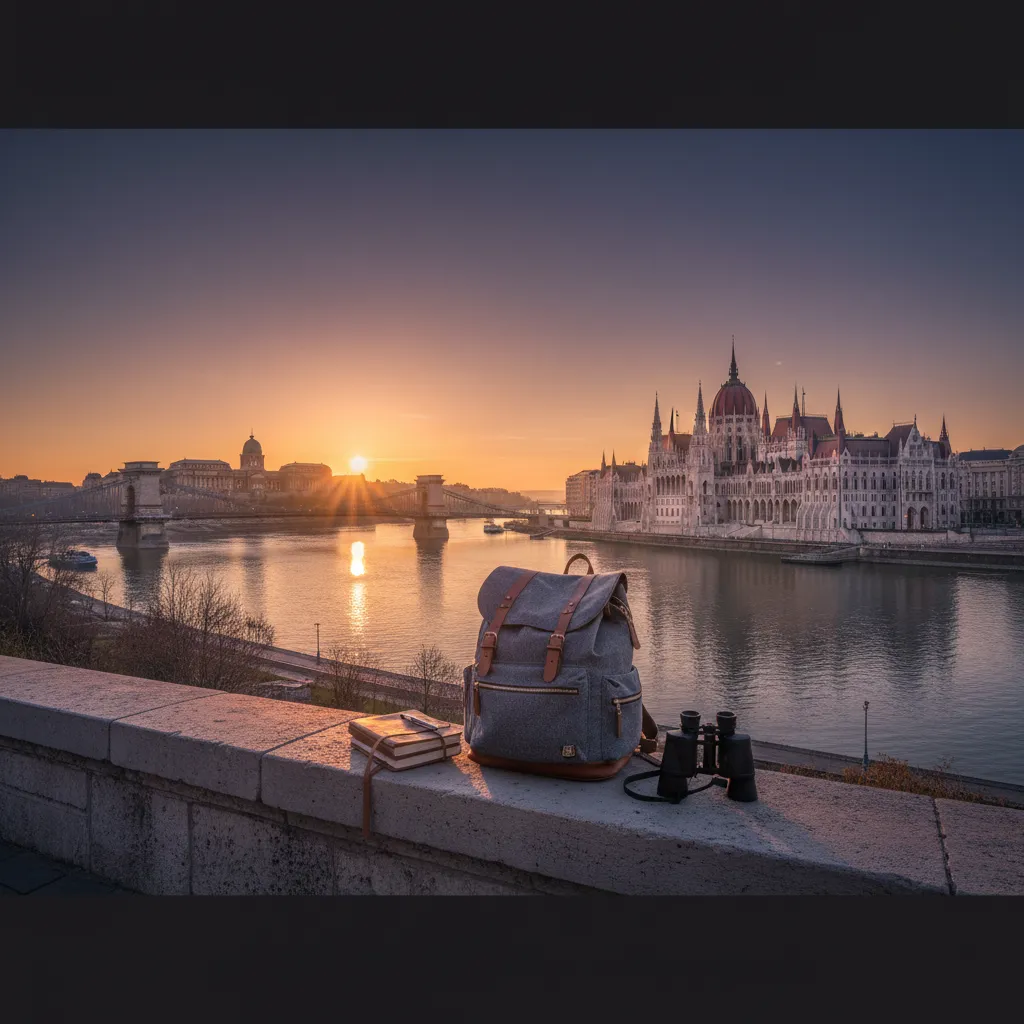
Walk toward the river and do the Parliament (Országház). The Parliament guided tour must be booked online 3–6 weeks ahead, 9,000 HUF (€23), 45 minutes, runs in 8 languages. The alternative is looking at the building from Kossuth Lajos Square across the street and from the Buda side of the river, it is actually best seen from outside at sunset and night.
Walk south along the river to the Shoes on the Danube Bank memorial, 60 pairs of iron shoes marking the spot where 3,500 Jews (mostly women and children) were shot into the Danube by Arrow Cross militiamen in 1944–45. Free, always visible, the saddest thing in Budapest. (source: U.S. travel advisories)
For deeper Central European context, see our Best Budget Eastern Europe Trip 2026: Prague, Budapest, Krakow. (source: EU tourism statistics)
Evening (19:30 – 23:00)
Dinner: Getto Gulyás again or a step-up. Mazel Tov (Akácfa utca 47) is a bohemian indoor-courtyard Israeli restaurant in a ruin-pub building, hummus, shakshuka, lamb tagines, and live music. Mains 4,500–6,800 HUF (€11–17). Book online.
For proper modern Hungarian cooking, Borkonyha Winekitchen (Sas utca 3) has one Michelin star and a €45 tasting menu, great value for the level. Book 2 weeks ahead.
After dinner, Szimpla Kert (Kazinczy utca 14). The original ruin bar, opened 2002, inside an abandoned apartment building full of mismatched furniture, a Trabant car mounted as booth seating, and four courtyards of people drinking. Entry free. A beer 900–1,500 HUF (€2.30–3.80). Goes until 4am. Do not book an organised “ruin pub tour”, just walk in.
Day 2: Buda Castle, Fisherman’s Bastion, and the Cave Church
Today is the Buda side.
Morning (9:00 – 13:00)
Cross the Chain Bridge from Pest to Buda. The 1849 suspension bridge is the most photographed Budapest landmark (apart from the Parliament) and it is best approached on foot. 10-minute walk from any central Pest hotel.
On the Buda side, take the Budavári Sikló funicular (4,000 HUF / €10 return, 2,000 HUF / €5 one way) up to Castle Hill. Opened 1870, restored 1986. Alternative: walk up via the zigzag path behind the funicular, 10–15 minutes and free.
At the top, Castle Hill has three main attractions spread along a 1.5 km pedestrian spine:
- Buda Castle / Royal Palace, the outside is free to walk around. The Hungarian National Gallery inside (Wings B, C, D) costs 3,400 HUF (€8.50) and holds 1,000 years of Hungarian art. The Castle Museum (Wing E) is 3,000 HUF (€7.50).
- Matthias Church (Mátyás-templom), the colourful tiled-roof Gothic church, 2,500 HUF (€6.30) entry. The interior frescoes are worth the ticket.
- Fisherman’s Bastion (Halászbástya), the neo-Romanesque white turrets with the best panorama of Pest, Parliament, and the river. The lower terrace is free. The upper turrets cost 1,500 HUF (€3.80) and are worth it only if you want to stand in a specific little tower for your photo. Go early morning (opens 9am) for better light and fewer people.
Afternoon (13:00 – 18:00)
Lunch back toward the river. Take the funicular down and cross Erzsébet Bridge to Pest. Hungarikum Bisztró (Steindl Imre utca 13) does classic Hungarian dishes in a traditional setting, chicken paprikash, stuffed cabbage, Dobos torte dessert. 3,500–5,500 HUF (€9–14) per main.
After lunch, head to Gellért Hill on the Buda side. Bus 27 from Móricz Zsigmond körtér goes to the top, or walk up from Szent Gellért tér (25–30 minutes, steep but shaded). At the top: the Liberty Statue (Szabadság-szobor), erected 1947 to commemorate the Soviet liberation from Nazi Germany, and the Citadella fortress (currently under renovation through 2026, most of it closed). The 360-degree view of Budapest from the statue base is the best in the city, free, open, and genuinely worth the climb.
On the way down, stop at the Cave Church (Sziklatemplom) cut into the south face of Gellért Hill. 1,500 HUF (€3.80) entry. It was used by Pauline monks in the 1930s, then cemented shut by communists in 1951 (with the monks inside, one was executed), reopened in 1991. Small, strange, worth 30 minutes.
Finish at Gellért Baths (entrance at the base of Gellért Hill, beside the Danubius Hotel Gellért). 22,000 HUF (€55) for a full day. The indoor Art Nouveau thermal hall is the most photographed bath interior in Europe, glass ceiling, marble columns, green and blue tiles. Bring a swimming cap.
Evening (19:30 – 22:30)
Dinner: Halászbástya Étterem (on Fisherman’s Bastion itself), a splurge restaurant inside the bastion with one of the best terrace views in the city. Set menus 18,000–28,000 HUF (€45–70). Book the early slot (6:30pm or 7pm) for sunset.
For a cheaper dinner with a similar view, climb back up to Castle Hill and eat at Pest Buda (Fortuna utca 3), proper Hungarian food in a historic cellar, mains 4,500–7,000 HUF (€11–18).
End the evening with a walk back across the Chain Bridge at night. The bridge, the Parliament across the river, and the Buda Castle behind you all light up. One of the best night walks in Europe.
Day 3: Thermal Morning, Ruin Pubs, and Margaret Island
Morning (8:00 – 12:30), Option A: Rudas Baths
Rudas Baths (Döbrentei tér 9), 16th-century Turkish baths built during the Ottoman occupation. 15,000 HUF (€38) for weekday entry, including access to the rooftop pool overlooking the Danube. The octagonal main pool under the original Ottoman dome is one of the oldest thermal pools still in use in Europe.
Rudas was historically men-only until 2006, now mixed most days, with gender-segregated days midweek. Check the current schedule on the official site before going. Night bathing on Friday and Saturday nights (10pm–4am, 16,000 HUF / €40) is a separate, louder, younger experience.
Morning (8:00 – 12:30), Option B: Market + Museum
Start at the Central Market Hall (Nagycsarnok, Vámház körút 1-3). Opened 1897, three floors of Hungarian produce, paprika, salami, fresh fruit, handmade embroidery on the top floor. Lángos (deep-fried flatbread with garlic, sour cream, and cheese) from one of the top-floor stalls costs 2,000–3,000 HUF (€5–7.50) and is the classic Hungarian market snack. Market open 6am–5pm closed Sunday.
Walk across the Liberty Bridge (Szabadság híd) to Buda. The green art nouveau ironwork is best seen from above on the bridge itself.
Or visit the House of Terror (Andrássy út 60). A museum dedicated to Hungary’s Nazi and communist regimes, in the building that housed the Arrow Cross and later the Hungarian secret police. 4,500 HUF (€11). Intense, heavy, takes 1.5–2 hours. The basement cells are not for the claustrophobic.
Afternoon (13:00 – 17:00)
Lunch at New York Café (Erzsébet körút 9–11). The most elaborate café interior in Budapest, opened 1894, Italian-Renaissance-meets-Baroque gone wild, often ranked among the world’s most beautiful cafés. Lunch mains 7,500–12,000 HUF (€19–30) plus 15% service. Go for coffee and cake instead (3,800 HUF / €9.50) if you do not want to spend €50 on lunch.
For an alternative cheaper lunch, Stika (Dob utca 46) does contemporary Hungarian small plates in a Jewish Quarter setting for 2,800–5,000 HUF (€7–13) per plate.
Afternoon options:
- Margaret Island (Margitsziget), a 2.5 km long park island in the Danube. Walk, rent a bike (1,500 HUF/hour), or rent a pedal car (4,000 HUF/hour). The musical fountain plays Queen’s “Bohemian Rhapsody” at the south end every hour. Free, peaceful, one of the best park spaces in Europe.
- Great Market Hall if you skipped it in the morning.
- Hungarian State Opera House tour (Andrássy út 22, 9,900 HUF / €25, 45 min, runs in 6 languages), the opera itself has been closed for renovation since 2017 and reopened 2022; the tour is worth it for the interior.
Evening (18:30 – 23:00)
Last dinner: Costes Downtown (Vigyázó Ferenc utca 5). Budapest’s original one-Michelin-star restaurant (Costes in District IX is Costes’ original two-star, but Downtown is more casual and easier to book). Tasting menu around 38,000 HUF (€95). Book 2 weeks ahead.
For a real-Budapest dinner at a normal price, Bors Gastro Bar (Kazinczy utca 10). A hole-in-the-wall soup + bao place run by two guys with a strong social media presence. Soups 1,600 HUF (€4), baos 1,400 HUF each. Always a queue.
End the night with a classic Budapest ruin-bar crawl: start at Szimpla Kert, continue to Instant-Fogas (a 7-floor ruin complex two blocks over), and finish at Csendes (Magyar utca 18), the quieter, more local ruin bar without the international bachelorette parties. All walkable, all open until 2–4am.
Compare flights home on Aviasales, 200+ airlines in one search.
Budapest 3-Day Budget Breakdown
Here is what three days in Budapest actually costs per person in 2026, based on mid-range choices:
| Category | Budget | Mid-Range | Splurge |
|---|---|---|---|
| Accommodation (3 nights) | €60–120 (hostel/Airbnb) | €150–300 (3-star hotel) | €400–700 (4-star central) |
| Food & drink (3 days) | €40–65 | €85–140 | €200–340 |
| Baths + museums | €55–95 | €95–160 | €170–270 |
| Local transport (72h) | €11.50 | €11.50 | €11.50 or taxis €40 |
| Total per person | €166–291 | €340–611 | €782–1,320 |
Budapest remains one of the best-value major European capitals in 2026 despite significant forint inflation since 2022. Thermal baths, ruin bars, and cheap street food keep the daily costs low even if you eat at Michelin-level restaurants in the evenings.
Getting Around Budapest Without a Car
Do not rent a car. Central Budapest parking is 800 HUF/hour (€2) and many streets are closed to cars. The public transport is excellent.
BKK runs 4 metro lines, 31 tram lines, 15 trolleybus lines, and 200+ bus routes on a single ticket system. A 72-hour tourist travel card costs 4,550 HUF (€11.50) and covers everything including the Buda Castle funicular (separate 4,000 HUF return ticket). Buy at any metro machine.
Single tickets cost 450 HUF (€1.15) if bought in advance, 600 HUF (€1.50) on the bus from the driver. Validate at the entry.
Bolt is the dominant ride-share app (cheaper than Uber). A ride across central Pest costs 1,800–3,500 HUF (€4.50–9). Licensed Főtaxi is the reliable taxi option.
When to Visit Budapest in 2026
April, May: 12–22°C, tree blossoms along the river, thin crowds, everything open. Paprika festival in Kalocsa (a day trip) runs early May.
June, August: 20–30°C. Sziget Festival in August is one of the biggest music festivals in Europe (August 11–17, 2026) and fills hotels city-wide. Book 3 months ahead for Sziget week. The thermal baths are less appealing at 32°C outdoor temperatures but still work.
September, October: Sweet spot. 15–22°C, autumn colours in City Park, wine harvest in the Eger region (2h east, day trip possible).
December: Christmas markets at Vörösmarty Square (November 15 – January 1, 2026) and St. Stephen’s Basilica. Mulled wine, chimney cakes, crafts. Cold (often below freezing) but festive. The thermal baths are at their best in winter, stepping into 38°C water from 2°C air is the reason you come to Budapest in December.
Book your Budapest trip on Booking.com, book Sziget weekend 3 months ahead.
FAQ: Budapest 3-Day Itinerary
Is 3 days enough for Budapest?
Three days is enough for the first-time visitor to see the core, one day for Pest and one bath, one day for Buda and Castle Hill, one day for deep-cut Budapest plus a ruin pub night. If you want to add day trips (Eger wine valley, Szentendre, Lake Balaton), stretch to 5 days.
How much does a trip to Budapest cost in 2026?
A mid-range 3-day Budapest trip costs €340–611 per person including a 3-star hotel, meals, two baths, and transport. Budget travellers in hostels can do it for €166–291. Budapest is about 25% cheaper than Prague and 40% cheaper than Vienna. [Source: Budget Your Trip Budapest]
Is Budapest safe for tourists in 2026?
Budapest is generally safe but has specific tourist scams that are worth knowing. The main ones: overcharging at certain VII district bars and strip clubs (bills of €400+ for two drinks), taxi scams in unmarked cars outside Keleti station, and currency-exchange booths on touristy streets that quote “rates” with hidden 20% commissions. Use Bolt for rides, Főtaxi or metered taxis only, and major bank ATMs (OTP, K&H, Erste) for cash.
Do I need to learn Hungarian to visit Budapest?
No. English is well-spoken by under-40s, at all hotels, central restaurants, and public transport. Hungarian is a Finno-Ugric language, completely unrelated to any Slavic or Germanic language around it, and genuinely impossible to pick up in 3 days. Basic (jó napot / köszönöm) is appreciated. Do not try to speak German to older Hungarians, the associations from 1944–45 and the subsequent decades make it awkward.
What food is Budapest known for?
Budapest’s classics are gulyás (a soup-stew of beef, paprika, onions, potatoes, not the stew served in Vienna), paprikás csirke (chicken paprikash with nokedli dumplings), töltött káposzta (stuffed cabbage), halászlé (fisherman’s soup, intense paprika broth with carp or catfish), and lángos as a street snack. Pair with Tokaj (sweet white) or Egri Bikavér (Bull’s Blood red). Dobos torte and Eszterházy torte are the classic pastries. Pálinka (fruit brandy, 40–55% ABV) is the traditional toast.
Which thermal bath should I go to in Budapest?
Széchenyi is the biggest and most photogenic, all-year outdoor pools, 18 indoor pools, neo-Baroque building, in City Park. Gellért has the best interior architecture (Art Nouveau glass ceiling) but smaller pool area. Rudas is the smallest and oldest (16th-century Ottoman dome) and has a rooftop Danube-view pool. First-time visitors should do Széchenyi for the full experience; repeat visitors should try Rudas for the history.
Is Budapest Parliament worth the tour?
Yes if you can get tickets. The interior (grand staircase, Holy Crown room, chamber) is more impressive than the exterior and the exterior is already one of the most photographed buildings in Europe. Tours must be booked online 3–6 weeks in advance, 9,000 HUF (€23), 45 minutes. Alternative: walk the outside at sunset and at night from both the Kossuth Lajos Square side and the Buda side of the river. Free and nearly as good.
FAQ
Why trust this information?
Profiles follow a quality checklist and are updated when new verified data is available.
How do I request corrections?
Use the contact page to submit updates with supporting details.